






The Astronaut's Lifeboat: A Crew Escape System
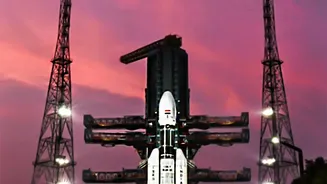
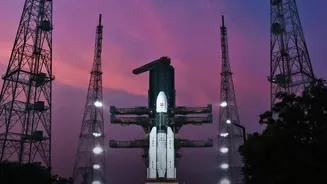
Before Indian astronauts, or 'Gaganauts', can journey to orbit, ISRO must prove it can save them if disaster strikes during launch. This is the job of the Crew Escape System (CES). Think of it as a sophisticated, high-speed lifeboat attached to the very
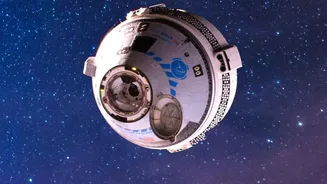
top of the rocket. Its sole purpose is to detect a critical failure on the launchpad or during ascent, fire its own powerful motors, and pull the crew module—the capsule carrying the astronauts—away from the malfunctioning rocket within milliseconds. This system has to be powerful enough to out-accelerate the main launch vehicle and steer the crew to a safe distance before the capsule begins its own descent back to Earth. It is a technology that prioritises astronaut survival above all else, representing a cornerstone of ISRO's human-rated spaceflight capability.
More Than Just an Escape: What is a Life Support System?
Getting the crew module away from a failing rocket is only half the battle. During the violent, high-G force ejection and subsequent descent, the capsule must remain a habitable sanctuary. This is where the Environmental Control and Life Support System (ECLSS) comes in. This system is responsible for maintaining a tiny, breathable bubble of Earth's atmosphere in the harshness of space or a high-altitude emergency. It provides vital oxygen, removes the carbon dioxide (CO2) exhaled by the crew, controls temperature and humidity, and maintains a safe cabin pressure. Without a fully functional ECLSS during an abort, the crew could face life-threatening conditions like oxygen deprivation or extreme temperatures, even if the escape itself is successful.
Simulating Disaster: The Abort Test Flight
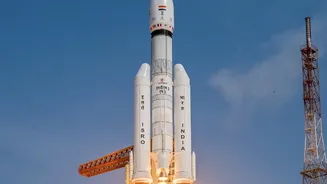
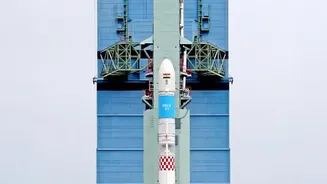
To verify this works, ISRO can't wait for a real emergency. Instead, it conducts meticulously planned abort tests, like the successful Test Vehicle Abort Mission-1 (TV-D1). In this test, a specially designed test rocket launched an unpressurised, but fully instrumented, version of the Gaganyaan crew module to a specific altitude and speed. In the TV-D1 mission, this happened at an altitude of about 17 km while travelling faster than the speed of sound. At this precise moment, an abort was deliberately triggered. The Crew Escape System's motors fired, violently pulling the crew module away from the rocket, simulating a real-world escape scenario under maximum aerodynamic pressure.
How the Test Verifies the Systems
While the test crew module in early missions like TV-D1 is unpressurised, it is packed with nearly 300 sensors that record every detail of the flight. These instruments act as virtual astronauts, collecting data on G-forces, vibrations, acoustics, and structural integrity. For the life support systems, the verification comes from proving the capsule's integrity. The test confirms that the module's structure can withstand the intense forces of the escape without deforming or breaking, which is the first step to ensuring it can hold pressure. Subsequent uncrewed test flights are planned with a pressurised module to fully test the ECLSS. In these future tests, sensors will directly monitor cabin pressure, temperature regulation, and the performance of gas circulation fans, confirming that the life support systems remain fully functional and would have kept the crew safe throughout the entire abort sequence.
From High-Speed Ejection to a Safe Splashdown
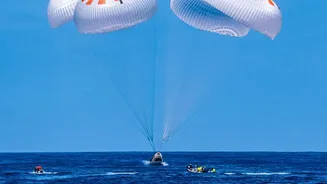
After the escape motors burn out and pull the module to a safe altitude, the test isn't over. The escape system jettisons, and the crew module begins its descent. A complex sequence of parachutes must deploy perfectly—first drogue parachutes to stabilise and slow the capsule, followed by the main parachutes to ensure a gentle splashdown in the sea. The successful TV-D1 mission saw the crew module land in the Bay of Bengal, about 10 km from the launch site at Sriharikota, where it was recovered by the Indian Navy. This final step demonstrates the success of the entire end-to-end safety procedure, proving that ISRO cannot only rescue its astronauts from a launch failure but also bring them home safely.