




The Prize: A Lunar Gas Station
Finding water on the Moon is not just about quenching an astronaut's thirst. It's the key to unlocking the entire solar system. Water (H2O) can be split into its component parts: oxygen for breathable air and hydrogen for powerful rocket fuel. This process,
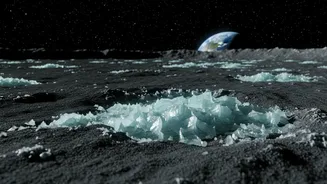
known as in-situ resource utilization (ISRU), could turn the Moon into a cosmic gas station. Rockets launching from Earth would no longer need to carry heavy fuel for a round trip; they could refuel on the Moon for journeys to Mars and beyond. Recent studies, some involving ISRO scientists, suggest that the amount of ice just below the surface could be five to eight times greater than what's on the surface, making this resource even more promising. This makes the quest for lunar ice a foundational step toward a sustainable human presence in space.
The Challenge of Eternal Darkness
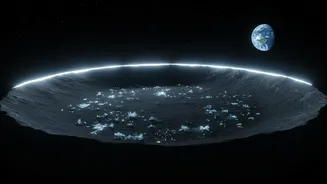
The prize is guarded by one of the most extreme environments imaginable. The water-ice is trapped in Permanently Shadowed Regions (PSRs) near the lunar poles, primarily inside deep craters. Because of the Moon's slight axial tilt, the floors of these craters never receive direct sunlight. As a result, they are some of the coldest places in the solar system, with temperatures plunging to around minus 250 degrees Celsius. This poses immense technical challenges. Standard solar-powered rovers are useless in the perpetual dark. The extreme cold can make equipment brittle and seize moving parts, and the sharp, abrasive lunar dust is a constant threat to any machinery. Navigating in the darkness, even with reflected light from nearby crater rims, is a significant hurdle.
ISRO's Multi-Pronged Plan
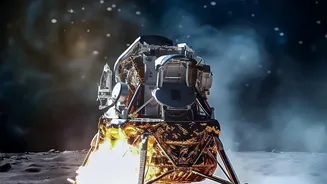
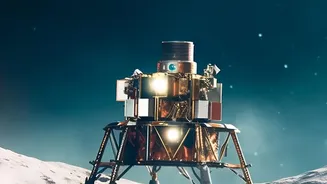
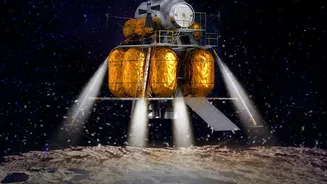
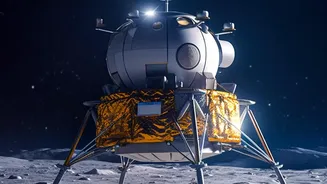
ISRO is tackling this grand challenge with a series of ambitious, interconnected missions. While Chandrayaan-3 proved India's capability to soft-land at the south pole, future missions are designed for exploration and sample return. The upcoming Chandrayaan-4 mission, planned for around 2027, is a highly complex sample-return mission. It involves landing, collecting surface samples, and returning them to Earth, a feat that requires multiple spacecraft modules and complex orbital maneuvers like docking for the first time in ISRO's history. This will be followed by a collaboration with Japan's space agency, JAXA, called LUPEX (Lunar Polar Exploration Mission). This mission will specifically target the PSRs, using a large lander and a rover designed to operate in the extreme cold and drill for subsurface water ice.
The Robotic Toolkit for the Job
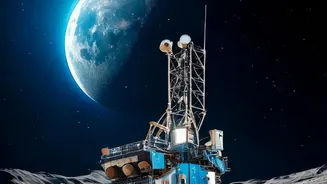
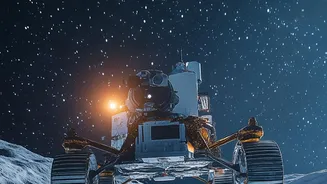
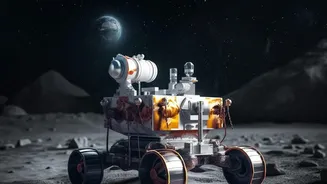
The LUPEX rover, a joint Indo-Japanese effort, will be a robust explorer packed with specialized instruments. ISRO is contributing a ground-penetrating radar that can map the location of water ice up to three meters below the surface. NASA is also contributing a key instrument, the Neutron Spectrometer System (NSS), which can detect hydrogen—an indirect sign of water—without needing to drill. The rover itself will be equipped with a drill to collect core samples of the icy regolith (lunar soil). These samples can then be analyzed on board to understand the nature, abundance, and accessibility of the water ice. These robotic missions are essential for prospecting. They will create detailed maps of water deposits, helping to identify the most resource-rich and accessible sites for future human landings and potential mining operations.
Paving the Way for a Lunar Outpost
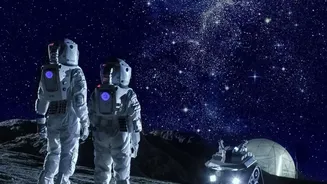
These missions are not just scientific endeavors; they are strategic moves in a new global era of space exploration. By proving the technology to find and characterize water ice, ISRO is positioning India as a key player in the future lunar economy. The data gathered by missions like Chandrayaan-4 and LUPEX will be invaluable for the Artemis program and other international efforts to establish a permanent human presence on the Moon. Successfully tapping into the Moon's water resources would validate the concept of living off the land, a necessary step for long-term habitation. Each successful robotic probe that ventures into the lunar shadows is another step towards the day when an Indian astronaut might stand at the edge of a crater, overlooking a bustling lunar outpost powered by the very ice hidden in the dark.