






The Afro is more than just a hairstyle; it's a powerful statement of identity, heritage, and self-love. Embracing its natural volume is a journey of celebrating the unique beauty of coily hair in its most authentic and glorious form.
A Legacy of Pride and Identity
The Afro's story is
deeply woven into cultural history. Long before it became a global symbol, intricate hairstyles in ancient African societies signified everything from social status to tribal affiliation. During the Civil Rights and Black Power movements of the 1960s and 1970s, the Afro became a powerful emblem of Black pride and resistance. Figures like Angela Davis and members of the Black Panther Party wore their hair naturally as a bold rejection of Eurocentric beauty standards and a celebration of Black identity. This legacy continues today through the modern natural hair movement, which encourages people to embrace their curls and coils with confidence.
Understanding Your Hair's Foundation
A healthy Afro starts with understanding your hair's unique structure. Afro-textured hair, often categorized as Type 4, grows in tight coils or zig-zag patterns. This structure gives it incredible volume but also makes it prone to dryness, as natural scalp oils have a harder time traveling down the hair shaft. Type 4 hair is further divided into 4A (defined, S-shaped coils), 4B (tighter, Z-shaped strands), and 4C (the most tightly coiled and fragile pattern). Identifying your specific curl pattern helps you choose the right products and techniques, but the core principles remain the same: moisture is paramount.
The Core of Afro Care: Moisture and Gentleness
Hydration is the golden rule of Afro care. Because coily hair is naturally dry, a consistent moisturizing routine is essential to prevent breakage and maintain elasticity. This starts with a gentle cleansing routine, using a sulfate-free shampoo or co-washing (washing with conditioner only) once a week to avoid stripping natural oils. Always follow with a deep conditioner, allowing it to sit for several minutes to penetrate the hair shaft. To lock in that moisture, many people follow the LOC or LCO method, which involves layering a liquid (water or a leave-in conditioner), an oil, and a cream to seal the hair cuticle and keep it hydrated for days.
Styling for Natural Volume
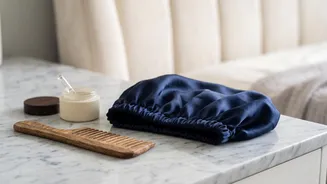
Achieving a full, voluminous Afro is an art. The most iconic tool is the Afro pick, used to gently lift the hair at the roots to create shape and height without disturbing the curl pattern. For best results, use a pick on dry, styled hair, focusing only on the roots. Many people start with a 'twist_out' or 'braid_out' to stretch the curls and provide definition. This involves twisting or braiding the hair when damp with a leave_in conditioner and then unraveling it once dry. To protect your style and prevent frizz overnight, sleeping with a satin bonnet or on a satin pillowcase is crucial, as cotton can cause friction and moisture loss.
Embracing the Journey
Growing and maintaining an Afro is a journey of patience and self_discovery. It involves learning to listen to your hair and understanding what it needs, whether that's more moisture, a protein treatment to strengthen strands, or a regular trim to remove split ends. It's about letting go of unrealistic beauty standards and finding confidence in your authentic texture. Every curl and coil is unique, and celebrating your natural hair is a powerful act of self_acceptance. Your Afro is not just hair; it's a crown you wear with pride, a connection to a rich history, and a beautiful expression of who you are.