





Start with the Right Foundation
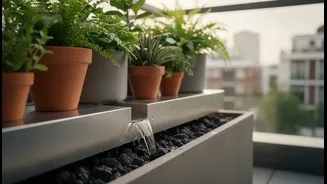
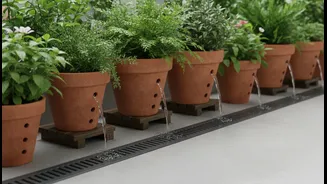
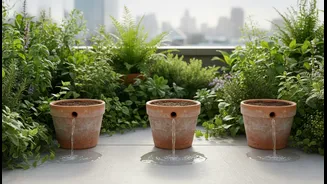
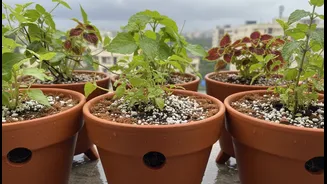
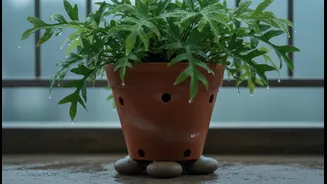
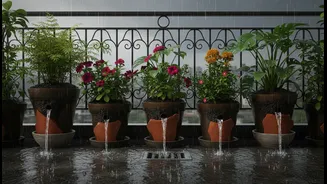
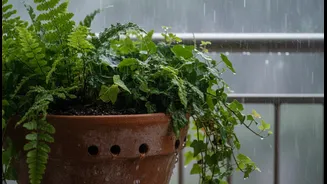
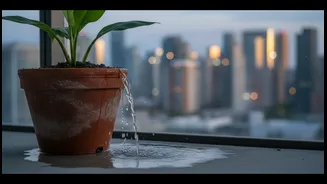
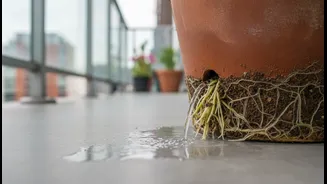
The first line of defence against waterlogging is the pot itself. Ensure every container has multiple drainage holes at the bottom. If a favourite pot lacks them, you can often drill more yourself, especially with plastic containers. Another simple yet
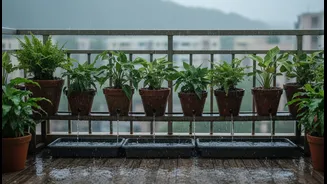
crucial step is to elevate your pots. Placing them on bricks, wooden blocks, or dedicated 'pot feet' creates an air gap underneath, preventing drainage holes from getting blocked and allowing excess water to escape freely. During the monsoon, it is also wise to remove any saucers that sit beneath your pots, as they can collect rainwater and leave the plant's roots sitting in stagnant water.
Rethink Your Potting Mix
Heavy, dense garden soil is a major problem in containers, as it compacts easily and retains too much water. The ideal potting mix for the rainy season is light and airy. Create a custom blend by combining potting soil with materials that improve aeration and drainage, such as perlite, cocopeat, or coarse sand. A good ratio to start with is two parts soil, one part compost, and one part aeration material like perlite. It's a common myth that a layer of gravel at the bottom of a pot improves drainage; in reality, it can hinder water movement and bring the saturated soil layer closer to the roots. Stick to a well-draining mix throughout the entire pot.
Assess Your Current Setup
Before the heaviest rains arrive, take a moment to assess your existing pots. Gently poke a stick or skewer into the soil; if it feels dense and compacted, the roots may be struggling for air. You can carefully aerate the soil by pushing a chopstick down into the pot in several places around the edge, away from the main root ball. This creates small channels that help air reach the roots and allow trapped water to drain. Also, check that the drainage holes are not clogged with compacted soil or roots. If a pot feels excessively heavy long after a downpour, it's a clear sign that it's not draining properly.
Know the Signs of Overwatering
It is crucial to recognise the symptoms of a waterlogged plant. The most common sign is leaves turning yellow or brown, especially the lower ones. Unlike underwatered leaves which are dry and crispy, overwatered leaves will often be soft and limp. A plant might also look wilted even though the soil is wet; this happens when rotting roots can no longer absorb water and nutrients. Other warning signs include a mushy stem base, leaf drop (of both old and new leaves), and a sour or rotten smell coming from the soil.
Provide Strategic Shelter
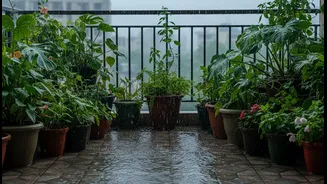
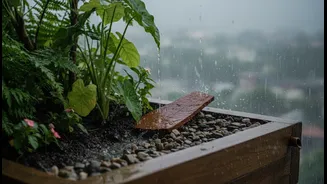
If possible, move more delicate plants to a sheltered part of your balcony, under an overhang or roof, to protect them from the constant deluge. For larger pots that are difficult to move, you can create a temporary shield using a market umbrella or a sheet of plastic propped up by a central stake to deflect the heaviest rain while maintaining airflow. Spacing your pots further apart also helps, as it improves air circulation around the foliage and soil, allowing them to dry out more quickly between showers. Just remember to stop all manual watering during periods of continuous rain; let nature do the work.
Emergency Rescue for Waterlogged Plants
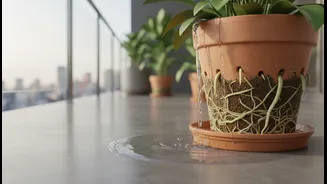
If a plant is already showing advanced signs of distress like a blackened stem base, you need to act fast. Gently remove the plant from its pot and inspect the roots. Healthy roots are firm and white, while rotting roots will be brown, black, and mushy. Carefully trim away any rotten roots with clean scissors. Repot the plant in a fresh, dry, well-draining potting mix. Do not add fertiliser at this stage, as the damaged roots are vulnerable and can be easily burned. Place the recovering plant in a shady spot to reduce stress as it recuperates.