




More Than a Green Accessory
Placing a plant on your desk is one of the quickest ways to make a workspace feel more personal and less sterile. Beyond aesthetics, studies have shown that the presence of indoor plants can help reduce stress and improve focus, creating a calmer atmosphere
for concentration. While many people buy them for their looks, plants like the Snake Plant and Pothos rose to fame following a 1989 NASA study that highlighted their ability to absorb certain airborne pollutants. This has made them popular choices for those looking to create a healthier indoor environment. While the effects in a typical room are modest, their resilience and beauty are reason enough to add them to your desk.
The Hardy and Architectural Snake Plant
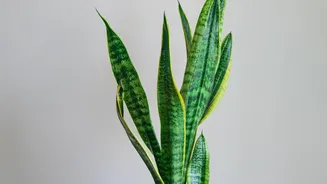
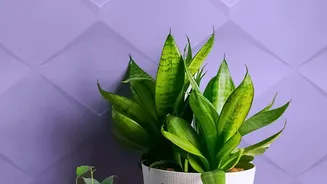
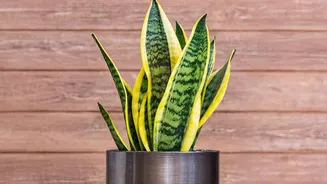
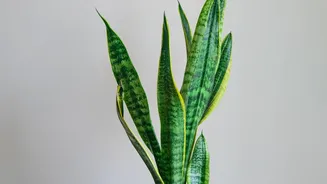
The Snake Plant, or Sansevieria trifasciata, is the undisputed champion of low-maintenance greenery. Its stiff, upright leaves give it a modern, architectural look that fits perfectly on a desk without taking up too much horizontal space. Nicknamed the 'mother-in-law's tongue', it's famously hard to kill, making it ideal for busy students or forgetful plant parents. One of its most unique qualities is its ability to perform a special type of photosynthesis at night, releasing oxygen when most other plants do not. This makes it a fantastic choice for bedrooms and study areas where you spend long hours. While it's celebrated for filtering toxins like formaldehyde and benzene from the air, its biggest selling point remains its near-indestructible nature.
Caring for Your Snake Plant
Success with a Snake Plant comes down to one simple rule: do not overwater it. These plants are succulents that store water in their leaves and are highly susceptible to root rot. Allow the soil to dry out completely between waterings—this might mean watering only once every two to four weeks, or even less in winter. They are also incredibly tolerant of various light conditions, from low indirect light to brighter spots, although they will grow faster with more light. Just keep them out of intense, direct sun which can scorch their leaves. They require very little fertilizer and are generally pest-free, making them one of the most forgiving houseplants you can own. A quick note: this plant is toxic to pets if ingested, so keep it out of reach of curious cats and dogs.
The Forgiving and Leafy Golden Pothos
If you want a plant with a bit more of a wild, trailing look, the Golden Pothos (Epipremnum aureum) is your perfect match. Often called 'devil's ivy' because it's so hard to kill, this vining plant is incredibly rewarding for beginners. Its heart-shaped leaves, splashed with golden-yellow variegation, grow quickly and can be left to cascade down the side of a bookshelf or desk. Pothos is known for its ability to thrive in a variety of lighting situations, from bright indirect light to lower-lit corners of a room. Like the Snake Plant, it was featured in NASA's study for its effectiveness at removing indoor pollutants such as formaldehyde, xylene, and benzene from sealed environments.
Pothos Care Made Simple
Golden Pothos is communicative; its leaves will start to droop slightly when it's thirsty, taking the guesswork out of watering. Typically, watering every one to two weeks is sufficient, allowing the top inch or two of soil to dry out first. It's a resilient plant that tolerates a bit of neglect. For a fuller, bushier plant, you can easily trim back the trailing vines and even propagate the cuttings in a glass of water to create new plants for free. It is adaptable to average household humidity and temperature, making it a fuss-free companion. However, like the Snake Plant, Pothos leaves contain compounds that are toxic to pets and humans if eaten, so it's best to place it on a high shelf or in a hanging basket away from small children and animals.
The Truth About Air Purification
The 'air-purifying' label on these plants comes with a major caveat. The famous NASA study was conducted in a small, sealed laboratory chamber, an environment very different from a typical home or office with drafts and open doors. Subsequent research has clarified that you would need a huge number of plants—essentially a dense, indoor jungle—to significantly impact the air quality of an entire room. False claims that a handful of plants can sustain a human in a sealed room have been debunked. So, while Snake Plants and Pothos do absorb trace pollutants, their primary benefits for your study desk are psychological and aesthetic. Think of the air cleaning as a small, invisible bonus to the proven stress-reducing and focus-boosting effects of having a green friend nearby.