
Anxiety and the 'Fight or Flight' Response
When a teenager feels stressed about an upcoming exam, their body’s ancient survival system, the sympathetic nervous system, kicks into gear. This is the 'fight-or-flight' response. The heart rate quickens, breathing becomes shallow, and stress hormones
like cortisol flood the system. While useful for genuine threats, this physical reaction makes it difficult to concentrate, recall information, and think clearly—everything a student needs to do during an exam. The cycle of anxious thoughts and physical symptoms can feed on itself, making the stress even worse.
How Breathwork Flips the Switch
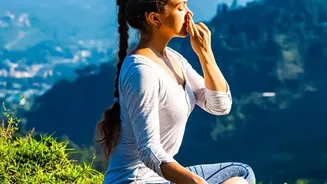
The secret to countering this response lies in the breath. Yogic breathing practices, known as pranayama, are scientifically recognised for their ability to calm the body down. Slow, deep, and controlled breathing stimulates the parasympathetic nervous system, also known as the 'rest-and-digest' system. Activating this system sends a powerful signal to the brain that the danger has passed. It helps lower the heart rate, reduce blood pressure, and decrease cortisol levels, bringing both the body and mind into a state of calm.
Why Add Simple Movements?
While breathwork alone is powerful, pairing it with simple, gentle yoga movements gives a racing mind a tangible anchor. When a teenager is anxious, their thoughts can spiral. Focusing on the physical sensation of a stretch or the coordination of breath with movement interrupts that negative thought loop. This combination of mindful movement and controlled breathing grounds them in the present moment. The tension that often accumulates in the neck, shoulders, and back during long study sessions can also be released, further promoting physical and mental relaxation.
Movement 1: Cat-Cow Stretch (Marjaryasana-Bitilasana)
This is one of the most effective movements for linking breath to motion. Start on your hands and knees. As you inhale, drop your belly, lift your chest and look forward (Cow Pose). As you exhale, round your spine, tuck your chin to your chest, and press the mat away (Cat Pose). The key is to make the breath and movement last for the same amount of time. This simple flow gently massages the spine, releases tension, and creates a calming rhythm that syncs the body and mind, making it an excellent exercise before opening the textbooks.
Movement 2: Child's Pose (Balasana)
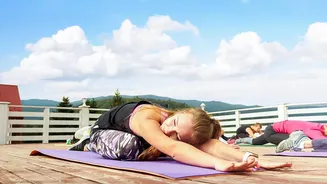
Child’s Pose is a restorative posture that signals safety and relaxation to the nervous system. From your hands and knees, sit back on your heels and fold forward, resting your forehead on the floor. Your arms can be stretched out in front or resting alongside your body. In this position, you can physically feel your breath expand your back, encouraging deep, calming belly breaths. It's a grounding pose that can be held for a minute or more to quiet the mind and relieve stress in the back and shoulders.
Movement 3: Standing Forward Fold (Uttanasana)
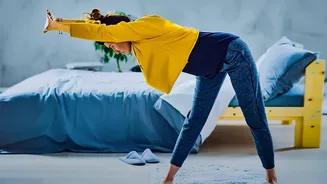
Long hours of studying often create tension in the neck and shoulders. The Standing Forward Fold helps to release it. Standing with feet hip-width apart, exhale and hinge at the hips to fold forward. Let your head hang heavy and your hands rest on the floor or shins. You can keep a gentle bend in your knees. This pose increases blood supply to the brain and can have a deeply calming effect on the nervous system. The gentle inversion offers a new perspective and a moment of quiet surrender, perfect for a short study break.
Putting It Into Practice
These are not complex yoga routines; they are immediate tools. A teenager can practise Cat-Cow for two minutes before a study session to get focused. They can retreat into Child's Pose for a minute when feeling overwhelmed. Even a simple Forward Fold can make a difference between chapters. The goal is to build a habit of checking in with the body and using the breath as a tool for self-regulation. Parents can support this by practising alongside their children, creating a calm environment where these techniques are seen not as another task, but as a source of support.