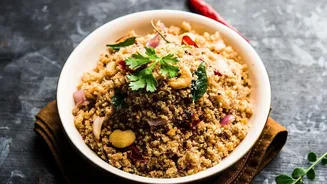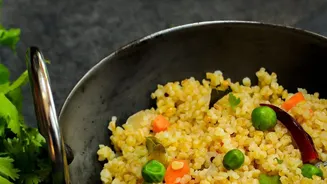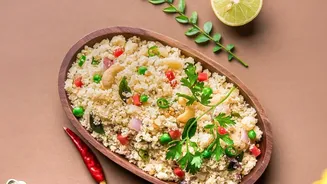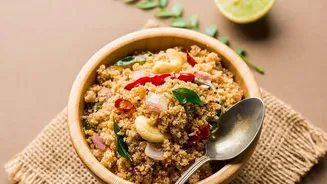

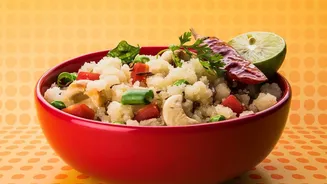
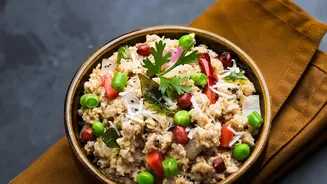
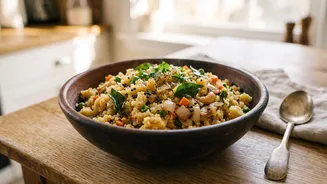
It’s the quintessential quick Indian breakfast, a warm and savoury porridge that comes together with just a handful of pantry staples. But to call Upma a single dish is to miss the delicious story of its many regional identities.
The Foundation: Classic Rava Upma
Before diving into its
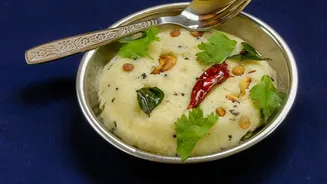
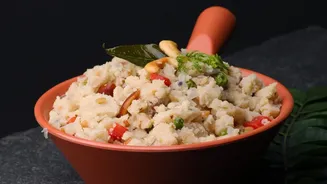
regional variations, it's worth appreciating the classic Rava Upma. Made from dry-roasted semolina (rava or sooji), it's cooked with water and a simple tempering of mustard seeds, lentils, curry leaves, and perhaps some cashews for crunch. This version is beloved across India for its simplicity and comforting texture. It’s a versatile base that can be made with minimal ingredients, making it a go-to for a fast, filling, and satisfying meal any time of the day. The name itself is believed to come from the Dravidian words 'uppu' for salt and 'mavu' for flour, a testament to its fundamental nature.
Karnataka's Spicy Sibling: Khara Bath
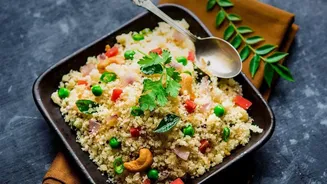
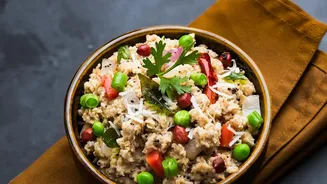
In Karnataka, Upma often takes on a spicier and more aromatic form known as Khara Bath. While it shares the same semolina base, Khara Bath is distinguished by the addition of a special spice blend, typically Vangi Bath or Bisi Bele Bath powder. This powder, rich with roasted lentils, coriander, and other spices, gives the dish a complex flavour and a beautiful yellow-orange hue. Often loaded with vegetables like carrots, beans, and capsicum, it's a heartier dish. In many local eateries, or 'darshinis', it's famously served as part of a 'Chow Chow Bath' — a plate featuring one scoop of savoury Khara Bath and one scoop of its sweet counterpart, Kesari Bath.
Tamil Nadu's Richer Cousin: Rava Kichadi
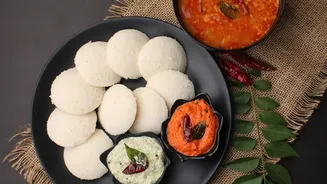
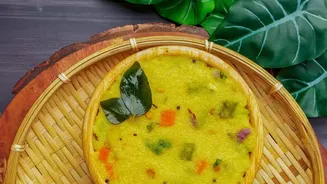
Travel to Tamil Nadu, and you'll find Rava Kichadi, a dish that looks similar to Upma but is decidedly richer and more indulgent. The main difference lies in texture and ingredients; Kichadi is softer, moister, and often made with a more generous amount of ghee and oil. It's typically loaded with colourful vegetables like tomatoes, carrots, and peas, and gets its vibrant yellow colour from turmeric powder. Unlike the often fluffy texture of Upma, Kichadi boasts a softer, almost melt-in-the-mouth consistency, thanks to a higher water-to-rava ratio. It's a festive and wedding favourite, often served with coconut chutney and sambar.
The Vermicelli Variation: Semiya Upma
Not all Upma is made from semolina. A popular variation across South India is Semiya Upma, which uses vermicelli noodles made from wheat. This version is incredibly quick to cook and results in a lighter, less dense dish where the individual strands remain distinct. The preparation is similar, involving a tempering of spices, lentils, and curry leaves, often with added vegetables. Because vermicelli cooks faster than semolina, it's a perfect choice for an even quicker breakfast. The key to a great Semiya Upma is to roast the vermicelli until golden, which prevents it from becoming sticky and ensures a fluffy texture.
The Flattened Rice Alternative: Aval Upma
Another pantry staple that transforms into a quick Upma-style breakfast is 'aval' or 'poha' (flattened rice). Aval Upma is especially popular for its speed and no-cook base. The flattened rice doesn't need to be cooked in water; instead, it's briefly rinsed and softened, then tossed into a hot pan with tempered spices, onions, and sometimes vegetables like peas and potatoes. This method preserves the light, fluffy texture of the poha flakes. Found in various forms across the country, from Maharashtra's Kanda Batata Poha to South Indian variations with coconut, it perfectly fits the spirit of a quick, pantry-ingredient breakfast.