



What is a Solar Eclipse?
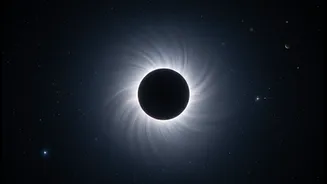
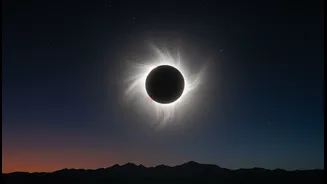
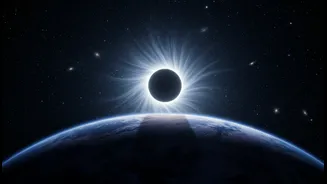
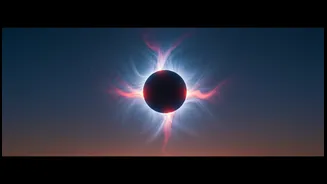
Imagine the Sun, Moon, and Earth are playing a game of tag in space. A solar eclipse happens when the Moon, in its orbit around Earth, passes directly between the Sun and our planet. For a few minutes, the Moon blocks the Sun's bright face, casting a shadow
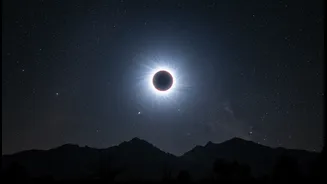
on Earth. If you're in the centre of that shadow, you experience a total solar eclipse, where the sky darkens dramatically. If you're on the edge of the shadow, you see a partial eclipse, where it looks like a bite has been taken out of the Sun. This alignment is a cosmic coincidence: the Sun is 400 times wider than the Moon, but it's also 400 times farther away, making them appear the same size in our sky.
Why Is the August 12, 2026 Eclipse Special?
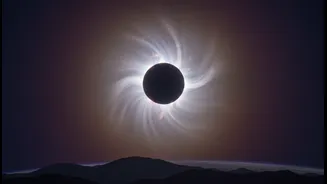
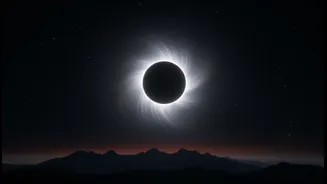
This eclipse is a big deal, especially for Europe. It will be the first total solar eclipse visible from mainland Europe since 1999. The path of totality—the narrow track where the full eclipse can be seen—will cross over Greenland, Iceland, the Atlantic Ocean, and northern Spain. For people in Spain, it's an even rarer event, as the last total eclipse on their mainland was way back in 1905. What makes it truly spectacular is that in Spain, it will be a 'sunset eclipse'. The total eclipse will happen just as the Sun is low on the horizon, promising breathtaking views of the Sun's corona, or outer atmosphere, against a twilight sky.
The Big Question: Can We See It From India?
Unfortunately, the direct path of the total solar eclipse on August 12, 2026, does not cross over India. The main event, where the sky goes dark, is happening thousands of kilometres away in Europe and the Arctic. However, that doesn't mean you have to miss out completely. Some eclipse calculators suggest that a very small partial eclipse might be visible just around sunset from the northernmost parts of Ladakh, but this would be extremely difficult to observe. The best and safest way for anyone in India to witness this amazing event will be to watch the live streams hosted by space agencies like NASA. These online broadcasts will provide stunning, close-up views from locations inside the path of totality.
How to Watch an Eclipse Safely
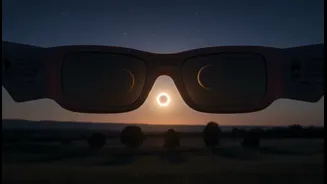
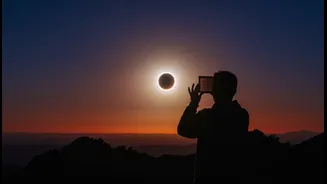
This is the most important rule: never, ever look directly at the Sun during a partial eclipse without proper eye protection. Regular sunglasses are not safe. Looking at the Sun, even when it's partially covered, can cause permanent eye damage. To watch safely, you need special-purpose 'eclipse glasses' or handheld solar viewers that meet the ISO 12312-2 international safety standard. These are thousands of times darker than regular sunglasses. Another fun and safe method is to create a pinhole projector. You can make a small hole in a piece of card and let the sunlight pass through it onto another surface, like the ground or a second card. This projects a small image of the Sun, allowing you to watch the Moon's progress without looking at the sky. And of course, watching a live stream online is completely safe and offers a fantastic view.
A Celestial Bonus: The Perseid Meteor Shower
The cosmic fun doesn't end with the eclipse. The date, August 12, also falls during the peak of the Perseid meteor shower, one of the best 'shooting star' displays of the year. A solar eclipse can only happen during a new moon phase. This is great news for stargazers, because a new moon means the sky will be extra dark, without any moonlight to wash out the faint meteors. So, after watching the eclipse online during the day, you can head out late at night (in the pre-dawn hours of August 12 and 13) to a dark spot away from city lights and catch a beautiful meteor shower.