
Jupiter's Turbulent Skies
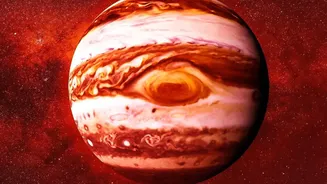
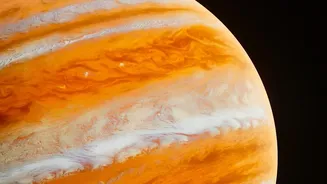
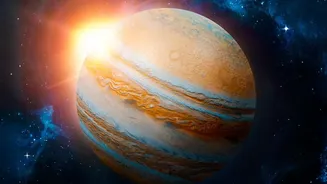
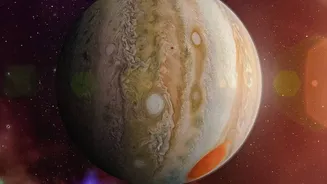
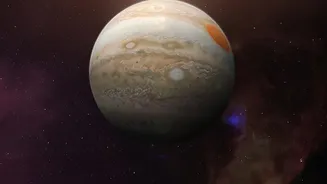
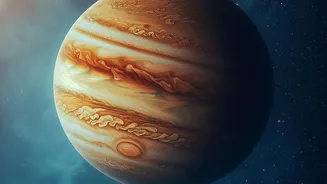
The atmosphere of Jupiter is one of the most chaotic places in our solar system. This gas giant is wrapped in distinct bands of clouds moving in opposite directions at incredible speeds. Where these bands meet, immense storms are born. The most famous
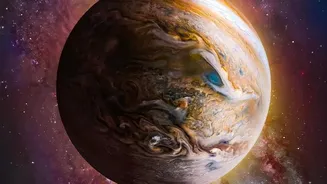
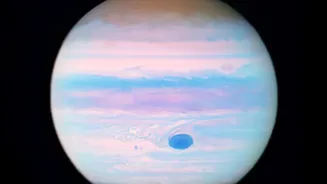
of these is the Great Red Spot, a colossal storm wider than our own planet that has been raging for centuries. But the Great Red Spot is not alone. Jupiter's surface is a dynamic canvas of countless vortices, cyclones, and anticyclones, creating a complex weather system that scientists are still working to understand. These storms are the engines of the planet's atmosphere, churning up material from deep below and creating the beautiful, turbulent patterns we see from afar.
Decoding 'Cosmic Tornados'
The term “cosmic tornados” is a dramatic way to describe Jupiter's powerful rotating storms, which come in two main varieties: cyclones and anticyclones. Similar to storms on Earth, they rotate around a central point, but on a vastly larger scale. Anticyclones, like the Great Red Spot, are high-pressure systems that rotate in the opposite direction of the planet's spin. Cyclones are low-pressure systems and tend to have warmer air at their tops and cooler air deeper down. Data from NASA's Juno spacecraft has allowed scientists to peer deep beneath the cloud tops for the first time, revealing the three-dimensional structure of these massive weather systems. Some of these storms extend hundreds of kilometers into the planet's atmosphere, far deeper than any hurricane on Earth.
A Surprising Shrinkage
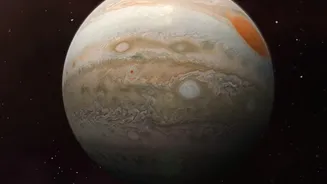
For decades, astronomers have noted that the Great Red Spot is shrinking. Once large enough to swallow three Earths, it is now only about 1.3 times the width of our planet. This shrinking has been monitored since at least the 19th century and appears to be accelerating, leading some scientists to predict it could become a circle or even disappear entirely within a few decades. But the new captures suggest this phenomenon might not be limited to just the one famous storm. Other, smaller storm systems, like one nicknamed Oval BA, have also been observed changing, in some cases becoming paler. This raises fascinating questions about the long-term stability of all of Jupiter’s storms.
The View from Juno
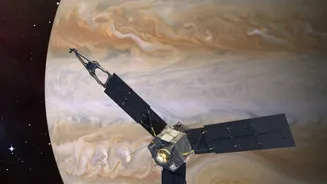
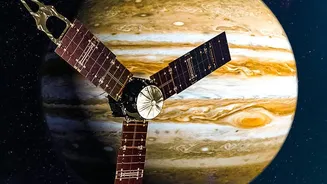
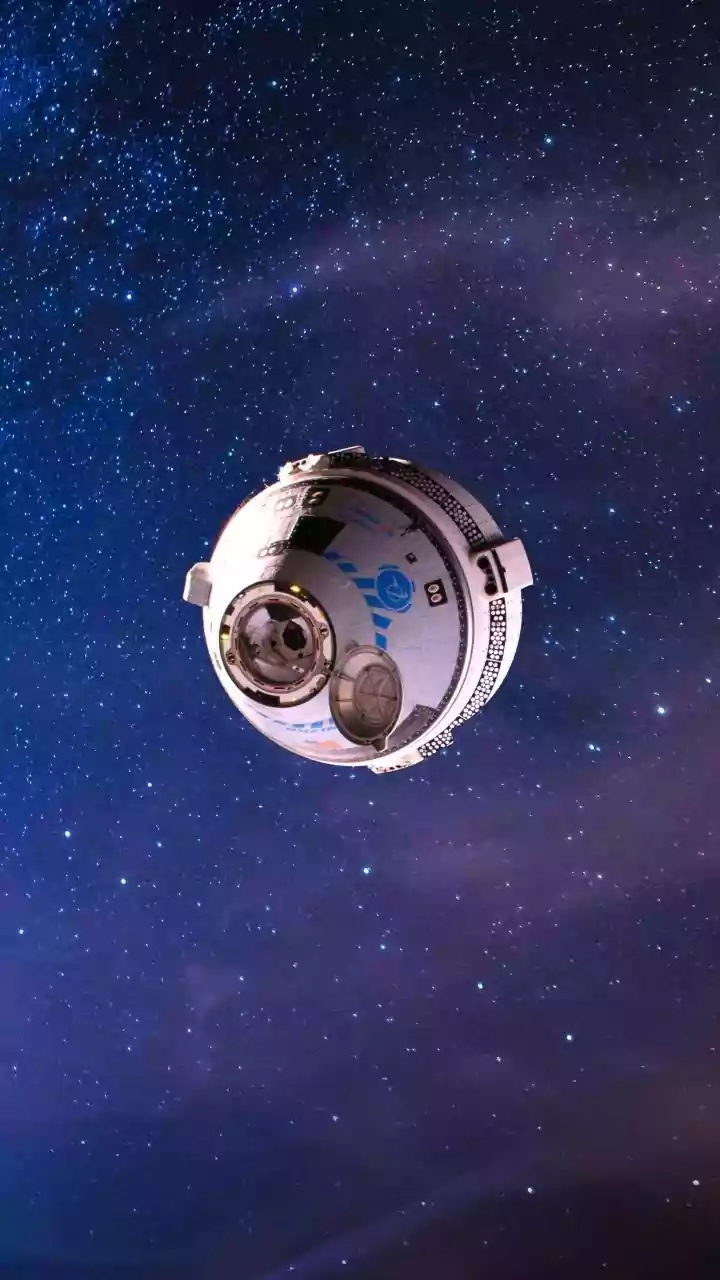
Our new understanding comes courtesy of NASA's Juno spacecraft, which has been orbiting Jupiter since 2016. Its primary mission was designed to last only 20 months but has been extended, allowing for an unprecedented long-term study of the planet. One of its key instruments, JunoCam, is a visible-light camera that captures breathtaking, high-resolution images as it flies just thousands of kilometers above the cloud tops. These images, often processed by citizen scientists, provide incredibly detailed views of the storms, showing features as small as a few kilometers across. It is this continuous, close-up monitoring that has allowed scientists to track the subtle and not-so-subtle changes in the planet’s stormy facade.
What Does It Mean for Science?
Studying these shrinking and evolving storms is about more than just Jupiter. It provides a natural laboratory for understanding planetary weather on a grand scale. On Earth, hurricanes lose their power when they move over land, but Jupiter's storms can rage for centuries because they never make landfall and are powered by the planet's internal heat. Understanding why they eventually fade or shrink could reveal fundamental principles of atmospheric physics. These findings also refine our models of how gas giants form and evolve. Recent data from Juno has already forced scientists to update textbooks, revealing in early 2026 that Jupiter is slightly smaller and flatter than previously thought. Each new discovery helps paint a more accurate picture of our own solar system and the thousands of giant exoplanets discovered across the galaxy.