




A New Shape in the Saturnian Sky
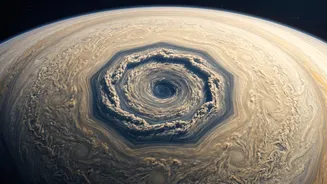
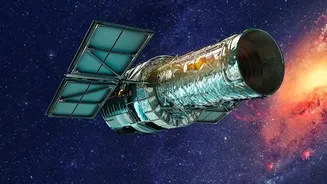
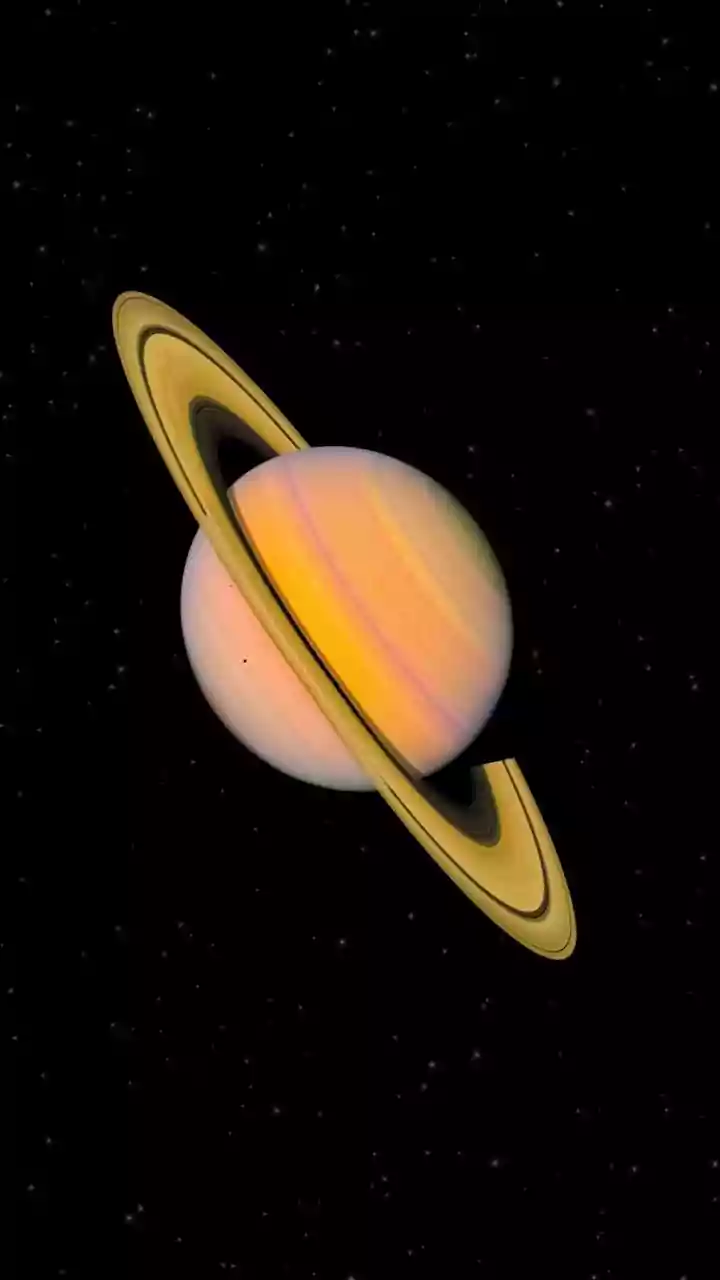
Scientists using NASA's Hubble Space Telescope have identified a massive, 10-sided atmospheric wave, or 'decagon,' forming around Saturn's south pole. This is a landmark discovery, as it is the first time a large, persistent, regular-sided jet stream
pattern has been observed in the planet's southern hemisphere. For decades, we have been fascinated by the famous and bizarre six-sided hexagon at Saturn's north pole. The emergence of a new, different geometric shape at the opposite pole was unexpected and gives scientists a thrilling opportunity to watch a major planetary weather system develop in real-time.
An Evolving, Wandering Pattern
Unlike the northern hexagon, which appears relatively fixed in its position, this new southern decagon seems to be more of a wanderer. Researchers have noted that the 10-sided structure appears to be migrating eastward. This movement suggests the decagon behaves less like a fixed structure and more like a meandering wave that penetrates through multiple layers of the atmosphere. The discovery was pieced together by analysing images taken by Hubble's Outer Planet Atmospheres Legacy (OPAL) program, which has been annually photographing the outer planets since 2014. Faint signs of the structure were visible in images from 2023, but it has become much more distinct in subsequent observations.
A Tale of Two Poles
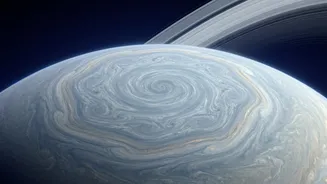
The discovery of a decagon is particularly significant because for years, the south pole looked very different. Data from the Cassini spacecraft, which orbited Saturn from 2004 to 2017, showed a monstrous, hurricane-like polar vortex with a distinct, cloud-free 'eye' but no persistent geometric shape. This southern vortex was enormous, with an eye measuring roughly 8,000 kilometres across, and possessed towering eyewalls two to five times higher than those in Earth's most powerful hurricanes. The fact that the Cassini mission saw no hint of a long-lived polygonal shape makes the decagon's recent emergence a genuine surprise, demonstrating just how dynamic and changeable these giant planets can be.
Clues to What Lies Beneath
So why a hexagon in the north and a decagon in the south? The answer may lie deep within the planet's interior. Recent simulations from MIT suggest that the type of storm pattern that forms at a gas giant's pole depends on the properties of the atmospheric layers far below the visible clouds. The theory posits that the 'hardness' or density of the material at the base of these swirling vortices determines their ultimate size and shape. A harder, denser base may allow a single, large pattern like Saturn's to form, while a softer base might result in multiple smaller vortices, like those seen on Jupiter. The north-south difference on Saturn could mean its interior is not uniform, a tantalizing clue about the planet's deep structure.
Rewriting the Planetary Playbook
This discovery fundamentally shifts our understanding of atmospheric dynamics on giant planets. For a long time, features like Jupiter's Great Red Spot and Saturn's hexagon were seen as almost permanent fixtures. The birth of a new decagon proves that these worlds are evolving on timescales we can observe. It provides a natural laboratory for testing theories about how jet streams behave and how energy is transported through a planet's atmosphere. By comparing the stable hexagon with the developing decagon, scientists can refine their models, which could help explain the diversity of weather patterns seen not only on Jupiter and Saturn but also on giant exoplanets orbiting distant stars.