

The September Rain Question
September is a critical transition month for the Indian monsoon. While forecasts from the India Meteorological Department (IMD) and private agencies now suggest a wet start to the month in many regions, the ultimate performance and timing of the monsoon's
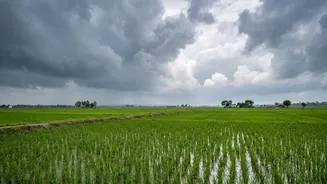
withdrawal remain a subject of intense scrutiny. A premature withdrawal or a significant dry spell can impact the yield of standing kharif crops like rice, soybeans, and cotton. It also affects the soil moisture necessary for the upcoming rabi (winter) crop season. This dual importance is why every signal coming from the atmosphere and oceans is now being read like a high-stakes tea leaf. A weak monsoon doesn't just affect farms; its impact ripples through the entire economy, influencing everything from rural incomes and consumer spending to food inflation and government policy.
Decoding the Weather Signals
So, what are these signals? The primary source is the IMD, which uses a sophisticated Multi-Model Ensemble (MME) forecasting system. This approach combines data from various global climate models to improve accuracy and reduce errors. Key global indicators are also watched closely. The El Niño-Southern Oscillation (ENSO) in the Pacific Ocean is a major factor, as El Niño conditions are often linked with weaker monsoons. Another is the Indian Ocean Dipole (IOD), where temperature differences in the Indian Ocean can either boost or suppress rainfall. Forecasters also monitor the Madden-Julian Oscillation (MJO), a pulse of rain and clouds that travels eastwards around the equator and can trigger wet or dry spells over India. For withdrawal specifically, meteorologists look for clear signs like the cessation of rain for at least five days in northwest India and the establishment of an anti-cyclone over Rajasthan.
The Farmer's Modern Almanac
For India's farmers, weather forecasting is no longer just about looking at the sky. Accurate, long-range forecasts are becoming essential tools for risk management. A forecast for a drier end to the season might prompt a farmer with access to irrigation to give their crops a final watering. For others, it might influence the timing of their harvest to avoid crop stress. Studies have shown that when farmers receive reliable forecasts, they adjust their decisions accordingly, such as changing planting dates or crop choices, which can significantly improve their welfare and returns. With increasing climate variability, these forecasts help bridge the gap between farmers' expectations and the actual weather, turning scientific data into a practical agricultural strategy. This information is increasingly delivered directly to millions of farmers via SMS and specialized apps, empowering them to make better, data-driven decisions.
The Market's Rain Dance
While farmers watch the skies for their crops, commodity traders watch them for profit. Rainfall data is a critical input for agricultural commodity markets. The prospect of a dry spell can send futures prices for crops like soybeans, cotton, and pulses soaring on exchanges like the NCDEX. Traders use weather forecasts to predict crop yields and, by extension, future supply. If a drier September is expected to reduce the soybean harvest, traders will buy soybean futures, betting that prices will rise due to a supply shortage. This isn't just limited to crop futures. In a novel development, exchanges have even launched rainfall derivatives. Contracts like the RAINMUMBAI on the NCDEX allow businesses to directly hedge against the financial risks of too much or too little rain, essentially allowing them to trade the weather itself. These instruments can be used by anyone from a construction company worried about delays to an agri-focused lender concerned about loan defaults.
A Science of Probabilities
Despite the advancements in technology, it's crucial to remember that long-range forecasting is a game of probabilities, not certainties. The IMD itself issues forecasts with a stated error margin. The atmosphere is a chaotic system, and even the most powerful models can't predict every outcome with perfect accuracy. This uncertainty is a fundamental risk that both farmers and traders must manage. Farmers might use crop insurance as a backstop, while traders use complex hedging strategies. Ultimately, the increasing sophistication of weather forecasting provides valuable guidance, but the inherent unpredictability of nature ensures that the annual monsoon will always be a source of economic suspense and a powerful reminder of our dependence on the climate.