





The Sun's 11-Year Rhythm
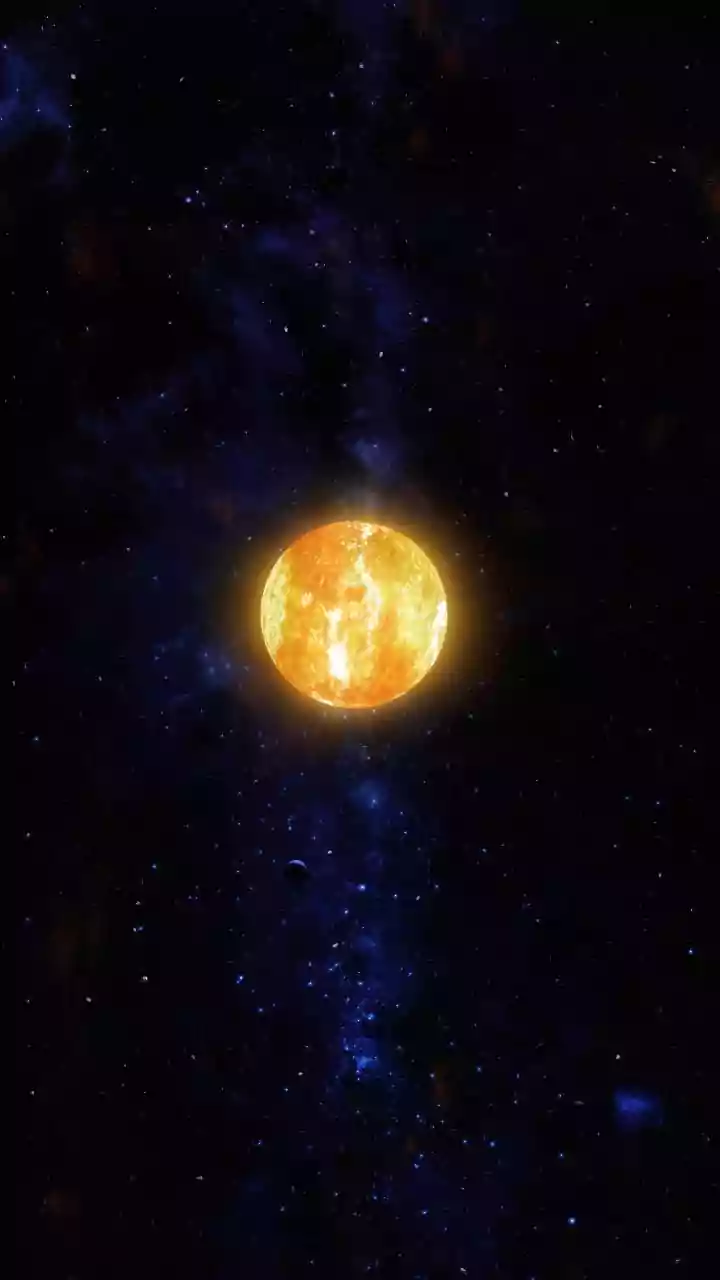
Our sun has a heartbeat, a predictable rhythm that ebbs and flows roughly every 11 years. This is known as the solar cycle. We are currently in Solar Cycle 25, which began in December 2019 and is expected to reach its peak of activity, or 'solar maximum,'
between 2024 and 2026. This peak period is defined by an increase in sunspots—dark, magnetically complex regions on the sun's surface. These sunspots are the launchpads for the powerful solar events that ultimately paint our night sky with light. Scientists have noted that the current cycle is proving to be stronger and more active than initially predicted, setting the stage for an impressive celestial display.
Solar Flares and Cosmic Clouds
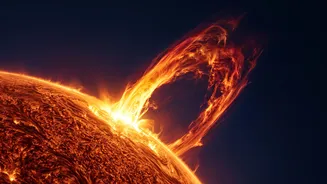
During the solar maximum, the sun is far more volatile. It frequently unleashes enormous explosions of energy called solar flares. These flares are often accompanied by coronal mass ejections (CMEs), which are massive clouds of hot plasma and charged particles that get hurled into space at millions of miles per hour. While a solar flare’s radiation reaches Earth in just eight minutes, the cloud of particles from a CME takes one to a few days to make the same journey. It is this massive, traveling cloud of solar particles that acts as the primary fuel for the aurora.
Earth's Protective Magnetic Shield
When a CME arrives, it doesn’t just hit Earth directly. Instead, it collides with our planet’s magnetosphere, a protective magnetic bubble that shields us from the harshest solar radiation. This collision of solar particles with our magnetic field creates what is known as a geomagnetic storm. Most of the solar wind is deflected, but some particles become trapped and are funnelled down along the magnetic field lines toward the North and South Poles. This is why auroras are typically concentrated in ring-like shapes, known as auroral ovals, around the polar regions.
How the Sky Lights Up
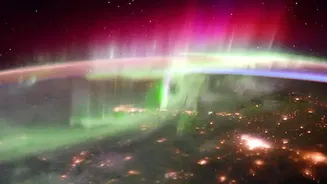
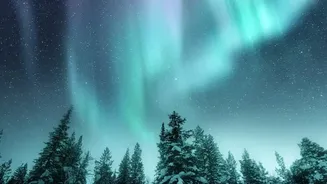
The magic of the aurora happens in our upper atmosphere. As the energized particles from the sun race along Earth’s magnetic field lines, they slam into atoms and molecules of gas, primarily oxygen and nitrogen. This collision transfers energy to the atmospheric gases, 'exciting' them. As these atoms and molecules calm down and release that extra energy, they emit light in the form of photons. The colour of the aurora depends on which gas is hit and at what altitude. Oxygen typically produces the most common green and yellow lights at lower altitudes (100-300 km) and rare, all-red auroras at very high altitudes. Nitrogen contributes beautiful blues and purplish-reds.
Global Visibility? What to Really Expect
While the headline mentions 'global' visibility, the aurora won’t be visible from every point on Earth. However, the intense geomagnetic storms caused by the solar maximum can dramatically expand the auroral oval. This pushes the lights significantly farther south than usual, making them visible to millions more people. During strong events, the northern lights have been seen in parts of Europe and the United States that rarely witness them. So, while it's not truly global, your chances of seeing the aurora from a lower latitude are much higher during this peak period. After 2026, the sun's activity will begin to wane, and this window of enhanced visibility will close for another decade.
Tips for Catching the Show
To maximize your chances of seeing the aurora in 2026, planning is key. The best viewing season is generally between September and March, when the nights are longest and darkest. The prime viewing hours are typically between 10 p.m. and 2 a.m. local time. The most crucial factor is finding a location with clear, dark skies, far away from city light pollution. You can also keep an eye on aurora forecasts provided by agencies like NOAA's Space Weather Prediction Center, which use data like the Kp index to predict the intensity and geographic reach of an upcoming display.