




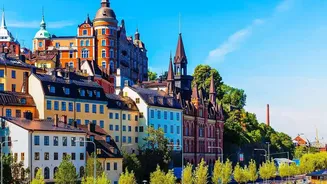
Visby: The Walled Hanseatic Jewel
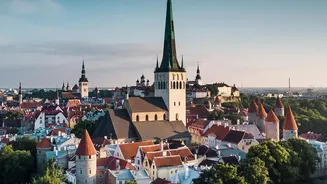
Located on the island of Gotland, Visby is arguably Scandinavia's best-preserved medieval city and a UNESCO World Heritage site. Its most defining feature is the impressive 3.4-kilometre-long ring wall, a limestone fortification built in the 13th century
that still encircles the old town. Once a powerful hub of the Hanseatic League, Visby's past wealth is evident in its more than 200 medieval buildings and the hauntingly beautiful ruins of numerous churches. Strolling through its winding alleys, you'll feel transported back in time, especially during the annual 'Medeltidsveckan' (Medieval Week), when the city comes alive with markets, jousting, and period costumes. Nicknamed 'the city of roses and ruins', Visby’s blend of history and natural beauty makes it an unforgettable stop.
Sigtuna: Where Sweden Began
Just a short trip from Stockholm lies Sigtuna, founded around 980 AD and widely considered to be Sweden's very first town. Situated on the shores of Lake Mälaren, its main street, Stora Gatan, is believed to be the oldest in the country, retaining its original Viking-era layout. Sigtuna was a critical royal and religious center before Stockholm's rise, and it's where Sweden's first coins were minted. The town is an open-air museum, dense with historical markers. It boasts the highest concentration of runestones in the world, telling stories of ancient journeys and powerful families. Visitors can explore the ruins of 11th-century stone churches like St. Olof and St. Lars, and admire the tiny 18th-century town hall, offering a tangible connection to the country's origins.
Ystad: Half-Timbered Charm
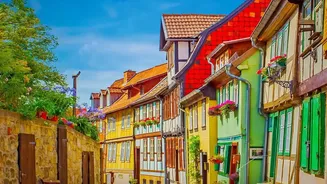
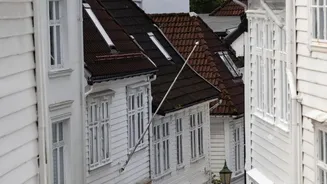
On the southern coast of Skåne, Ystad presents a different but equally captivating medieval picture. The town is famous for its hundreds of well-preserved half-timbered houses, lining cobblestone streets that have remained largely unchanged since the Middle Ages. Key historical sites include the imposing St. Mary's Church (Mariakyrkan), a Gothic structure nearly 800 years old, and the Greyfriars Abbey, one of Sweden’s best-preserved medieval monasteries, founded in 1267. The old town square, Stortorget, is the perfect place to absorb the historic atmosphere. For modern culture enthusiasts, Ystad also offers a unique twist as the atmospheric setting for the popular 'Wallander' crime novels, blending its deep history with contemporary fame.
Lund: A Center of Learning and Faith
Lund is a vibrant university city with a history stretching back to the Viking Age. Its crowning glory is the magnificent Lund Cathedral, a masterpiece of Romanesque architecture consecrated in 1145. For centuries, it was the archiepiscopal seat for all of Scandinavia. Inside, visitors are captivated by its grand stone pillars, the intricate astronomical clock from the 1420s (Horologium Mirabile Lundense), and the mysterious giant, Finn, said to be carved into a column in the crypt. Beyond the cathedral, the city's medieval heritage is woven into its streets, with the establishment of Lund University in 1668 cementing its role as a center for both spiritual and intellectual life that continues to this day.
Kalmar: The Castle of the Union
Strategically located on the Baltic coast, Kalmar's history is dominated by its magnificent castle. What began as a defensive tower in the 12th century to protect against pirates grew into a formidable medieval fortress. Its historical peak came in 1397 with the signing of the Kalmar Union, a political act that united Sweden, Denmark, and Norway under a single monarch. In the 16th century, the Vasa kings transformed the fortress into the stunning Renaissance palace seen today, now considered one of the best-preserved in the Nordic region. A visit to Kalmar Castle is a journey through centuries of Nordic power struggles, royal ambition, and architectural evolution, making it a key destination for understanding Sweden's national story.