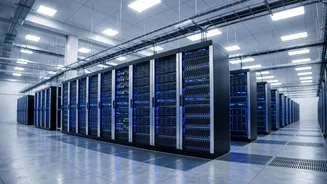







India is in the midst of an unprecedented digital expansion, and its next phase is being built on a foundation of pure data. A new report from Crisil Ratings forecasts a massive fivefold boom in data centre capacity by 2030.
The Scale of the Surge
According to Crisil, India’s
data centre capacity is set to skyrocket from its current levels to approximately 7.5 gigawatts (GW) by March 2030. To put that into perspective, this expansion is expected to attract more than Rs 3 lakh crore (approximately $31.7 billion) in investments over the next four years. This isn't just incremental growth; it's what the rating agency calls an 'investment supercycle'. This boom will physically house the country's exploding digital economy, from streaming services and digital payments to the complex computations needed for next-generation technologies.
Generative AI: The Primary Driver
The single biggest catalyst for this explosive growth is the rise of generative artificial intelligence (GenAI). AI models, particularly those used for training and inference, are incredibly power-hungry and require enormous computing resources that only specialized data centres can provide. As businesses across India race to integrate AI into their operations, the demand for this underlying infrastructure has intensified dramatically. This is complemented by other significant trends, including widespread enterprise digitalisation, the nationwide 5G rollout accelerating data consumption, and government data localisation policies that mandate storing Indian users' data within the country's borders.
An Attractive Investment Destination
Global investors and hyperscalers—the tech giants that dominate cloud computing—are taking notice. India presents a compelling case, with development costs for data centres being roughly 20% lower than in competing Asia-Pacific markets. This cost advantage is due to more competitive prices for land, construction, and labour. When combined with lower power tariffs, it results in rental rates that are 30-35% cheaper than in peer markets, making India a magnet for large-scale investment. Furthermore, the ability to develop large campuses powered by renewable energy aligns perfectly with the sustainability goals of global tech companies.
The Power Challenge
However, this rapid expansion comes with significant challenges, the most critical of which is power. Data centres are incredibly energyintensive. Nearly threefourths of the upcoming 6 GW of capacity is expected to be concentrated in just three cities: Visakhapatnam, Mumbai, and Hyderabad. By 2030, the power demand from data centres in these cities could equate to a staggering 80%, 60%, and 20% of their current peak electricity needs, respectively. This places immense pressure on the existing power infrastructure and underscores the urgent need for timely grid connectivity and major upgrades to transmission networks to prevent bottlenecks.
DeRisking a HighStakes Buildout
Despite the risks, developers are moving forward with confidence. Demand is so strong that nearly half of the upcoming capacity is already committed under longterm contracts, some stretching 15–20 years. These upfront agreements with hyperscalers provide revenue certainty and significantly deRisk the massive capital expenditure involved. Existing data centres are already operating at around 90% utilisation, while over 95% of the capacity currently under construction has been precontracted. This high level of preleasing ensures that facilities will generate cash flow almost immediately upon commissioning, providing a strong foundation for this ambitious expansion.