





A Legacy of Success
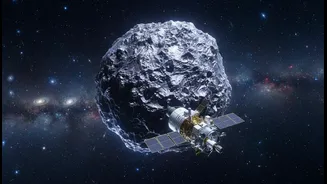
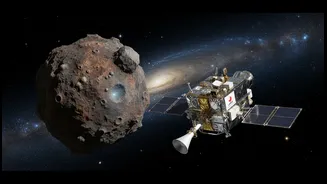
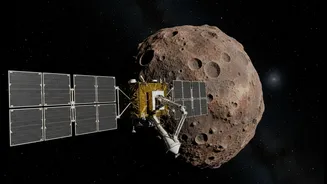
First, it's important to remember why Hayabusa2 is so famous. Operated by the Japan Aerospace Exploration Agency (JAXA), the spacecraft achieved a monumental feat by landing on the asteroid Ryugu, collecting pristine samples, and returning them to Earth
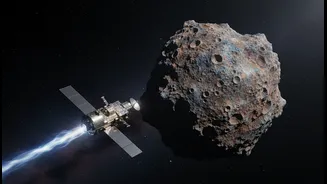
in December 2020. These samples, containing organic molecules and water-bearing minerals, have provided invaluable insights into the building blocks of our solar system and potentially life itself. After dropping off its precious cargo, the mission didn't end. With about half of its xenon fuel remaining, JAXA sent the intrepid explorer on a new, long-term journey called Hayabusa2♯ (pronounced 'sharp').
The Real Extended Mission
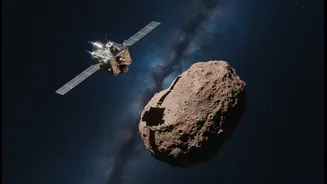
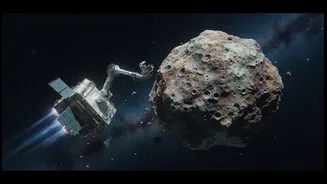
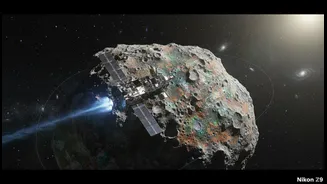
The primary target for Hayabusa2's extended mission is a completely different object: a tiny, fast-spinning asteroid named 1998 KY26. The spacecraft is scheduled to rendezvous with this object in July 2031. Exploring 1998 KY26 is a major scientific goal because it represents a class of small celestial bodies that have never been studied up close. This asteroid is only about 11 meters in diameter and spins on its axis every five to ten minutes, an environment where the centrifugal force can exceed its own gravity. Studying such a world will test the limits of spacecraft technology and provide crucial data for planetary defense, as asteroids of this size can still pose a significant threat to Earth.
So, What is 'Torifune'?
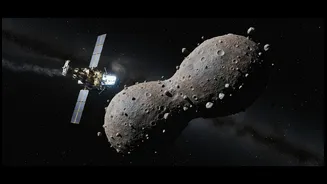
The recent excitement is about a flyby that occurred on July 5, 2026. The target was an asteroid with the official designation 2001 CC21. The name 'Torifune' was selected through a public campaign and comes from Japanese mythology, referring to a divine ship that travels with speed and stability. This flyby was a scheduled waypoint on Hayabusa2's long road to 1998 KY26. It was not the final destination but an opportunistic chance to gather data and test the spacecraft's capabilities for a high-speed encounter. The flyby happened at a relative speed of about 5 kilometers per second, making it a challenging observational feat.
What the Flyby Accomplished
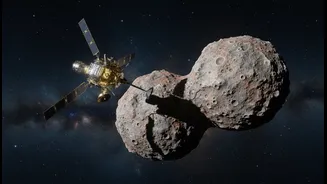
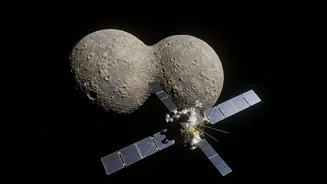
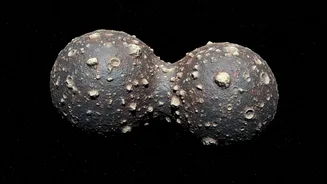
Despite the high speed, the flyby was a success. JAXA confirmed on July 5 that Hayabusa2 was operating normally after the encounter and had captured remarkable images. The pictures revealed that Torifune, which is about 450 meters long, is a 'contact binary' asteroid—meaning it looks like two separate lobes stuck together, resembling a snowman. This structure suggests it may have formed from a gentle collision between two smaller objects in the early solar system. The observations are valuable for understanding how small planetary bodies form and also serve as a crucial technology demonstration for planetary defense, honing the skills needed to track and intercept near-Earth objects.
Why the Context Matters
In space exploration, precision is everything. While nicknames like 'Torifune' are great for public engagement, it's important to use official designations like 2001 CC21 to avoid confusion. More importantly, understanding the hierarchy of mission objectives helps manage expectations. This was a flyby, not a rendezvous or another sample collection. Its purpose was to gather bonus science and prepare for the main event in 2031. The journey of Hayabusa2 is a marathon, not a sprint. Each milestone, from the Ryugu sample return to the Torifune flyby and the upcoming Earth swing-bys in 2027 and 2028, is a carefully planned step toward its ultimate, groundbreaking encounter with 1998 KY26.