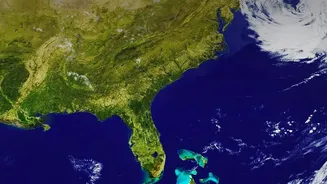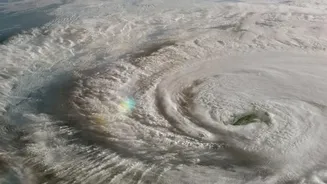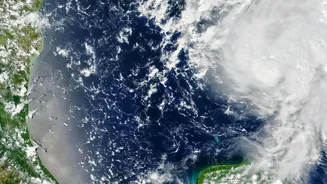







For decades, India's east coast braced for the worst of cyclone season, with the Bay of Bengal known as a storm hotbed. But a new, worrying trend is emerging in the historically calmer Arabian Sea, prompting urgent questions.
A Tale of Two Seas
Historically, the Bay of Bengal
has been the far more active basin for cyclonic storms. On average, it has experienced four to five times more cyclones than the Arabian Sea. This is due to a combination of factors, including higher sea surface temperatures, a larger inflow of fresh water from rivers which keeps the surface warm, and favourable wind patterns. As a result, India's disaster management apparatus, forecasting models, and coastal community preparedness have long been focused primarily on the eastern seaboard, treating the west coast as a region of lower, though not non-existent, risk. This long-standing pattern created a clear 'hotspot' for cyclonic activity, shaping everything from infrastructure planning to evacuation protocols for states like Odisha, Andhra Pradesh, and West Bengal.
The Arabian Sea's Alarming Shift
In recent years, however, that historical balance has begun to change. Scientists have observed a significant uptick in both the frequency and intensity of cyclones forming in the Arabian Sea. Post-monsoon cyclones, in particular, have shown a clear increasing trend. Studies indicate that while the Bay of Bengal has not necessarily become calmer, the Arabian Sea has become dramatically more active. Storms that form there are now more likely to intensify into 'very severe' or 'extremely severe' cyclonic storms. This shift challenges long-held assumptions and means that India's west coast, from Gujarat down to Kerala, is facing a threat level it has not been accustomed to or prepared for in the same way as the east coast.
What's Driving This Change?
The primary driver behind this dangerous shift is climate change, specifically the warming of the ocean. The Arabian Sea's surface temperatures are rising faster than those of many other ocean basins. Warmer water is rocket fuel for cyclones, providing the heat and moisture needed for them to form, grow, and intensify. A sea surface temperature of 26.5°C is typically required for cyclone formation; the Arabian Sea is now exceeding this threshold more frequently and for longer periods. Furthermore, changes in large-scale atmospheric patterns and a weakening of wind shear—the difference in wind speed and direction between the upper and lower atmosphere—are creating a more permissive environment for storms to strengthen without being torn apart.
Not Just More Storms, But Different Storms
The changes go beyond mere numbers. The character of the storms is also evolving. Cyclones in the region are now showing a greater tendency for 'rapid intensification'—a sudden and dramatic increase in wind speed in a short period, which makes them much harder to forecast accurately. This was observed with cyclones like Tauktae in 2021. Additionally, storms are tending to move more slowly and linger over coastal areas, dumping massive amounts of rainfall and causing widespread flooding long after landfall. They are also retaining their intensity for longer after hitting the coast. This combination of more intense winds, slower movement, and extreme rainfall makes modern cyclones a far more destructive and complex challenge.
The Challenge for India's Coasts
This new reality poses a dual challenge for India. On one hand, the eastern coast continues to face its traditional threat from the Bay of Bengal. On the other, the western coast must now rapidly adapt to a level of cyclonic risk it has not previously faced. This requires a significant rethink of preparedness strategies. Forecasting agencies like the India Meteorological Department (IMD) need to refine their models to account for rapid intensification in the Arabian Sea. Coastal infrastructure on the west coast, which may not have been built to the same resilience standards as in the east, is now more vulnerable. Evacuation plans, shelter capacity, and public awareness campaigns in states like Maharashtra, Gujarat, and Karnataka must be urgently scaled up to match the escalating threat.