

Our Cosmic Neighborhood Watch
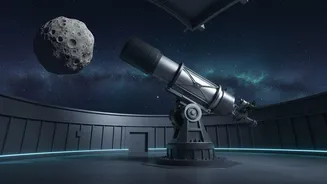
Earth orbits the sun in a cosmic shooting gallery. We are accompanied by millions of asteroids and comets, known as Near-Earth Objects (NEOs), that are remnants from the formation of our solar system. While most of these objects are small and burn up
harmlessly in our atmosphere, some are large enough to pose a significant threat if their orbits intersect with ours. An impact from an asteroid just 140 meters wide could devastate an entire city. This is why NASA was directed by the U.S. Congress to find 90% of these city-killer-sized NEOs. The 2013 Chelyabinsk meteor event, which injured hundreds in Russia from an object only 20 meters wide, served as a stark reminder that even smaller, undetected rocks can cause significant damage. Planetary defense, therefore, doesn't start with building weapons; it starts with finding and tracking these potential threats.
Meet the Celestial Sentinels
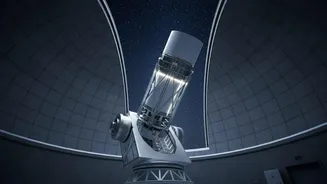
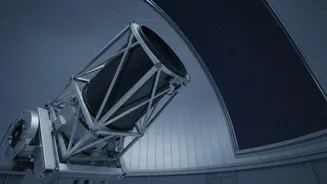
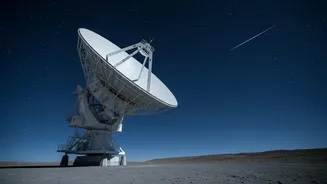
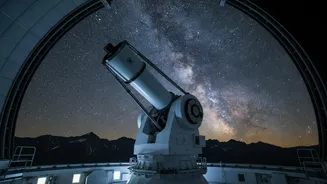
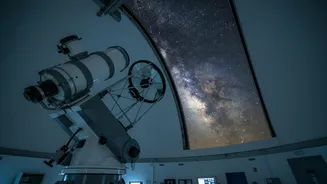
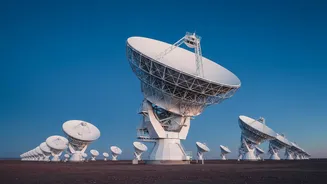
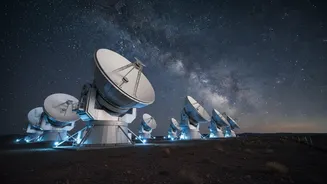
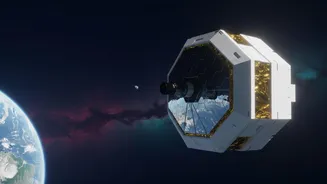
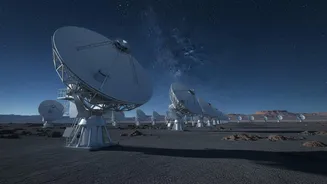
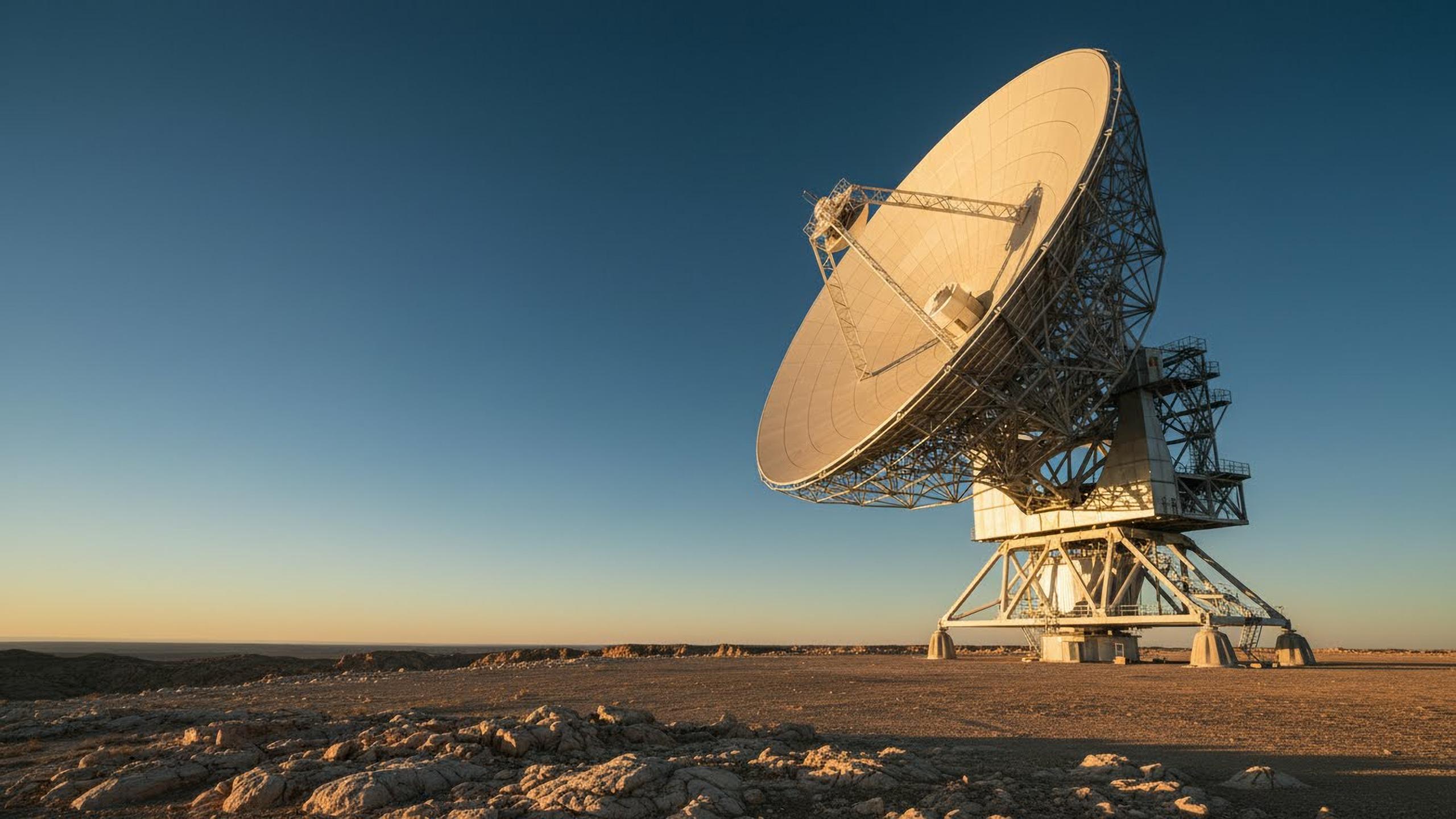
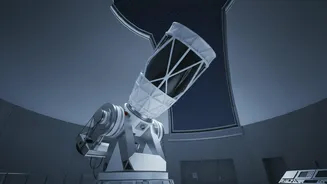
A global network of ground and space-based observatories acts as our planet's early-warning system. Telescopes like Pan-STARRS in Hawaii and the Catalina Sky Survey in Arizona continually scan the night sky, taking multiple images minutes apart to spot the faint movement of an NEO against the backdrop of fixed stars. These efforts are coordinated through organizations like the Minor Planet Center, which acts as a global clearinghouse for all asteroid and comet observations. The next great leap in detection is the upcoming NEO Surveyor mission. Scheduled for launch in 2026, this space-based infrared telescope will be able to spot asteroids that are difficult for ground-based optical telescopes to see, such as dark asteroids or those hidden in the sun's glare. By operating in space, NEO Surveyor will fill a critical gap in our ability to find potentially hazardous objects.
From Detection to Data
Spotting an asteroid is just the first step. To assess its risk, scientists need to gather a wealth of data. Tracking systems measure an object’s trajectory, speed, size, shape, and rotation. This orbital data is fed into sophisticated systems like NASA's Sentry and Scout, which calculate potential Earth impact risks for the next 100 years. But perhaps the most critical piece of information is the asteroid's composition. Is it a solid chunk of iron, a loosely-packed pile of rubble, or something in between? Knowing what an asteroid is made of is essential for planning any potential deflection mission. The porosity and density of an asteroid are more significant than its raw composition in determining how it will react to a kinetic impact. This detailed characterization is what transforms a simple detection into actionable intelligence.
The Planetary Defense Playbook
All this data directly informs our planetary defense playbook. If a hazardous asteroid is identified with enough lead time—ideally, years or decades—several deflection techniques could be employed. The most tested method is the kinetic impactor, a strategy proven by NASA's DART (Double Asteroid Redirection Test) mission in 2022. DART successfully crashed a spacecraft into the small asteroid moonlet Dimorphos, altering its orbit by 33 minutes and proving that we can physically nudge an asteroid off a collision course. The success of such a mission relies entirely on precise targeting data provided by tracking systems. Knowing the asteroid's mass, momentum, and structure allows mission planners to calculate the exact force needed for a successful deflection without accidentally breaking the object into multiple hazardous pieces.
A Blueprint for the Solar System
The data gathered for planetary defense has benefits that extend far beyond avoiding impacts. These detailed observations of asteroids provide invaluable scientific insights into the formation and evolution of our solar system. Since asteroids are pristine remnants from 4.6 billion years ago, studying their composition helps us understand the building blocks of planets, including our own. Furthermore, as humanity looks to expand its presence in space, this same data could be used to identify asteroids for resource mining. Tracking these celestial bodies is not just about defending our present; it is also about cataloging a library of cosmic objects that hold the secrets to our past and potential resources for our future.