





A Tree's Inner Plumbing
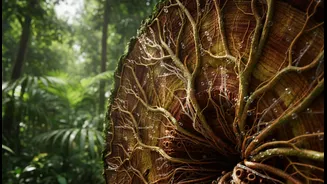
To understand how a tree survives a drought, we need to look inside its trunk. Every tree has a sophisticated internal plumbing system called the xylem. This network of tiny vessels is responsible for transporting water and nutrients from the deep roots
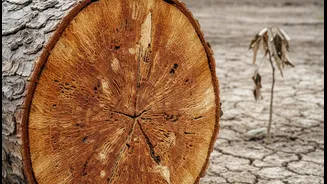
all the way up to the highest leaves, defying gravity every second of the day. This process is known as hydraulic function. When water is scarce, this system comes under immense stress. The tension on the water column increases, creating a risk of air bubbles, or embolisms, forming within the xylem. Much like an embolism in a human blood vessel, these air bubbles can block the flow of water, effectively causing the tree to die of thirst from the inside out. Scientists refer to these internal characteristics—how efficiently a tree can move water and how well it can resist these deadly air bubbles—as its hydraulic traits.
The Skyscraper vs. The Bungalow
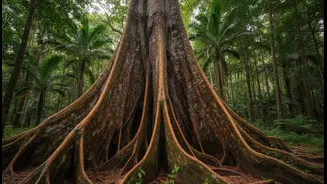
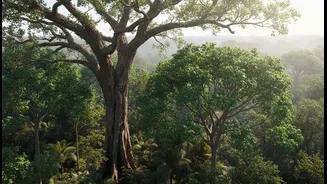
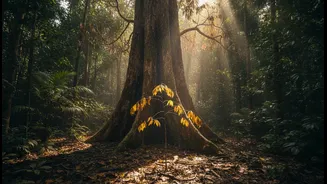
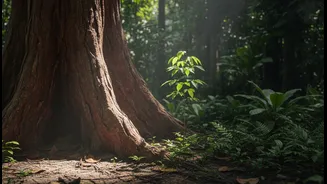
For decades, scientists believed that the tallest trees in the rainforest were the most vulnerable to drought. The logic seemed simple: pumping water hundreds of feet into the air is an enormous physical challenge, and this stress should make them more susceptible to hydraulic failure. However, recent research has turned this assumption on its head. A study published in early July 2026 revealed that giant dipterocarp trees in Southeast Asia have evolved remarkable adaptations to cope with their height. Researchers found that these giants have wider xylem vessels near their base, which reduces resistance and makes it easier to transport water over long distances. Their leaves at the top are also better adapted to dry conditions. In contrast, smaller understorey trees operate with a different strategy. Living in the shade of the canopy, they have a more conservative approach. Studies have shown they often have a greater resistance to embolism and can adjust their hydraulic systems to take advantage of changing conditions, such as increased light when a canopy tree dies. They occupy a distinct hydraulic niche, prioritizing safety and flexibility over the tall trees' strategy of high-efficiency transport.
Putting Trees to the Test
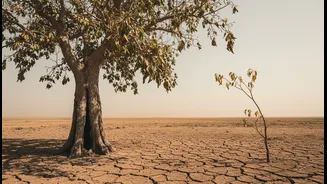
To truly understand these dynamics, scientists conduct large-scale drought experiments. In some of the longest-running experiments, researchers build massive panels to intercept rainfall over a patch of forest, artificially creating long-term drought conditions. By monitoring the trees within these plots, they can observe firsthand how different species and sizes respond to sustained water stress. One key finding from these experiments is that tree death from drought is primarily a hydraulic issue, not one of starvation. For a long time, it was thought that trees closed the pores on their leaves (stomata) to save water, which would stop them from absorbing CO2 and cause them to starve. But experiments have shown that even drought-stressed trees often have sufficient sugar reserves; their ultimate failure is the collapse of their water transport system. These experiments have confirmed that while tall trees are at great risk of hydraulic deterioration, their smaller counterparts show a surprising ability to adapt.
Why This Matters for India's Forests
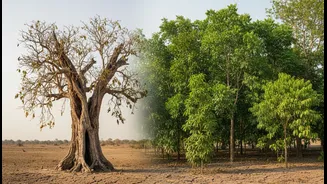
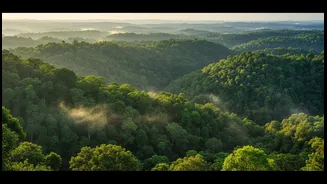
These scientific insights are not just academic. For a country like India, with vast and vital tropical forests in the Western Ghats and Northeast, understanding drought risk is crucial for conservation. As climate change leads to more erratic monsoons and hotter droughts, the composition of our forests could change dramatically. The research shows that simply looking at a tree's height is not enough to predict its fate. Instead, its internal hydraulic traits are the key indicators of resilience. Recent studies have even challenged the idea that tall trees suffer more during drought, finding their growth rates are not more negatively affected than smaller trees during recent El Niño events. This complex interplay between size, species, and hydraulic strategy determines which trees will survive and which will perish, ultimately shaping the future of the entire ecosystem. Knowing which species are most at risk allows for more targeted conservation efforts and better predictions for how these essential carbon sinks will fare in a drier world.