





Your Pre-Monsoon Investment
The best time to prepare for power cuts is before the first major storm. A small investment now can save you from costly repairs and replacements later. Your first line of defence is a good quality surge protector. Many people mistake these for simple
multi-plug power strips, but they are not the same. A power strip only adds more outlets, while a surge protector is designed to absorb and divert the excess voltage from a power surge, protecting the devices plugged into it. When shopping, look for a high joule rating (over 1,000 is good for sensitive electronics) as this indicates how much energy it can absorb. For critical devices like your computer or Wi-Fi router, consider an Uninterruptible Power Supply (UPS).
The Critical Role of a UPS
An Uninterruptible Power Supply (UPS) is more than just a surge protector; it's a device with a built-in battery. When the power goes out, the UPS instantly switches to battery power, keeping your connected devices running for a short period. This is crucial not just for convenience but for the health of your electronics. For a desktop computer, it gives you several minutes to save your work and shut down properly, preventing data loss and potential hardware damage. For your Wi-Fi router, it can mean the difference between staying online during a brief outage or being cut off completely. Even a small UPS can keep your internet connection alive for an hour or more, a significant advantage when you're waiting for the storm to pass.
When the Storm Rolls In
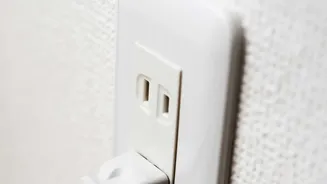
As the sky darkens and the storm begins, it's time for immediate action. The single most effective way to protect an electronic device is to unplug it from the wall. Power surges caused by lightning or grid fluctuations can travel through wiring and fry sensitive circuits. Prioritise unplugging expensive, non-essential equipment first. This includes your television, sound system, gaming consoles, and microwave oven. While it might seem like a hassle, it’s a guaranteed way to isolate them from any electrical chaos. It's also wise to move valuable electronics away from windows where heavy, wind-driven rain could lead to water seepage and damage.
Managing Your Major Appliances
Big appliances need special attention. For your air conditioner, it's best to turn it off completely at the main switch or breaker during a severe storm. The compressors in AC units are particularly vulnerable to damage from power fluctuations. The most important rule for your refrigerator and freezer is to keep the doors closed. An unopened fridge can keep food cool for about four hours, while a full freezer can maintain its temperature for up to 48 hours. Opening the door, even for a moment, lets the cold air out and speeds up the warming process. Resist the temptation to check on your food until the power is reliably back on.
The Moment Power Returns
Often, the most dangerous moment for your electronics is not when the power goes out, but when it comes back on. The restoration of power can create a significant surge as the electrical current rushes back into the lines. This is why it's crucial to not immediately plug everything back in the second the lights return. Wait at least five to ten minutes for the voltage to stabilise across the grid. When you do start plugging things in, do it one at a time. Start with a lamp or a less sensitive device, and then gradually reconnect your more expensive electronics. This staggered approach prevents a sudden, large demand on your home's wiring and gives you a final layer of protection against any lingering instability in the power supply.