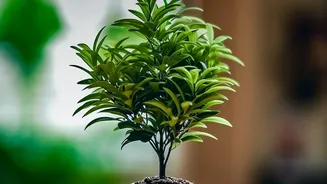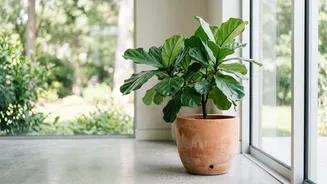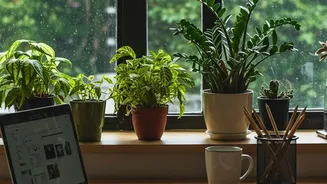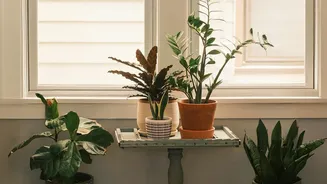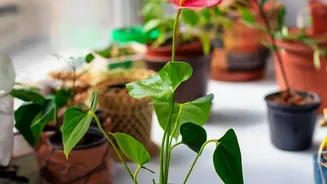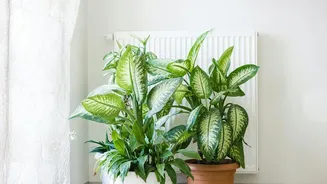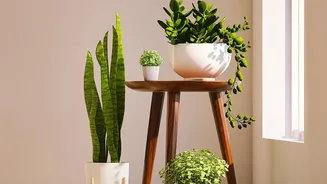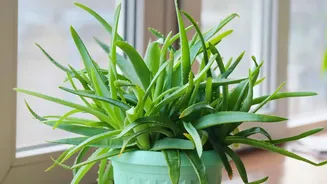







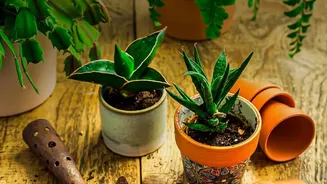
Ever notice your favourite houseplant starting to lean, looking a bit lopsided as it stretches toward the nearest window? This is a plant's natural survival instinct at work, but it can lead to uneven growth. Here’s why it happens.
The Science of the Lean: What is Phototropism?
That determined lean
towards a light source has a scientific name: phototropism. It's a plant's fundamental mechanism for survival, ensuring its leaves can capture as much light as possible to perform photosynthesis—the process of converting light into energy. This response is driven by a powerful plant hormone called auxin. Auxins are produced at the tip of the plant's stem and are sensitive to light. When light shines on a plant from one direction, the auxins move to the shaded side of the stem. This concentration of hormones on the darker side stimulates the cells there to grow longer and faster than the cells on the sunny side. The result is that the stem bends and grows toward the light.
The Downside of a One-Sided View
While phototropism is a brilliant survival strategy, in the static environment of a living room it can cause problems. When a plant consistently receives light from only one source, like a single window, the growth becomes unbalanced. The side facing the light will be lush and dense with leaves, while the side facing away from the light can become sparse, weak, and 'leggy'—with long, stretched-out stems. Over time, this lopsided growth not only looks less appealing but can compromise the plant's structural integrity, making it more prone to toppling over or stem breakage. It can also affect water distribution in the soil, as the more active, sun-facing side may dry out faster.
Rotation: The Simple Solution for Balanced Growth
The easiest way to counteract one-sided growth is simply to rotate your potted plants. This simple action ensures that all parts of the plant get their turn in the sun. By distributing light exposure evenly, you encourage the plant to grow straight and strong, developing a full, symmetrical shape. Regular rotation promotes more robust stems, fuller foliage all around, and better overall health. It also improves air circulation around the entire plant, which can help reduce the risk of pests and fungal diseases that thrive in stagnant conditions. Plus, the act of turning your plant provides a regular opportunity to inspect it for any issues like pests or dead leaves.
How and When to Rotate Your Plants
There's no single strict rule for rotation frequency, but a great habit to adopt is giving your plant a quarter turn each time you water it. This makes it easy to remember and provides consistent, gentle adjustment. For most plants, a quarter turn every one to two weeks is sufficient. Plants in lower light conditions might benefit from more frequent rotation, perhaps weekly, as they are more prone to stretching. Conversely, plants in very bright, even light may only need a turn every few months. The key is consistency. Always try to turn the plant in the same direction to ensure it completes a full 360ndegree rotation over time. If a plant is already severely leaning, you can turn it 180 degrees to face the bare side toward the light, which will gradually encourage it to straighten out.
Are There Exceptions to the Rule?
While most foliage plants benefit from rotation, there are a few exceptions to consider. Some experts argue that constant rotation isn't always necessary and can prevent a plant from settling into its environment. If a plant has even growth and seems healthy, you don't need to force a rotation schedule. A more critical exception involves flowering plants like orchids and Christmas cacti. Once these plants have set their buds, it's best not to rotate them. A sudden change in light direction can stress the plant and cause it to drop its buds before they have a chance to bloom. Wait until the flowering cycle is complete before you resume any rotation routine.