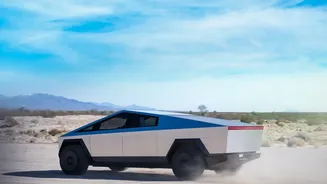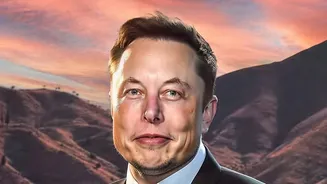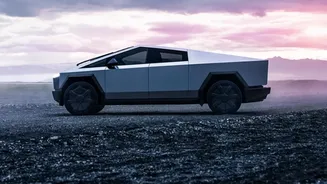



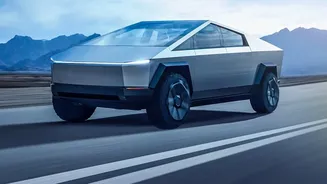
In a surprising reversal, Elon Musk announced Tesla will extend Cybertruck production through summer 2027. This move adds a few more months to the controversial pickup's lifespan, which was previously slated to end in mid-2027.
A Sudden Change of Plans
Just days after confirming
that Tesla would wind down Cybertruck production in mid-2027 to make way for its autonomous Cybercab, CEO Elon Musk has altered the timeline. In a post on his social media platform X, Musk stated that production will now continue "through the end of summer 2027." The reason given for this extension is to work through more of the massive order backlog for the electric pickup. This decision comes after a period of whiplash for customers, during which Musk noted the order rate far exceeded production capacity and that Tesla would have to refund deposits for many people. The extension offers a sliver of hope for those still in the queue, adding approximately two to three more months to the production run.
Context of the Cybertruck's Rocky Road
The Cybertruck's journey has been tumultuous since its 2019 unveiling. Originally planned for a 2021 launch, it faced multiple delays, with first deliveries not happening until late 2023. The vehicle's polarising stainless-steel design, higher-than-expected pricing, and quality control issues have been persistent topics of discussion. Despite initial projections of producing 250,000 units annually, actual sales have been significantly lower, with an estimated 63,000 delivered in total since its launch. The plan to end its production run after just four years came as a shock to many, especially given the long life cycles of the now-discontinued Model S and X.
What the Extension Means for Buyers
For the many thousands of reservation holders, the news is a mixed bag. The extended schedule, coupled with plans to add an extra production shift, increases the chance of receiving their vehicle. However, the reprieve is brief, and an order is not a guarantee. Musk has been clear that many deposits will still likely be refunded. Compounding the issue for some is Tesla's decision to simplify its final production months by discontinuing the lower-priced All-Wheel-Drive and Premium All-Wheel-Drive trims, leaving only the top-tier 'Cyberbeast' model available to order. This leaves customers with a choice: upgrade to a more expensive model if offered, or risk their order being cancelled as the production line's end date approaches.
A 'Sentimental' Decision
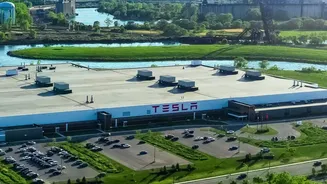
Interestingly, Musk admitted the decision to extend production was not based on maximising profit. "This is not the smartest move from a profit-maximizing standpoint btw," he wrote on X, "but there must be some room in this world for sentimentality or what's the point?" This suggests the extension was influenced by backlash from fans and the vehicle's cult status. Despite the extension, the ultimate fate of the Cybertruck's production line remains unchanged. The factory space at Gigafactory Texas is still earmarked for the mass production of the Cybercab, a key part of Tesla's strategic pivot towards becoming an AI, robotics, and autonomous transport company.
The Bigger Picture for Tesla
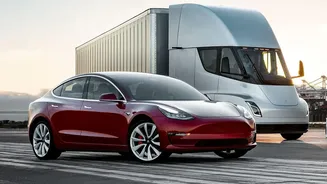
The Cybertruck saga highlights a major strategic shift within Tesla. The company is moving away from expanding its consumer vehicle lineup and is instead focusing resources on projects like the Cybercab and the Optimus robot. Once the Cybertruck is phased out, Tesla's consumer offerings will shrink back to the Model 3 and Model Y, which were introduced in 2017 and 2020, respectively. While the Cybertruck extension provides a temporary boost for the company's vehicle manufacturing, the long term vision is clearly fixed on an autonomous future. This move redirects immense manufacturing and engineering resources toward the Cybercab, which the company believes holds greater long term value.