




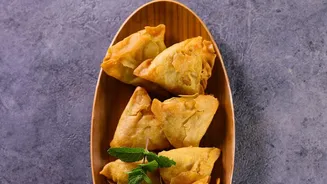
The Golden Rule: A Thicker Batter is Better
The single biggest difference between traditional deep-frying and air-frying pakoras lies in the batter. For deep-frying, a slightly thinner batter works because the hot oil instantly creates a crust, holding everything together. In an air fryer, a runny
batter will simply drip through the basket, creating a mess and leaving your vegetables bare. The secret is to create a much thicker, stickier batter. Start by mixing your besan (chickpea flour) and spices with the chopped vegetables before adding any water. Onions, in particular, will release their own moisture, which helps bind the flour. Only then should you add water, one tablespoon at a time, until you have a dense mixture that clings firmly to the vegetables with no pooling at the bottom of the bowl.
Embrace a Little Oil for a Lot of Crunch
While the goal is to use minimal oil, “minimal” does not mean “zero.” A small amount of oil is crucial for achieving that familiar golden-brown colour and satisfying crunch. Without it, air-fried pakoras can turn out dry and pale. There are two key moments to use oil. First, mix about a teaspoon of oil directly into your thick batter. This helps make the inside of the pakora softer and prevents it from becoming too dense. Second, lightly spray or brush the pakoras with oil just before you start cooking and again when you flip them halfway through. This external coating is what allows the surface of the besan to “fry” in the hot circulating air, creating a deliciously crisp shell.
Preheat for a Perfect, Immediate Sizzle
Think of the air fryer basket as your kadai. You would never drop pakoras into cold oil, and the same principle applies here. Preheating your air fryer for a few minutes at the target temperature (typically around 180°C to 200°C) is essential. Placing your batter-coated vegetables into a hot basket ensures they start cooking immediately, helping the surface set quickly and giving you a crispier final product. This step prevents the pakoras from steaming in a slowly heating environment, which can lead to a softer, less satisfying texture.
Give Them Space: Don’t Crowd the Basket
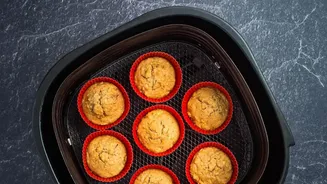
Overcrowding is the enemy of crispiness. Air fryers work by circulating hot air around the food. If you pack the pakoras tightly together, you block that airflow. Instead of frying, the trapped moisture will cause the pakoras to steam, resulting in a soggy outcome. Always place your pakoras in a single layer with ample space between each one. If you are making a large batch, it is far better to cook them in two or three smaller batches than to try and squeeze them all in at once. For extra assurance against sticking, you can line your basket with a lightly greased, perforated parchment paper sheet designed for air fryers.
The Mid-Cook Flip for Even Browning
Because the primary heat source in an air fryer comes from the top, flipping your pakoras halfway through the cooking process is non-negotiable for achieving an even cook and uniform crispiness. Most recipes recommend a total cooking time of 12-15 minutes. A good strategy is to cook for about 7-8 minutes, then pause to open the basket, flip each pakora individually, and give the new top side a light spray of oil before continuing to cook until golden brown. Some experts even suggest a two-temperature method: cook at a lower temperature like 180°C for about 10 minutes to cook the inside, then increase to 200°C for the last 5 minutes to get them extra crispy.
Choose Your Vegetables Wisely
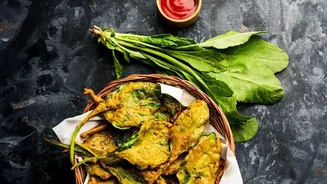
While you can make pakoras from a wide variety of vegetables, some are better suited for air-frying than others. Drier vegetables like onions, potatoes, spinach, and cauliflower work exceptionally well. Vegetables with very high water content, such as tomatoes or zucchini, should be avoided as they can release too much moisture and make the pakoras soggy. When prepping your vegetables, aim for thin, uniform slices or shreds. For onions, thin juliennes are perfect. For potatoes, grating them or cutting them into thin matchsticks helps them cook through quickly and evenly.