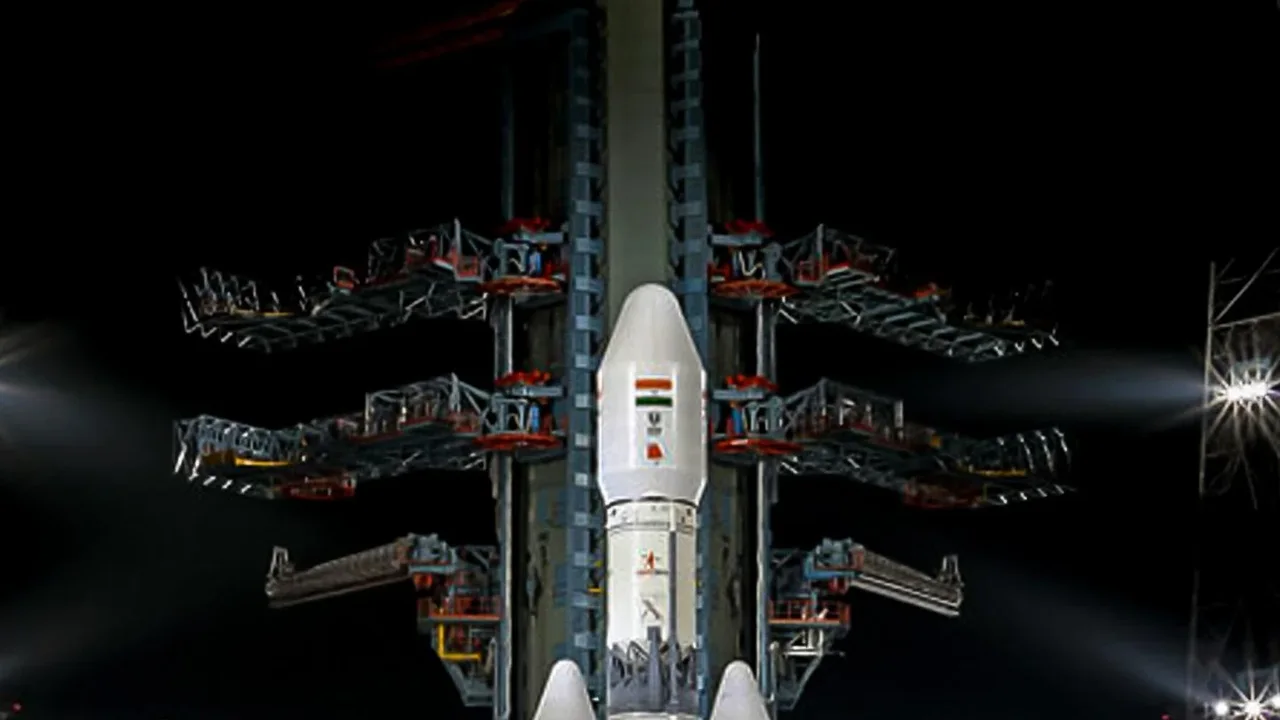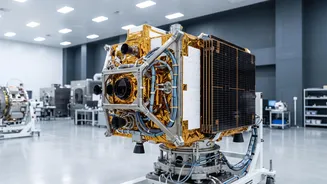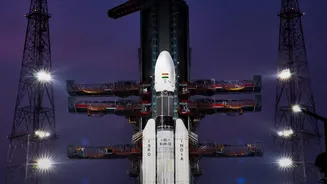






The Official Word: ISRO Remains Public
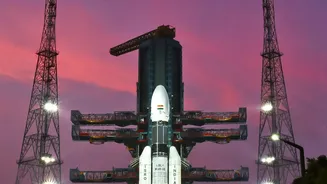
In response to concerns from employees and public speculation, both ISRO and government officials have issued clear statements in early September 2026. ISRO Chairman V Narayanan and Union Minister Jitendra Singh have categorically denied any plans for
privatisation. They clarified that ISRO will continue to be a government organisation and India's main institution for advanced space research, planetary exploration, and strategic missions. The recent policy shifts are not about diminishing ISRO's role but about expanding the entire Indian space ecosystem to make it globally competitive.
The Real Story: A New Space Ecosystem
The major change, initiated in 2020 and formalised by the Indian Space Policy 2023, is the deliberate opening of the sector to private companies. The government's goal is to grow India's share of the global space economy from around 2% (valued at about $8.4 billion) to a target of $44 billion by 2033. To manage this, a new regulatory body, the Indian National Space Promotion and Authorisation Centre (IN-SPACe), was created. IN-SPACe acts as a single-window agency to authorise, promote, and supervise the activities of non-governmental entities (NGEs), from building rockets and satellites to using ISRO's facilities. This move is designed to transform the industry from a 'supply-driven' model led by ISRO to a 'demand-driven' one where private innovation can flourish.
From Launch Vehicles to Data Analytics
For decades, private industry's role was largely limited to being component suppliers for ISRO. Today, a new wave of over 400 space startups is changing that paradigm. These companies are venturing into every part of the value chain. Firms like Skyroot Aerospace and AgniKul Cosmos are developing their own launch vehicles to send small satellites into orbit. Others, such as Pixxel and Dhruva Space, are focused on building satellite constellations for Earth observation and communication. A third, rapidly growing vertical is in downstream applications, where companies like SatSure use satellite data and AI-powered analytics to provide 'decision intelligence' for sectors like agriculture, finance, and environmental management.
The New Frontier for Space Careers
This commercial boom is creating a diverse job market that extends far beyond traditional aerospace engineering. While ISRO remains a prestigious employer, opportunities are exploding in the private sector. High-demand roles now include satellite data analysts, aerospace software engineers, robotics experts, mission operations specialists, and even space policy and law professionals. Companies are actively hiring for skills in remote sensing, GIS, AI and machine learning, and cybersecurity for space systems. The rise of well-funded private players has also made salaries more competitive, with junior roles at startups often starting in the Rs. 10-18 lakh per annum range. This diversification means a career in the space industry is no longer limited to a few specialists who clear ISRO's highly competitive exams.
ISRO's Evolving Role as a Mentor
With private companies stepping in to handle routine manufacturing and mature technologies, ISRO is recalibrating its focus. The agency can now dedicate more of its scientific talent and resources to frontier research and development. This includes pioneering work on next-generation launch systems, deep-space missions to Venus and Mars, the Gaganyaan human spaceflight programme, and building the Bharatiya Antariksh Station. In this new model, ISRO acts as a mentor, transferring technology and providing its world-class infrastructure to help the private sector scale up. Essentially, ISRO is moving from doing everything itself to leading a national team, fostering an environment where public and private sectors grow together.