





Clarifying the New Space Doctrine
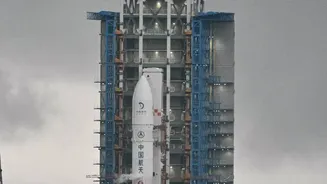
The government's announcement isn't about maintaining the status quo; it's about redefining roles in an expanding ecosystem. ISRO will continue to be the nation's premier institution for advanced research and development, focusing on frontier missions
like Gaganyaan (human spaceflight), deep space exploration, and next-generation launch systems. The new policy creates a clear division of labour. The Department of Space sets the overall policy, while two other bodies play crucial roles. IN-SPACe (Indian National Space Promotion and Authorisation Centre) acts as a single-window agency to authorise and facilitate private sector activities. Meanwhile, NewSpace India Limited (NSIL), ISRO’s commercial arm, is tasked with commercialising mature technologies and services. This structure is designed to create an “ISRO-led national space ecosystem,” where the agency guides and enables a much larger industrial base.
The Private Sector Is Already Booming
While ISRO focuses on the next frontier, the private sector has been given the mandate to scale up existing capabilities. The numbers tell a powerful story. From just a handful of startups in 2020, India is now home to over 450 private space-tech companies. These firms are working on everything from building launch vehicles and satellite constellations to developing propulsion systems and downstream data applications. This surge is backed by significant policy support, including a framework that allows for 100% FDI in certain areas. The economic ambition is immense: to grow India’s share of the global space economy from its current valuation of around $8.4 billion to a projected $44 billion by 2033. Startups like Skyroot Aerospace, Agnikul Cosmos, and Pixxel are already making headlines, demonstrating that the private space race is well and truly underway.
A New Symbiotic Relationship
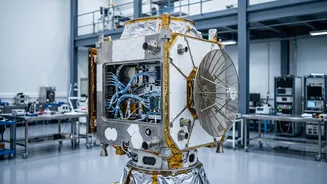
The relationship between ISRO and private industry is not adversarial; it's symbiotic. Instead of competing, they are designed to augment each other. A key part of this strategy is technology transfer. ISRO is actively transferring mature, proven technologies—such as the Small Satellite Launch Vehicle (SSLV)—to the private sector for mass production and commercial deployment. This frees up ISRO’s world-class scientists and engineers from routine manufacturing to concentrate on unsolved challenges. This collaboration is already visible on the ground. ISRO has provided extensive technical support, testing facilities, and range services for private missions, including Agnikul's successful launch of its 3D-printed engine. This partnership allows India to rapidly increase its launch cadence and satellite manufacturing capacity to meet massive future demand, with plans for 200-300 new satellites in the coming years.
Two Distinct Paths for Engineers
For engineers, this dual-track ecosystem creates a wealth of new and diverse opportunities. The career paths are now more distinct than ever. A career at ISRO remains a prestigious choice, focused on fundamental research, complex mission design, and working on strategic national projects with unparalleled job security and prestige. Roles here are for those who want to push the boundaries of science and exploration. In contrast, the private sector offers a different kind of excitement. Startups and established aerospace firms are hiring for roles in product development, agile manufacturing, software engineering, and data analytics. These jobs are often in a faster-paced environment where engineers work on building scalable commercial products, from rockets and satellites to the software that controls them and the applications that use their data. Companies are actively hiring aerospace, mechanical, electronics, and computer science engineers to fill these roles.
Building the Future, Together
This new architecture is the foundation for India’s ambitious long-term space vision. The goals of establishing the Bharatiya Antariksh Station by 2035 and sending an Indian astronaut to the Moon by 2040 are monumental undertakings. Such missions cannot be achieved by ISRO alone. They require a deep and resilient industrial base capable of manufacturing components, managing supply chains, and innovating at scale. By empowering the private sector to handle routine production and commercialisation, ISRO can dedicate its resources to these complex, multi-decade national missions. For an engineer entering the field today, the choice is no longer just about joining the national space agency. It's about deciding which part of a vast, interconnected national endeavour they want to build—the exploratory science or the industrial engine that powers it.