





The Fiery Final Over
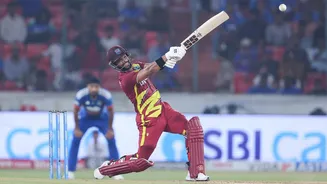
West Indies ultimately defeated India by 24 runs to level the five-match series, but the final moments overshadowed the victory. Chasing a mammoth 248, India’s hopes were gone, needing an impossible 35 runs from the final over with only tail-enders Arshdeep
Singh and Mayank Yadav at the crease. West Indies pacer Shamar Joseph, however, opted for aggression. He unleashed a series of short-pitched deliveries aimed at Arshdeep, who is not known for his batting prowess. One ball struck Arshdeep on the shoulder, causing him to go down in pain and require attention from the physio. Despite the visible discomfort and the game being a foregone conclusion, Joseph continued with the short-ball tactic. Eventually, Indian captain Shreyas Iyer gestured for Arshdeep to retire hurt, bringing the innings and the match to an unconventional close.
The Case Against Joseph
The backlash was immediate. On air, legendary former captain Sunil Gavaskar was audibly dismayed. 'He is aiming at him,' Gavaskar said. 'Why attack the batter when the stumps are right there?'. His sentiment was echoed by many, including former Bengal cricketer Shreevats Goswami. On social media, Goswami labelled the tactic as against the 'spirit of the game'. The core of the argument is that with the match result already secured, the repeated, aggressive targeting of a non-batsman was unnecessary and potentially dangerous. Critics argue it wasn't a tactical battle but a deliberate attempt to intimidate and physically hurt an opponent who posed no threat. They believe Joseph could have easily aimed for the stumps, which Arshdeep was leaving exposed, to end the game without resorting to such hostile bowling.
In Defence of Aggression
However, another school of thought defends Joseph's actions as part and parcel of professional cricket. The argument is simple: if you are on the pitch with a bat, you are a batsman. In modern cricket, the runs scored by tail-enders can be crucial, and they are expected to have at least a basic level of defensive skill. The bouncer is a legal delivery, and bowlers are well within their rights to use it, provided they don't exceed the per-over limit—one in T20Is. Proponents of this view would argue that there's no 'gentleman's agreement' that applies only when the game is nearly over. A fast bowler's job is to be aggressive and take wickets, regardless of who is facing them. They might also point out the hypocrisy often seen where bowling bouncers is fine when your team does it, but unsporting when the opposition does.
The Unwritten Rules of Engagement
This incident taps into a long-standing debate in cricket. Historically, there was an unwritten code among fast bowlers to not target each other with aggressive short bowling, partly out of mutual respect and partly out of self-preservation. That code has eroded over time as the game has become more professional and every run more valuable. While the laws of cricket provide clear rules on what is legal—limiting the number of bouncers per over—the 'spirit of the game' is a subjective grey area. It relies on players and umpires to differentiate between legitimate, hard-fought cricket and actions that are purely intimidatory or malicious. The question here isn't whether Joseph's bowling was legal—it was. The question is whether it was ethical in the specific context of the match.
The Verdict: A Line Was Crossed
So, did Shamar Joseph cross the line? In this instance, the answer leans towards yes. While aggression is a key part of a fast bowler's armoury, its application demands context. India needed 35 runs from six balls with their last pair at the crease; the match was over. Arshdeep had already been hit and was visibly in pain. Continuing to aim short-pitched balls at his body, rather than the undefended stumps, felt less like a winning tactic and more like a punitive measure. It served no real cricketing purpose beyond asserting dominance in a situation where dominance had already been established. It was a moment where the spirit of the game—that unwritten contract of respect between professionals—should have outweighed the letter of the law. While a bouncer is a fair delivery, using it to injure a non-threatening opponent when the contest is dead is poor sportsmanship.