







Step 1: The Pre-Check - Declutter Ruthlessly
Before you can organise, you must declutter. Storage solutions are ineffective if they are just hiding things you don't need. Start by sorting items by category, not by room. For instance, gather all your clothes, books, or kitchenware from every part
of the house into one place. This gives you a clear picture of what you own. Apply the 'one-year rule': if you haven't used an item in the last 12 months and it holds no strong sentimental value, it's time to let it go. Create three distinct piles: Keep, Donate, and Discard. Be honest with yourself about what you truly need versus what you think you might need 'someday'. This initial purge is the most crucial step to reclaiming your space and making any storage system effective.
Step 2: Go Vertical - Use Your Walls
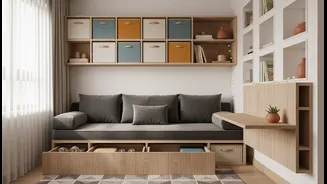
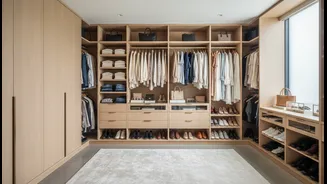
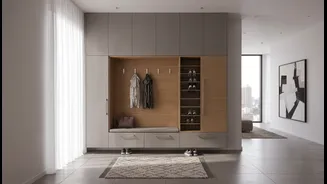
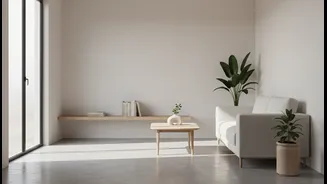
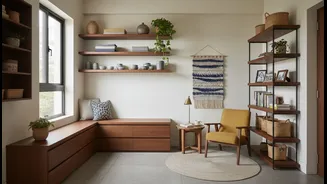
When floor space is limited, the only way to go is up. Most Indian apartments have ceilings between 9 to 10 feet, but people often only use the bottom six feet, wasting valuable real estate. Installing floor-to-ceiling wardrobes or tall, narrow bookshelves can double your storage capacity while using half the floor footprint of multiple low-lying units. Wall-mounted floating shelves are perfect for books, plants, and decor, drawing the eye upward and creating a sense of spaciousness. Don’t forget the often-ignored dead zones, like the space above doors and windows, which can be fitted with a shelf for storing less-frequently used items. Pegboards in the kitchen or entryway are a flexible way to hang utensils, keys, and bags, keeping surfaces clear.
Step 3: Invest in Multipurpose Furniture
In a small flat, every piece of furniture should earn its keep by serving at least two purposes. A sofa-cum-bed is a classic example, providing seating during the day and a bed for guests at night. Beds with hydraulic lift mechanisms are a game-changer, offering a massive, hidden space for bulky items like winter quilts, luggage, and seasonal clothing. An ottoman with built-in storage can serve as extra seating, a footrest, and a place to stash magazines or toys. Similarly, nesting tables can act as a coffee table and be pulled apart for extra surface area when you have company. A foldable dining table that mounts to the wall can free up significant floor space when not in use.
Step 4: Zone and Conquer Hidden Spaces
Think of your home in zones to prevent clutter from spreading. Designate specific areas for categories like work, relaxation, and storage. Beyond the obvious, unlock the potential of hidden storage nooks. The space under your bed is prime real estate; use wheeled containers or vacuum-sealed bags to store off-season clothing and extra linens. In the kitchen, use tiered racks inside cabinets to double your shelf space and invest in pull-out organisers for narrow spaces. Over-the-door organisers are excellent for storing shoes, toiletries, or cleaning supplies without taking up any floor area. Even the space behind a mirror can be converted into a slim cabinet for medicines or accessories.
Step 5: Master the Kitchen and Wardrobe
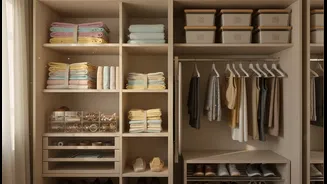
The kitchen and wardrobe are often the most clutter-prone areas in an Indian home. For the kitchen, think about how you use your items. Daily-use appliances like your mixer-grinder should be easily accessible, while rarely-used items can be stored in higher cabinets or lofts. Use drawer dividers for cutlery and tools, and consider a magnetic strip for knives to free up counter space. In the wardrobe, slim hangers can create more space. Consider adding a second rod to double your hanging area. Use labelled boxes on the top shelf (loft) for items you can't part with but don't use often, ensuring you know what's inside without having to pull everything down.