






The Smoke Detectives
For years, the smoke from agricultural burning has been a visible, yet somewhat mysterious, seasonal event. We knew it was happening and that it was bad for local air quality, but tracking its full journey was a challenge. Small, short-lived fires often
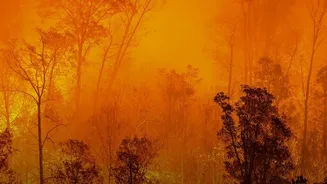
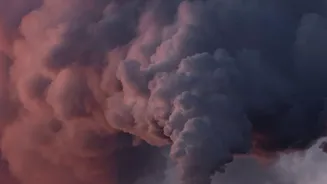
evade satellite detection, making it difficult to build a complete picture. However, a new generation of research is changing that. By combining high-resolution satellite imagery, aircraft flying directly through the plumes, and sophisticated computer models, scientists are now acting like atmospheric detectives. They can trace the chemical fingerprints of smoke from a specific region and follow it as it travels across states, providing a much clearer understanding of its broader impact. This is crucial because, as studies show, these emissions are a major contributor to particulate pollution, sometimes travelling all the way to the Himalayas.
A Cocktail of Pollutants
So, what exactly is in this agricultural haze? It’s far more than just simple soot. The smoke is a complex cocktail of fine particulate matter (like PM2.5), carbon monoxide, and various organic gases. One of the most significant components that researchers are now focusing on is something called 'brown carbon'. For a long time, climate models primarily considered 'black carbon' (soot) as the main light-absorbing, and therefore warming, agent in smoke. However, recent studies have revealed that brown carbon, and particularly a highly absorbent sub-type dubbed 'dark brown carbon', plays a much larger role than previously thought. It absorbs sunlight across a wider spectrum, contributing a warming effect that can be comparable to, or in some cases even exceed, that of black carbon. This discovery means that many climate models may have been underestimating the true climate impact of biomass burning.
A Long and Surprising Journey
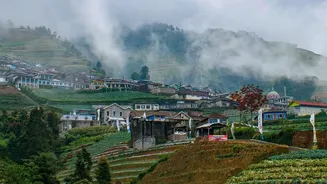
One of the most startling findings from recent tracking efforts is just how far agricultural smoke travels. It is not a purely local problem. Plumes from post-monsoon burning in the Indo-Gangetic Plain have been shown to contribute significantly to air pollution hundreds of kilometres away. Research has established clear links between emissions in Punjab and Haryana and air quality degradation in the western and central Himalayas, while smoke from Bihar and West Bengal impacts the eastern Himalayas. These aerosols can remain in the atmosphere for days, travelling on wind currents and mixing with other pollutants, contributing to the thick regional haze that blankets large parts of the country. A study covering 25 years found that pollution hotspots have expanded across eastern India, driven in large part by this transport of emissions from biomass burning.
From Farm Fields to Cloud Formation
The impact of this smoke isn't limited to ground-level air quality; it fundamentally alters the atmosphere above. The tiny particles within the smoke act as nuclei around which water vapour can condense, directly influencing the formation and properties of clouds. This can change weather patterns, affecting everything from sunlight reaching the ground to rainfall. Furthermore, the discovery that dark brown carbon is a potent warming agent adds another layer of complexity. By absorbing solar radiation, these smoke plumes heat the atmospheric layer they occupy, which can alter regional climate dynamics. Some research has even shown that when smoke mixes with rain, it can deposit nutrients like nitrogen and potassium back onto the land and water, a phenomenon that could have unforeseen ecological consequences as fires become more frequent.
The Air We Breathe, Miles Away
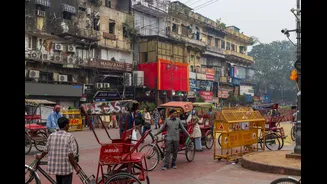
Ultimately, this research connects the dots between rural agricultural practices and urban public health crises. The fine particulate matter (PM2.5) in agricultural smoke is particularly dangerous because the particles are small enough to travel deep into the lungs, triggering asthma and aggravating heart and lung conditions. Studies have directly linked periods of high fire activity with significant spikes in PM2.5 levels in major cities like Delhi, pushing pollution to extreme levels. One study showed that during the post-monsoon season, agricultural burning was responsible for nearly all of the fire activity in Delhi's 'airshed'—the upwind region from which its air originates. This demonstrates that for millions of people, the air they breathe is being directly impacted by fires burning far away, making the smoke a shared, cross-regional challenge.