





The Urban Heat Island Problem
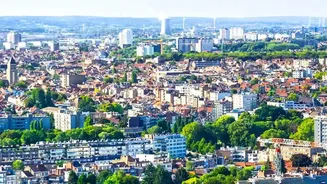
Our cities are getting hotter, and it’s not just due to climate change. Densely packed buildings, concrete roads, and dark-coloured rooftops absorb and retain the sun's heat, creating what is known as the 'urban heat island' effect. This phenomenon can
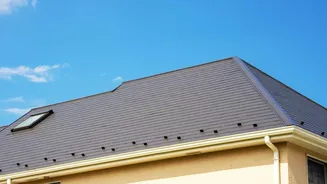
make cities several degrees hotter than surrounding rural areas. For apartment dwellers, especially those on the top floor, this translates into stifling indoor temperatures. Traditional roofs, often made of dark materials like concrete or metal, can reach extreme temperatures in direct sunlight, radiating that heat downwards into living spaces long after the sun has set. This not only makes life uncomfortable but also puts immense pressure on air conditioners, leading to soaring electricity bills and straining the city's power grid.
How Cool Roofs Work Their Magic
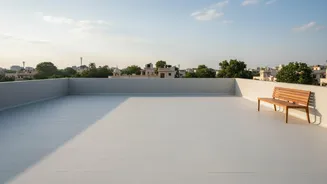
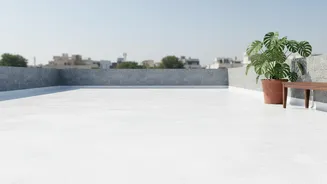
A cool roof is a simple yet powerful solution. It involves applying a liquid-applied reflective coating, which is typically white or light-coloured, to the roof surface. The principle is straightforward: where dark colours absorb sunlight and convert it to heat, light colours reflect it. These special coatings are designed to have high solar reflectance, bouncing sunlight away from the building. They also have high thermal emittance, meaning they efficiently radiate away any heat that is absorbed. Think of it as putting a giant sun-shield on your building. Instead of soaking up the sun’s energy, the roof reflects it back into the atmosphere, preventing it from ever heating up the building in the first place.
Tangible Benefits: Cooler Homes and Lower Bills
The results are impressive and immediate. Studies and real-world pilot projects across Indian cities like Hyderabad, Ahmedabad, and Bhopal have shown that cool roofs can lower indoor temperatures by 2°C to 5°C. For a family living on the top floor without air conditioning, this reduction can be the difference between a restless, sweaty night and a comfortable one. For those with AC, the savings are just as significant. Because the building stays cooler, air conditioners don't have to work as hard or run as long. This can lead to a reduction in energy use for cooling by 20-30%, directly translating to lower monthly electricity bills. These coatings also protect the roof membrane from UV damage and extreme temperature fluctuations, extending its lifespan.
Pioneering Policies in India
Recognising these substantial benefits, several Indian states and cities are actively promoting cool roofs. Telangana became the first state to launch a comprehensive Cool Roof Policy in 2023, setting ambitious targets for its adoption. The policy mandates cool roofs for new government, commercial, and large residential buildings. Following successful pilot programs in cities like Ahmedabad, which saw thousands of low-income homes benefit from cooler temperatures, other states are also integrating cool roofs into their climate action plans. These government-led initiatives, often supported by organisations like the Natural Resources Defense Council (NRDC), are helping to raise awareness and make this technology more accessible to everyone, from large developers to individual homeowners.
Is It a Practical Choice for You?
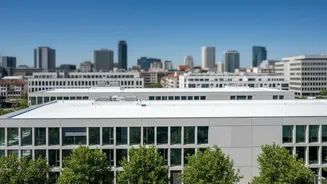
For apartment residents and housing societies, adopting a cool roof is a practical and cost-effective measure. The cost of application can be quite low, especially for simpler lime-based washes or basic reflective paints, with a payback period of just a few years through energy savings. The process involves cleaning the roof surface and applying the coating, which is a relatively non-disruptive process. With a lifespan that can range from 10 to 20 years, these coatings are a long-term investment in comfort and sustainability. As awareness grows, it's becoming an increasingly common upgrade discussed in housing society meetings as a collective solution to a shared problem.