






The New Players in India's Space Race
For decades, space was solely the domain of the Indian Space Research Organisation (ISRO). Today, the landscape is buzzing with new energy, thanks to a wave of private startups. Companies like Hyderabad-based Skyroot Aerospace and Chennai's Agnikul Cosmos,
both founded by former ISRO scientists, are at the forefront of this revolution. Following key policy reforms in 2020 and the creation of IN-SPACe—a single-window agency to promote and authorise private space activities—the sector has seen explosive growth. As of August 2026, India is home to around 440 registered space startups, a massive leap from just one in 2014. This shift from a government-led model to a collaborative public-private ecosystem is setting the stage for India to capture a larger share of the global space market.
Democratising Access to Space
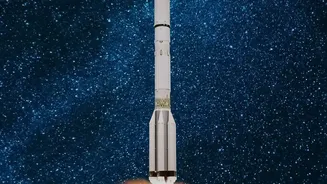
The most immediate impact of commercially viable private rockets is a dramatic reduction in the cost and time required to send satellites into orbit. Think of it like the transition from expensive mainframe computers to affordable personal computers; private rockets are set to do the same for space access. By using innovative manufacturing techniques like 3D-printed engines and all-carbon-fibre structures, companies like Skyroot and Agnikul are making launch services more modular, frequent, and affordable. This 'democratisation' means that smaller companies, universities, and research institutions can now realistically plan to launch their own satellites, something previously unthinkable due to prohibitive costs and long waiting times. The government has quantified this emerging cadence, with plans for two private commercial launches in fiscal year 2026-27 and more than six in the following year.
A Boom for the Satellite-Driven Economy
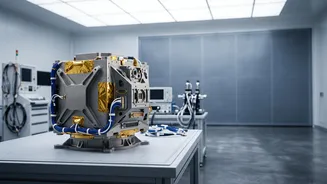
Cheaper launch services will directly fuel a boom in downstream applications that rely on satellites. This extends far beyond just telecommunications. Startups are developing satellite constellations for high-resolution Earth observation, which can transform sectors like agriculture through precise crop monitoring and weather prediction. It also enhances disaster management by providing real-time data for cyclone forecasting and response, which has already helped significantly reduce mortalities. Other critical areas include infrastructure monitoring, urban planning, and expanding broadband connectivity to remote and rural areas, which accelerates digital and financial inclusion. Companies like GalaxEye are pushing the envelope with advanced satellites that can capture clear images through clouds and at night, providing crucial data for defence and climate monitoring.
Fuelling a High-Tech Job Market
The growth of a private space industry is a powerful engine for creating high-skilled jobs. This isn't limited to just aerospace engineers and rocket scientists. The expanding ecosystem requires specialists in software development, data science, artificial intelligence, robotics, electronics, and advanced materials. The sector already supports a significant number of jobs, and as it grows, it will foster entire industrial clusters dedicated to space technology. States like Karnataka and Tamil Nadu are already rolling out policies to attract billions in investment and create dedicated space parks and manufacturing hubs, aiming to generate thousands of high-value jobs. This not only boosts local economies but also helps retain top engineering talent within the country.
Strengthening India's Global and Strategic Standing
A robust domestic launch industry has significant geopolitical benefits. It provides India with sovereign launch capabilities, reducing reliance on foreign providers and enhancing national security. This strategic autonomy is crucial in a world where access to space can be leveraged during geopolitical crises. Furthermore, becoming a reliable, low-cost hub for launching satellites strengthens India's position as a technological partner for nations in the Indo-Pacific and the Global South. With its space economy projected to grow from around $9 billion today to over $40 billion in the next decade, India is not just participating in the global space economy; it is positioning itself to become a leader. Success will hinge on maintaining a consistent launch schedule and proving commercial reliability on the world stage.