





The Traditional Airport Obstacle Course
For decades, air travel has been notoriously difficult for families. The journey from the curb to the gate often feels like a parental endurance test: navigating long security queues with restless toddlers, searching for a clean and private space to change
a diaper, and trying to keep children entertained in crowded gate areas with limited seating and even fewer distractions. This environment, filled with stress and constant motion, is challenging for any traveler, but it’s particularly taxing for parents and caregivers trying to manage luggage, strollers, and the unpredictable needs of young children. The result is an experience that families often dread rather than anticipate, starting their holiday or visit on a note of exhaustion before the plane even takes off.
A New Generation of 'Kidports'
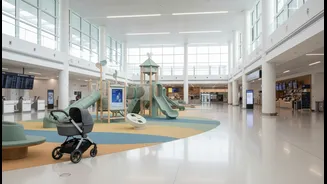
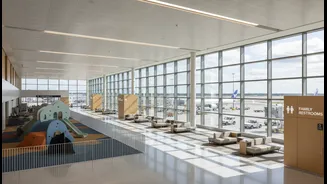
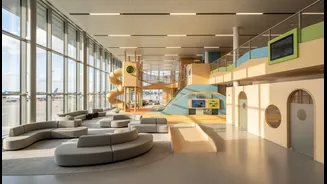
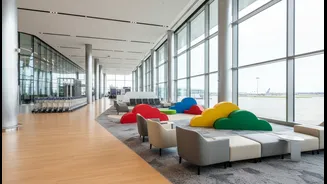
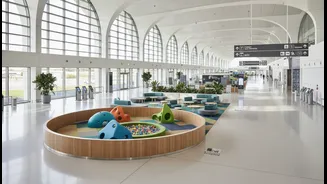
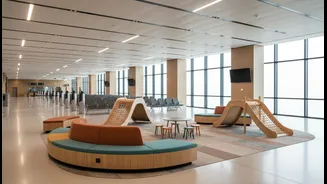
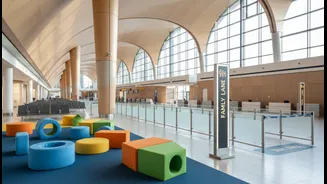
A new design philosophy is taking hold in airports worldwide. Global hubs like Singapore's Changi (SIN) and Doha's Hamad International (DOH) are leading the charge, redefining the pre-flight experience. Changi, for instance, offers everything from a butterfly garden and movie theatre to elaborate playgrounds and the world's tallest indoor waterfall. Hamad Airport features multiple activity nodes with climbing frames, toys, and internet access to keep kids engaged. This trend extends beyond just play. Dedicated family lanes at security, complimentary stroller rentals, and private, well-equipped nursing rooms are becoming more common. These features collectively transform the terminal from a place of transit into a destination in its own right, where a family's journey can begin with comfort and even a bit of fun.
It's Not Just About Being Nice
While these amenities are a welcome relief for parents, the motivation behind them is rooted in smart business strategy. Airports generate a significant portion of their income from non-aeronautical revenue—that is, money spent on retail, food, and services. The simple commercial logic is that stressed families rush to their gate and spend very little. Conversely, relaxed families with entertained children are more likely to 'dwell' longer in commercial areas. They are more inclined to sit down for a full meal, browse shops, and generally spend more money. A survey by the International Air Transport Association (IATA) found that a majority of parents are more likely to spend on retail and dining if an airport provides adequate family facilities. This makes investing in play areas and family comforts a direct investment in the airport's bottom line.
The 'Stroller Effect': Designing for Everyone
The benefits of family-focused design extend to all passengers through a principle known as universal design. Features created to accommodate strollers—such as wider aisles, ramps instead of stairs, and clearer signage—also improve the experience for passengers in wheelchairs, elderly travelers, and anyone struggling with bulky luggage. The recent emergence of sensory rooms in airports like Bengaluru, Seattle-Tacoma, and Pittsburgh is another powerful example. Initially designed to provide a calm space for children with autism or sensory processing issues, these quiet rooms benefit any passenger feeling overwhelmed by the airport's hectic environment. By designing for the most vulnerable or demanding users, airports inadvertently create a better, less stressful environment for everyone.
Are Indian Airports Keeping Up?
India's major airports are making significant strides. Bengaluru's Kempegowda International Airport (BLR) was recently ranked as one of the world's most family-friendly, lauded for its play areas, easy navigation, and India's first airport sensory room. Delhi's Indira Gandhi International (DEL) recently launched its 'Family@DEL' program, offering dedicated entry gates, check-in counters, and priority security for families across its domestic terminals. Mumbai's Chhatrapati Shivaji Maharaj International Airport (BOM) also offers play areas and baby care facilities. While these hubs are embracing the trend with essential services, they are still on the journey to match the large-scale entertainment and leisure attractions seen at global leaders like Changi. However, the clear focus on reducing family travel stress shows a fundamental shift in passenger experience strategy across the country.