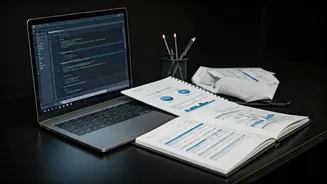









The Age of the Resume Decorator Is Fading
For decades, the path to a great job was clear: get the right degree, list your qualifications, and sprinkle your resume with impressive-sounding roles and responsibilities. This is the world of the "Resume Decorator." They are masters of presentation,
with CVs that are perfectly formatted and full of keywords. They list experiences, but don't necessarily show proof of their impact. In a stable market, this was often enough. Recruiters, faced with hundreds of applicants, used degrees and prior job titles as a filter. But as technology and industry demands change at a breakneck pace, employers are finding that a decorated resume doesn't guarantee a candidate can actually perform in the role. [7] The degree still matters, but it is no longer enough on its own. [4] This has led to a major shift in hiring.
Enter the Portfolio Builder
In contrast, the "Portfolio Builder" operates on a simple premise: show, don't just tell. Instead of merely listing skills, they provide tangible evidence of their capabilities. [5, 24] This could be a collection of code on GitHub for a developer, a series of successful campaign reports for a marketer, or a set of design mockups for a UX professional. [22] This portfolio is a living collection of projects, case studies, and results. [23] It answers the crucial question that every hiring manager has: "Can this person solve my problem?" [8] By focusing on proof of work, Portfolio Builders demonstrate not just their skills, but their commitment, problem-solving ability, and the real-world impact of their efforts. [5]
Why Proof Trumps Polish Now
The shift towards portfolio-driven hiring is happening for several key reasons. Firstly, there is a significant skills gap. As of early 2025, 80% of Indian employers reported prioritising practical skills over formal degrees, with many finding it difficult to find candidates with the necessary expertise. [6, 10, 11] This is especially true in fast-growing sectors like AI, data science, and cybersecurity. [3, 12] Secondly, the rise of AI and automation in recruitment means that initial screenings are often done by algorithms looking for specific, demonstrable skills. [20] A portfolio provides concrete evidence that a human recruiter can then verify. [9] A recent Coursera report highlighted that 99% of Indian employers are moving toward skills-based hiring, with micro-credentials and proven GenAI skills being highly valued. [2] In fact, many said they would prefer a candidate with a GenAI credential over a more experienced one without it. [2]
How to Build a Winning Portfolio
Becoming a Portfolio Builder doesn't require you to be in a traditionally 'creative' field. Start by thinking of your work in terms of projects. [8] For each significant task or role, create a mini-case study. Use the STAR (Situation, Task, Action, Result) framework to explain the context, what you did, the skills you used, and, most importantly, the measurable outcome. [8] Did you increase efficiency, save money, or improve a process? Quantify it. [5] Your portfolio can be a simple website, a PDF document, or even a well-organized LinkedIn profile with links to your work. [21] The key is to make it easy for a recruiter to see your value in under a minute. [18] Tailor which projects you highlight for the specific job you're applying for. [5, 22]
Where This Trend Matters Most
While this trend is visible across the board, it is most pronounced in the technology sector, where skills can become outdated quickly. [12] Roles in software development, data analytics, UI/UX design, and digital marketing are now often portfolio-first. [3, 22] However, the mindset is spreading. Project managers can showcase successful project timelines and outcomes, writers can display published articles, and even sales professionals can present case studies of successful client relationships. [22] With project-based hiring in India growing by nearly 40%, the gig economy expanding, and employers looking for adaptable talent, a portfolio is your best tool to prove you're ready for the future of work. [17]