



The Cosmic Waiting Game
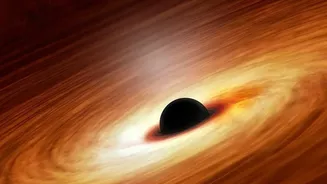
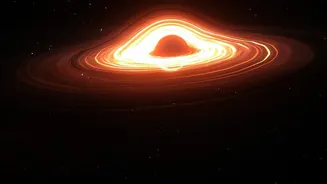
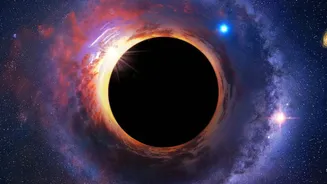
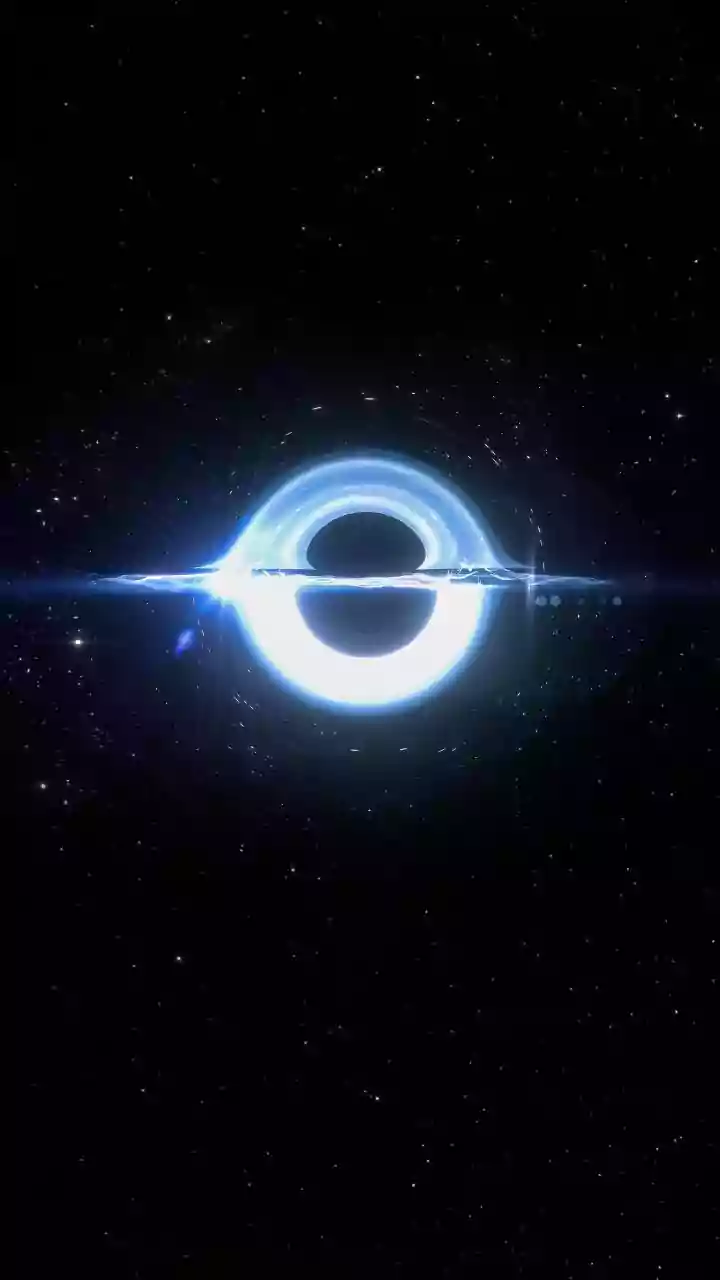
Observing a black hole is nothing like taking a simple photograph. Because they trap all light, astronomers must study them indirectly, by watching the material swirling around them. This material, a superheated disc of gas and dust called an accretion
disk, glows brightly before it crosses the point of no return—the event horizon. Long-term monitoring means observing these chaotic surroundings for months, years, or even decades. It’s like watching the weather patterns around a mountain peak instead of just looking at the peak itself. A single image, like the groundbreaking ones from the Event Horizon Telescope (EHT), provides a crucial snapshot. But continuous observation reveals how the black hole 'breathes', 'eats', and interacts with its environment, which is where the deepest cosmic questions find their answers.
Answering: How Do Galaxies Evolve?
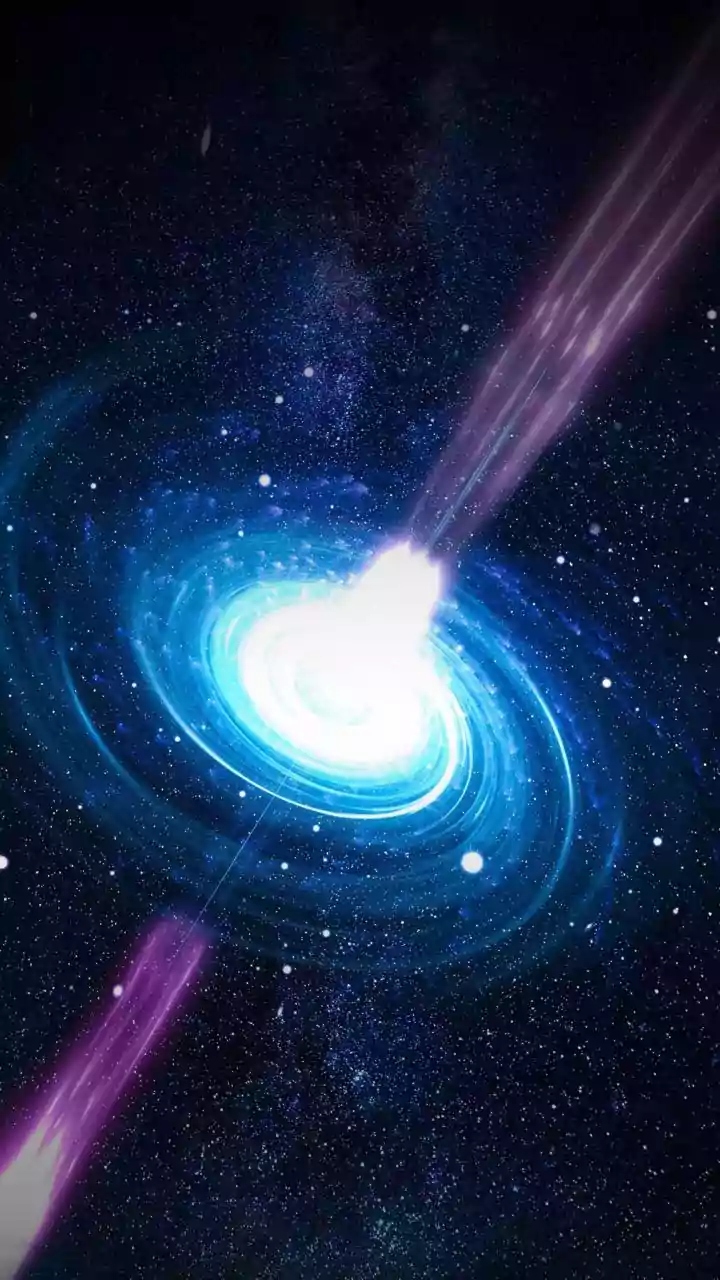
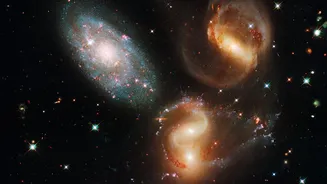
One of the biggest puzzles in astrophysics is how galaxies, including our own Milky Way, form and grow. It turns out that the supermassive black holes at their centers are not just passive residents; they are active architects. Long-term studies show a powerful link between the growth of a black hole and the evolution of its host galaxy. By tracking the violent jets and powerful radiation blasting from a black hole's vicinity over time, astronomers can see how this energy output regulates star formation across the galaxy. Sometimes, this energy can trigger a burst of new stars; other times, it can blow away the necessary gas, effectively halting star birth. Watching this galactic feedback loop in action helps scientists build a coherent picture of how these cosmic ecosystems work, confirming that a galaxy's evolution is intimately tied to the behaviour of the monster at its heart.
Answering: Is Einstein Still Right?
Albert Einstein's theory of general relativity has passed every test we’ve thrown at it for over a century. However, the extreme gravity near a black hole is the ultimate testing ground where the theory might finally show cracks. Long-term monitoring provides two key tests. First, by tracking the orbits of stars that swing incredibly close to a supermassive black hole, like those around Sagittarius A* in our own galaxy, scientists can check if their movements precisely match the predictions of general relativity. Any deviation could point to new physics. Second, by observing merging black holes and the resulting gravitational waves, projects like LIGO can test fundamental theorems about black hole properties. The 'ringdown' of a newly formed black hole—like the fading sound of a struck bell—emits gravitational waves whose tones are predicted by relativity. Repeated observations of these events provide increasingly precise tests, pushing Einstein's theory to its absolute limit.
Answering: What Is the Universe Made Of?
Black holes are where the two great pillars of modern physics, general relativity and quantum mechanics, collide. General relativity describes gravity and the large-scale universe, while quantum mechanics governs the tiny world of particles. Inside a black hole, these two theories give conflicting answers, signaling that our understanding of reality is incomplete. By studying the properties of the event horizon and the behaviour of matter in this extreme environment, scientists hope to find clues to a unified 'theory of quantum gravity'. Watching how information behaves as it falls into a black hole or observing the fine details of its shadow could reveal subtle effects predicted by new theories. In this sense, long-term monitoring isn't just about black holes themselves, but about using them as unique laboratories to probe the very fabric of spacetime and discover the next fundamental laws of physics.