





The Balcony Gardener's Watering Woes
Every plant parent knows the feeling: are the leaves yellowing from too much water or not enough? Balcony gardens present unique challenges. Pots dry out faster than garden beds, sun exposure can be intense and varied, and there's a fine line between
hydration and waterlogging. Overwatering is one of the most common mistakes, leading to root rot, fungus, and mushy stems. Underwatering, on the other hand, causes wilting, crispy brown edges on leaves, and eventual plant death. The symptoms can often look confusingly similar, turning a simple task into a source of constant anxiety. For city gardeners in apartments, where every plant is precious, this guesswork can be disheartening.
Technology to the Rescue: What Are IoT Sensors?
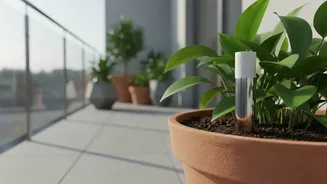
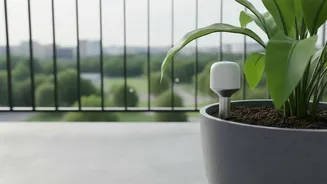
Enter the Internet of Things (IoT) soil sensor. These small, relatively inexpensive devices are a game-changer for home gardening. Originally developed for large-scale precision agriculture, the technology has become accessible for enthusiasts. In simple terms, an IoT soil sensor is a probe you stick into your plant's pot. It continuously measures the moisture level in the soil and, in some cases, other factors like light, temperature, and nutrient levels. It then sends this data wirelessly to an app on your smartphone. Instead of relying on the 'finger dip test,' you get real-time, accurate data telling you exactly when your plant is thirsty and when it's had enough.
From Guesswork to Data-Driven Care
The primary benefit of these sensors is taking the guesswork out of watering. By providing precise moisture readings, they help you avoid both overwatering and underwatering. The app connected to the sensor will typically show the moisture level on a simple scale—dry, moist, or wet. Many apps also send you a notification when the soil moisture drops below an optimal threshold for that specific plant, essentially telling you, 'It's time to water your fern!' This prevents the classic scenario of watering on a fixed schedule, regardless of the plant's actual needs, weather conditions, or humidity. It ensures your plants get water exactly when they need it, promoting healthier roots and more vibrant growth.
The 'Affordable' Advantage for Indian Homes
For a long time, this kind of technology was expensive and reserved for commercial farms. However, a new generation of low-cost sensors has made them perfectly suited for the home gardener in India. The rise of urban farming and balcony gardening as a popular hobby has driven demand for accessible tech. These devices are no longer a high-end novelty. Many simple, effective sensors are now available at a price point that makes them a sensible investment for protecting your beloved plants. Considering the cost of replacing a mature plant that died from improper watering, a sensor that prevents that from happening often pays for itself quickly.
What to Look for in a Balcony Sensor
When choosing a sensor for your balcony garden, you don't need the most complex agricultural model. Look for a few key features. First, consider connectivity: most home sensors use Bluetooth or Wi-Fi to connect to your phone. Second, check the power source and battery life, as you don't want the hassle of frequent changes. Third, evaluate the companion app for its ease of use. Is it intuitive? Does it provide clear information? Finally, consider the measurement type. While basic moisture sensing is enough for most, some advanced models also track light levels and soil nutrients, which can be a fun bonus for dedicated hobbyists. Resistive sensors are often cheaper but can corrode, while capacitive sensors are generally more durable and accurate for long-term use.