




Why Ditch Refined Flour?
Refined flour, or maida, is a staple in many traditional sweets, but it offers very little nutritional value. The refining process strips the grain of its essential nutrients like fibre, B vitamins, and iron, leaving behind mostly starch. This causes
a rapid spike in blood sugar levels, which can contribute to health issues like weight gain and insulin resistance over time. Diets high in refined carbohydrates have been linked to an increased risk of several chronic conditions, including heart disease and type 2 diabetes. By contrast, millets are ancient grains packed with nutrients, making them a smarter choice for festive indulgence.
The Power of Ragi (Finger Millet)
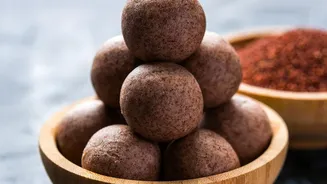
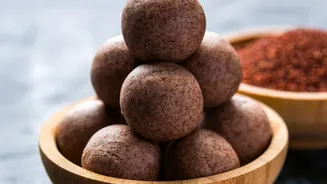
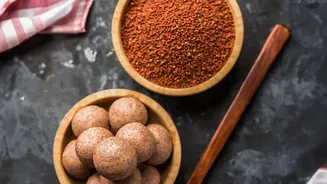
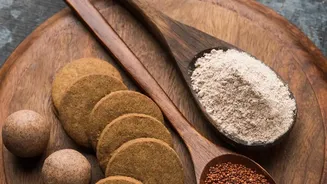
Ragi is a nutritional powerhouse, celebrated for being exceptionally rich in calcium, making it fantastic for bone health. It is also a great source of iron and dietary fibre. This high fibre content helps in slowing down sugar absorption, preventing sharp spikes in blood glucose levels, which is beneficial for everyone. Ragi has a mild, earthy flavour that works beautifully in sweets. You can easily adapt classic recipes to create delicious and wholesome treats like Ragi Halwa, Ragi Ladoos, or even a decadent Ragi Chocolate Pudding. In the south of India, a traditional pudding called Ragi Manni is a popular festive preparation, showcasing the grain's versatility.
The Brilliance of Bajra (Pearl Millet)
Bajra is a warming grain, making it a popular choice in western and northern India, especially during cooler months. It is particularly known for its high iron content and is also rich in protein and magnesium. Bajra has a slightly nutty flavour and a dense texture. While traditionally used for rotis, it lends itself wonderfully to desserts. You can try making a creamy Bajra Kheer, a rich Bajra Halwa, or even festive Bajra Barfi. These sweets are not only flavourful but also keep you feeling full and satiated for longer, thanks to the grain's fibre content.
The Joy of Jowar (Sorghum)
Jowar is another fantastic gluten-free millet that deserves a place in your pantry. It is packed with protein, fibre, and antioxidants. Jowar is known for being light and easy to digest. Its fibre and starch composition helps in the slow release of glucose, making it a good choice for sustained energy. The flour has a fine texture and a mild taste, which means it can be seamlessly incorporated into a variety of sweets. Consider making Jowar Halwa, sweetened with jaggery for an earthy flavour, or preparing Jowar Ladoos for a quick, healthy snack. You can even create a nutritious Jowar Phirni for a modern twist on a classic dessert.
Tips for a Seamless Swap
Baking with millet flours is slightly different from using refined flour. Since millets are gluten-free, they can sometimes result in a denser, crumblier texture. For best results, start by replacing only 25-30% of the refined flour in a recipe with millet flour. You can gradually increase the proportion as you get more comfortable. Millet flours also absorb more moisture, so you might need to add a little extra liquid—like milk or water—to your batter or dough. Combining millets with natural sweeteners like jaggery or dates, and aromatic spices like cardamom and nutmeg, will complement their natural flavours and create truly memorable festive sweets.