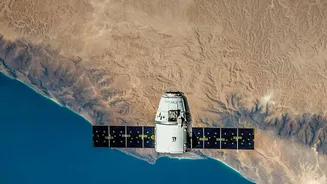






As demand for AI strains Earth's power grids, SpaceX chief Elon Musk has championed a bold alternative: move data centers into orbit. The idea promises abundant solar power, but it also raises massive engineering questions that are far from solved.
The Vision: AI Factories in the Sky
The
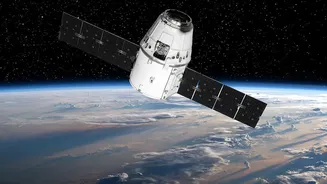
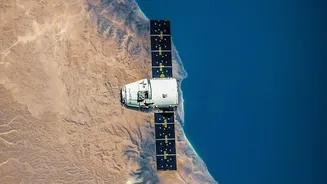
concept of orbital AI infrastructure is essentially about placing data centers—vast clusters of powerful computer processors—on satellites orbiting Earth. Elon Musk, CEO of SpaceX, has become a vocal proponent of this idea, suggesting it as a solution to the growing energy and land-use crises facing terrestrial data centers. On Earth, these facilities are power-hungry behemoths, consuming enormous amounts of electricity and water for cooling. Musk argues that in space, these constraints vanish. Satellites in certain orbits have access to nearly continuous sunlight, offering a steady and powerful energy source without burdening our planet's grids. This vision has led to projects like 'Starmind,' a collaboration between SpaceX and NVIDIA to design and launch AI-focused computers into space, with initial launches potentially starting as soon as late 2027.
The Sobering Reality of Heat
While the power source in space is abundant, getting rid of waste heat is one of the most daunting engineering challenges. On Earth, data centers use air and liquid to convect heat away from processors. In the vacuum of space, there is no air, making convection impossible. The only way for a satellite to cool itself is through thermal radiation—shedding heat as infrared light into the cold void. This process is far less efficient than terrestrial cooling methods. To dissipate the immense heat generated by racks of AI accelerators, orbital data centers would require massive radiator panels, potentially spanning hundreds of square meters per satellite. These radiators add significant mass and complexity, which in turn drives up launch costs, one of the key economic hurdles for any space-based enterprise.
Surviving the Hazards of Space
Beyond cooling, any electronics operating in orbit must contend with a hostile environment. Space is filled with high-energy particles from solar flares and cosmic rays that can wreak havoc on standard computer chips. This radiation can corrupt data, cause system failures, and degrade hardware over time, a phenomenon known as Total Ionizing Dose (TID). To combat this, electronics must be 'radiation-hardened,' a process that involves using specialized materials, shielding, and redundant designs to withstand the constant bombardment. This adds another layer of cost and complexity. Furthermore, maintenance is a problem that is largely unsolved. If a component fails in a terrestrial data center, a technician can simply replace it. In orbit, repairs are either prohibitively expensive or altogether impossible, meaning a dead server likely stays dead for the life of the satellite.
The Data Bottleneck and Economic Case
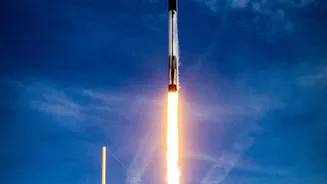
Another major question is data transfer. Getting massive datasets to and from an orbital data center presents a significant bottleneck. While inter_satellite laser links, like those used by SpaceX's Starlink network, have improved dramatically, the bandwidth required for training large_scale AI models is immense. The primary advantage today seems to be for 'edge computing' in space, where data generated by satellites (like Earth observation imagery) is processed on_orbit to reduce the amount of data that needs to be sent back to the ground. For the economics to work for large_scale AI training, the cost of launching hardware into orbit must continue to plummet. Musk argues that SpaceX's reusable Starship rocket is the key, claiming it could lower launch costs by a factor of 100. However, even with cheaper launches, the high upfront capital costs for building and deploying these complex systems remain a major barrier.