



The silent, invisible threat of space weather poses a real risk to our tech-reliant world. It's more than just beautiful auroras; it's a force that can disrupt power grids and communications. Now, new research is helping us better understand it.
What Exactly Is Space Weather?
Think
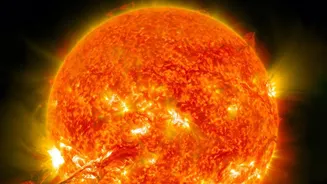
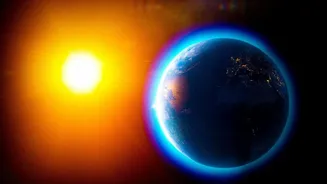
of space weather as the Sun's version of a terrestrial storm. Instead of wind and rain, it involves massive eruptions of plasma and magnetic fields. The two main events are solar flares and coronal mass ejections (CMEs). A solar flare is an intense burst of radiation that can reach Earth in just eight minutes, primarily affecting radio communications on the sunlit side of the planet. A CME is a much larger eruption, a colossal bubble of plasma and magnetic fields that travels more slowly, taking one to three days to reach us. While flares are a quick flash, CMEs are the lumbering giants that can cause the most significant disruptions to our infrastructure.
The Journey from Sun to Earth
When a CME collides with Earth, it doesn't just bounce off. It interacts with our planet's natural magnetic shield, the magnetosphere. This collision can trigger what's known as a geomagnetic storm. The CME's magnetic fields can connect with Earth's, stretching our magnetic field lines like a rubber band. When these lines snap back, they accelerate charged particles toward Earth's poles. This process not only creates the spectacular light show of the aurora but also generates powerful electrical currents in the upper atmosphere and, crucially, on the ground.
What New Research Is Revealing
Recent scientific efforts are providing a much clearer picture of this complex chain of events. One area of focus is improving forecasting. Researchers are now using coronagraphs—special instruments that block the Sun's glare—to get a better view of the Sun's mysterious outer atmosphere, the corona. By studying patterns in the corona, scientists can create more accurate maps of the Sun's magnetic field, which is key to predicting when and where a disruptive solar event might occur. Other new research combines data from NASA spacecraft with ground-based instruments to track how quickly a disturbance in space can affect the ground, finding that the impact can be felt within minutes of a substorm event in Earth's magnetosphere. This near-real-time link between space and ground is a major leap in understanding the immediacy of the threat.
The Risk to Our Power Grids
The most significant terrestrial threat from space weather is to our electrical power grids. Geomagnetic storms induce currents in the Earth's surface, known as geomagnetically induced currents (GICs). These are quasi-DC currents that can flow into long conductors like high_voltage transmission lines. Power grids are designed for alternating current (AC), and the introduction of DC from a GIC can be disastrous. It can cause large transformers—the backbone of the grid—to overheat, leading to voltage instability, equipment damage, and potentially widespread blackouts. The 1989 blackout that left over six million people in Quebec without power for nine hours serves as a stark reminder of this vulnerability.
Satellites and Communications Under Fire
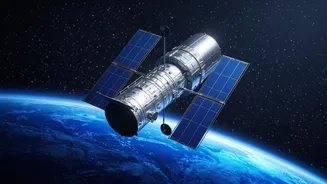
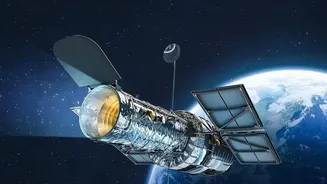
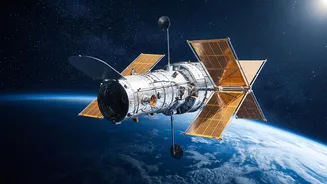
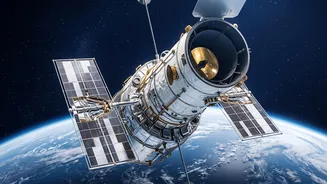
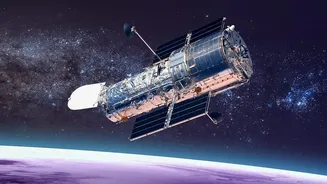
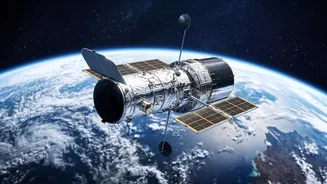
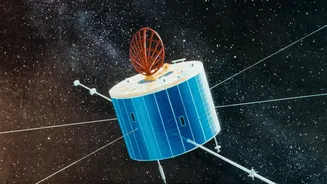
Our infrastructure in space is also on the front line. Satellites for GPS, communication, and weather forecasting are highly vulnerable. High_energy particles from a solar storm can damage sensitive electronics and degrade solar panels. These particles can also increase atmospheric drag on satellites in low_Earth orbit, causing them to lose altitude and potentially collide with other objects. Furthermore, the same atmospheric disturbances that disrupt radio signals can also interfere with GPS, impacting everything from airline navigation to financial transactions that rely on precise time_stamping from satellites.
Building a More Resilient Future
We can't stop space weather, but we can prepare for it. Improving forecasting is the first line of defense, giving grid operators and satellite controllers time to take protective measures. This can include rerouting power or temporarily shutting down vulnerable components. At the same time, new initiatives are exploring ways to harden infrastructure. This includes designing new transformers that are more resilient to GICs and developing AI_powered systems that can predict impacts with greater accuracy and speed. As our society's reliance on technology continues to grow, understanding and mitigating the effects of solar storms is no longer an abstract scientific pursuit—it's a matter of national security and economic stability.