





Why Short Bursts of Movement Matter
Modern life often involves long hours of sitting, which research links to an increased risk of cardiovascular disease and other health issues. The good news is that you don't need a full-scale gym session to counteract these effects. Emerging science
around 'exercise snacks'—short, intentional bursts of activity lasting one to five minutes—shows significant benefits. Regularly interrupting sedentary time can improve blood sugar control, boost circulation, and enhance cardiorespiratory fitness. These brief routines make physical activity more accessible and easier to integrate into a busy day, helping to build a consistent habit.
Golden Rules for Getting Started
If you're new to exercise, the key is to begin safely. First, 'start low and go slow'. Your body needs time to adapt, so begin with gentle activities and gradually increase the intensity as you feel stronger. Second, listen to your body. Mild soreness can be normal, but sharp pain is a signal to stop. Don't try to 'push through' an injury. Finally, focus on proper form. Performing an exercise correctly is more important than speed or the number of repetitions. Using videos or guides can help ensure your technique is safe and effective. If you have any pre-existing health conditions, it's always wise to consult a healthcare provider before starting a new routine.
A Sample 5-Minute Bodyweight Routine
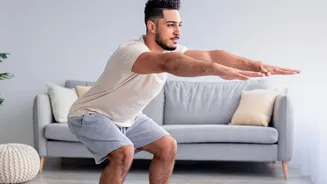
A great beginner workout requires no equipment and can be done almost anywhere. Try this simple five-minute circuit to get your whole body moving. Perform each exercise for about 45 seconds, with 15 seconds of rest in between: 1. Marching in Place: Lift your knees high to get your heart rate up. 2. Wall Push-Ups: Stand facing a wall, place your hands on it, and perform a push-up motion. This builds upper body strength safely. 3. Bodyweight Squats: Stand with feet shoulder-width apart and lower yourself as if sitting in a chair, keeping your back straight. 4. Arm Circles: Stand with arms extended to the sides and make small, controlled circles forward and then backward to improve shoulder mobility. 5. Seated Spinal Twist: While sitting, gently twist your torso to one side, then the other, to release back tension.
Low-Impact and Seated Options
For those who need to avoid stress on their joints or prefer to remain seated, there are plenty of effective options. These gentle movements still provide benefits by boosting circulation and mobility. A simple seated routine could include neck stretches, where you gently tilt your head from side to side, and shoulder shrugs. You can also perform seated leg extensions by straightening one leg at a time while sitting in a sturdy chair. Another great option is the seated cat-cow stretch: place your hands on your knees, arch your back as you inhale, and round it as you exhale to improve spinal flexibility. Even ankle circles and seated marching can help get blood flowing in your lower legs.
How to Make It a Lasting Habit
Consistency is more important than intensity when you're starting out. The best way to stick with your new routine is to make it as easy as possible. Try 'habit stacking' by linking your five-minute workout to an existing daily activity, like right before your lunch break or after your last email of the day. Setting a recurring timer or calendar reminder can also serve as a powerful cue. Don't feel pressured to do a complex workout every time; even a simple five-minute walk around the office or your home is beneficial. The goal is to make movement a non-negotiable part of your day, no matter how small. Finding a friend or coworker to join you can also help with motivation and accountability.