







Why Start with an App Instead of a Telescope?
Jumping straight into buying a telescope can be an expensive gamble. Will you use it often? Is your local sky clear enough? A stargazing app is a low-risk, high-reward first step. For free or just a few dollars, these powerful planetariums in your pocket
can help you learn the fundamental skill of navigating the night sky. They solve the initial overwhelming feeling of looking up at thousands of stars and not knowing where to begin. By using an app first, you can gauge your own interest and determine if the hobby is a lasting passion before committing to costly equipment.
Choosing Your Digital Window to the Stars
Dozens of stargazing apps are available, but most great beginner options share key features. Look for an app with a simple, intuitive interface and a large database of celestial objects. Apps like SkyView, Star Walk 2, and Stellarium are popular choices that offer free versions. The most magical feature for a novice is augmented reality (AR), which uses your phone's camera and sensors to overlay information directly onto your view of the sky. Just point your phone, and the app will identify stars, constellations, and planets in real time. Many also include calendars for celestial events like meteor showers and eclipses.
Your First Night Out: Mastering the Basics
For your first session, find the darkest spot you can. Let your eyes adjust to the darkness for about 15 minutes; avoid looking at your bright phone screen. Most apps have a red-light "night mode" that helps preserve your night vision. Start by simply holding your phone up to the sky. The AR feature will help you identify the brightest stars and most prominent constellations. Don't try to learn everything at once. Focus on finding a few major constellations like Ursa Major (the Big Dipper) or Orion. Tap on objects on the screen to read more about them and begin building your celestial vocabulary.
Finding Planets and Deeper Sky Objects
Once you can confidently find a few constellations, use the app's search function to locate planets. Unlike stars, planets often shine with a steadier light and are found along a specific path in the sky called the ecliptic. Your app can show you exactly where to look for Jupiter, Saturn, or Mars on any given night. Many apps also pinpoint the locations of deep-sky objects like the Andromeda Galaxy or the Orion Nebula. While you won't see these faint smudges in detail with your naked eye, knowing their location is crucial. It gives you specific targets to hunt for if, and when, you decide to upgrade to binoculars or a telescope.
Setting Realistic Expectations with Light Pollution
A major challenge for any urban astronomer is light pollution—the excessive artificial light that washes out the night sky. A key benefit of a good stargazing app is that many can simulate the effects of light pollution based on your location. This helps you understand what is realistically visible from your backyard versus a remote, dark-sky park. Some apps, or companion apps like Light Pollution Map, can even help you find nearby locations with darker skies, rated on what's known as the Bortle Scale. This practical knowledge prevents disappointment and helps you set achievable goals for what you might see through a future telescope.
From App to Eyepiece: Making the Telescope Decision
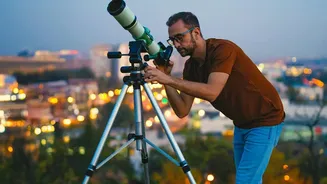
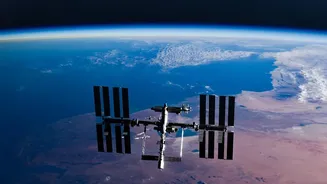
After spending several nights with your app, you'll have a much clearer picture of your astronomical interest. Have you learned to identify several constellations? Do you get excited tracking the International Space Station as it flies overhead? Do you feel a desire to see the rings of Saturn or the craters of the Moon in more detail than your naked eye allows? If the answer is yes, then you're ready to start researching telescopes. Your time with the app has provided an invaluable foundation. You now know your way around the sky and have a list of objects you're excited to see up close, ensuring your new telescope won't just gather dust.