



The Problem with Low Orbits
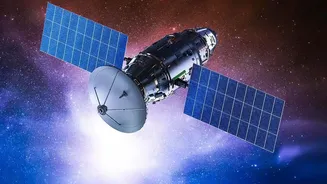
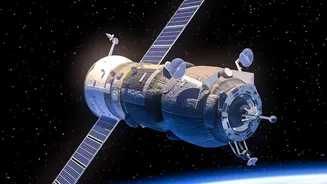
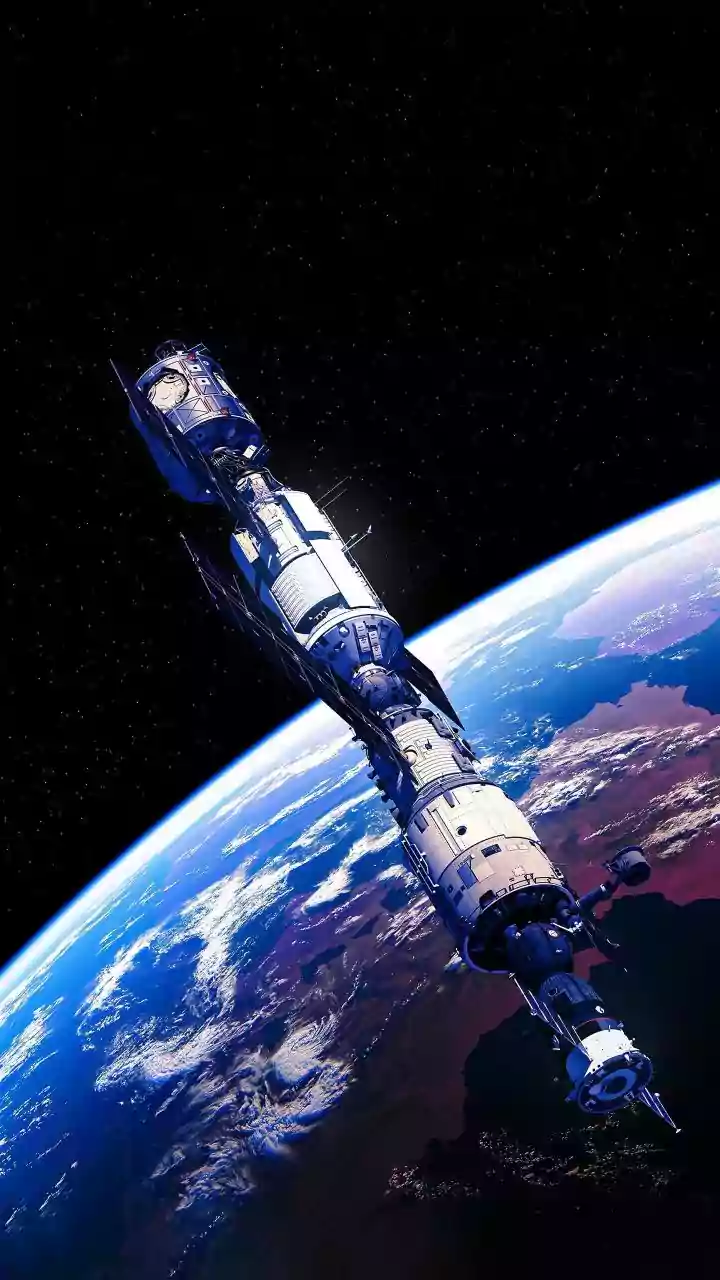
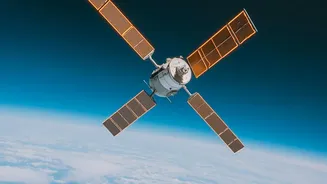
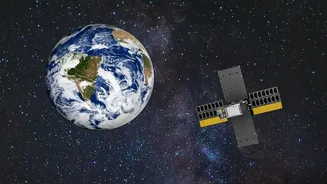
Satellites in Very Low Earth Orbit (VLEO), typically below 400 kilometres, face a persistent challenge: atmospheric drag. While the air is incredibly thin, it's still present enough to slow a satellite down, causing its orbit to decay. To counteract this,
satellites must fire thrusters, but this consumes precious onboard propellant like xenon gas. Once the fuel is gone, the satellite's journey ends, often within a few years. This limitation has made long-duration missions in VLEO—which are ideal for high-resolution Earth observation and low-latency communications—historically impractical. Air-breathing electric propulsion (ABEP) offers a revolutionary solution by eliminating the need to carry propellant from Earth.
How 'Breathing' in Space Works
The core concept of ABEP is elegantly simple: it collects the scarce atmospheric molecules and uses them as fuel. The system has two main components: an intake and an electric thruster. As the satellite speeds through its orbit at roughly 7.8 kilometres per second, a specially designed passive intake, or scoop, collects the incoming air particles, primarily nitrogen and oxygen. Instead of letting these particles bounce away, the intake funnels and compresses them into the thruster. This process turns what was once a mission-ending drag force into a renewable resource, enabling a satellite to potentially operate for years on end without needing to be refuelled.
From Collected Air to Usable Thrust
Once the atmospheric molecules are collected and compressed, the 'electric propulsion' part of the name comes into play. Inside the thruster, the captured gases are ionized, meaning they are given an electric charge. This turns the gas into a plasma. This plasma is then accelerated by powerful electromagnetic fields and expelled at high velocity. This ejection of ions generates a small but continuous thrust. While the thrust is only on the order of millinewtons, it's enough to precisely counteract the atmospheric drag experienced in VLEO, allowing the satellite to maintain its altitude indefinitely, powered only by its solar arrays.
The Promise of Limitless Missions
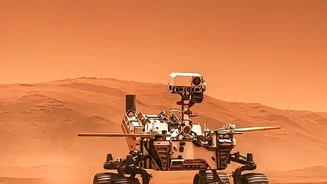
The implications of this technology are vast. By freeing satellites from the constraints of an onboard fuel tank, ABEP could enable a new class of long-duration missions. Satellites for climate monitoring, disaster response, and military surveillance could remain in VLEO for extended periods, providing higher-resolution imagery and quicker data relay than their higher-orbit counterparts. It could also lead to more sustainable use of space; satellites in these lower orbits naturally de-orbit faster at the end of their life, reducing the long-term problem of space debris. Furthermore, the technology isn't limited to Earth. Space agencies like the European Space Agency (ESA) are exploring its use for missions to Mars, where it could draw on the red planet's carbon dioxide atmosphere.
Challenges on the Horizon
Despite its promise, developing ABEP technology is not without significant hurdles. The atmosphere at 200 kilometres is extremely rarefied, so designing an intake efficient enough to collect sufficient particles is a major engineering challenge. Another significant issue is the corrosive nature of the VLEO environment. Atomic oxygen, a primary component at these altitudes, can degrade spacecraft materials over time. Furthermore, conventional electric thrusters and their cathodes are not designed to operate with oxygen-containing propellants and can be easily damaged, requiring new, robust designs. Researchers are actively working on these challenges, with successful ground tests by ESA and other institutions demonstrating that the concept is viable.