
Early Month: A Parade of Planets
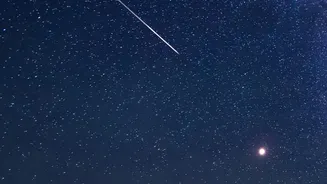
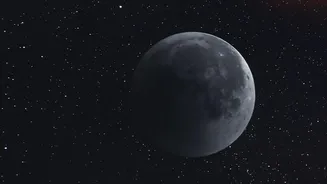
September kicks off with a beautiful planetary display in the pre-dawn sky. On the mornings of September 6 and 7, you can spot a waning crescent Moon cosy up to Mars in the eastern sky. Look for them around 3 a.m. local time. Just a day later, on September 8,
the Moon continues its journey, passing by the giant planet Jupiter. If you stay out a little longer, you might also catch Saturn in the southwest, offering a chance to see three planets in one session. And for those with an eye for evening events, brilliant Venus will be unmissable. On September 1, it passes very close to the bright star Spica low in the west just after sunset, creating a striking side-by-side comparison of a planet and a distant star.
Mid-Month: The Best Time for Stargazing
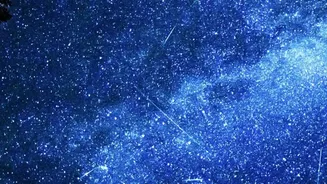
For those who dream of seeing the Milky Way, the nights around the New Moon on September 11 and 12 are your best bet. With no moonlight to wash out the sky, it's the ideal time to head to a location with minimal light pollution. These dark skies provide a perfect canvas for spotting faint objects, including the core of our own galaxy, which will soon disappear from Northern Hemisphere skies until next spring. This period is also prime for spotting a more elusive phenomenon known as the zodiacal light. Best seen about 90 minutes before sunrise from a dark location, this hazy pyramid of light is caused by sunlight reflecting off cosmic dust. It's often called a "false dawn" and is a truly special sight for patient observers.
Venus Shines at Its Brightest
Throughout September, Venus will dominate the evening sky, but it reaches its peak brilliance for the entire year on or around September 18-22, depending on the source. Shining at a dazzling magnitude of -4.8, it will be one of the easiest celestial objects to spot, appearing as a radiant beacon in the western sky shortly after sunset. Its brightness is so intense that it's visible even from brightly lit urban areas. An interesting fact is that Venus is brightest not when it's fully illuminated, but when it's a crescent shape, due to its closer proximity to Earth during this phase. Keep an eye out for Mercury nearby as well.
The Autumnal Equinox Arrives
On September 22, 2026, the Northern Hemisphere officially welcomes autumn with the autumnal equinox. This is not a day-long event, but the precise moment the Sun crosses the celestial equator, moving from north to south. On this day, day and night are of approximately equal length across the globe. For skywatchers, the equinox is more than just a calendar date; it marks a period of increased geomagnetic activity, which can lead to a higher chance of seeing the aurora borealis, or northern lights, at higher latitudes.
The Full Harvest Moon
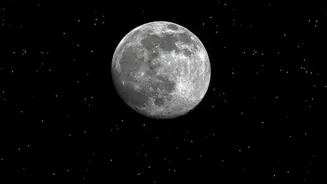
September concludes with the spectacular Full Harvest Moon on the night of September 26. This full moon gets its name because it's the one closest to the autumnal equinox. Historically, its bright light helped farmers work late into the night to bring in their crops. A unique feature of the Harvest Moon is that for several nights in a row, the moonrise occurs only about 25-30 minutes later each night, as opposed to the usual 50. This gives the impression of having a full moon for several evenings. As it rises near the horizon, it may appear larger and more orange due to an optical effect known as the moon illusion. Look for Saturn trailing the moon that night as a bright companion.