




The New Campus Reality: AI as a Study Buddy
Across Indian universities, AI has moved from a theoretical concept to a daily utility. A 2024 survey found that a staggering 86% of students use AI in their studies, with nearly one in four using it every day. [2, 4] This isn't just about getting help
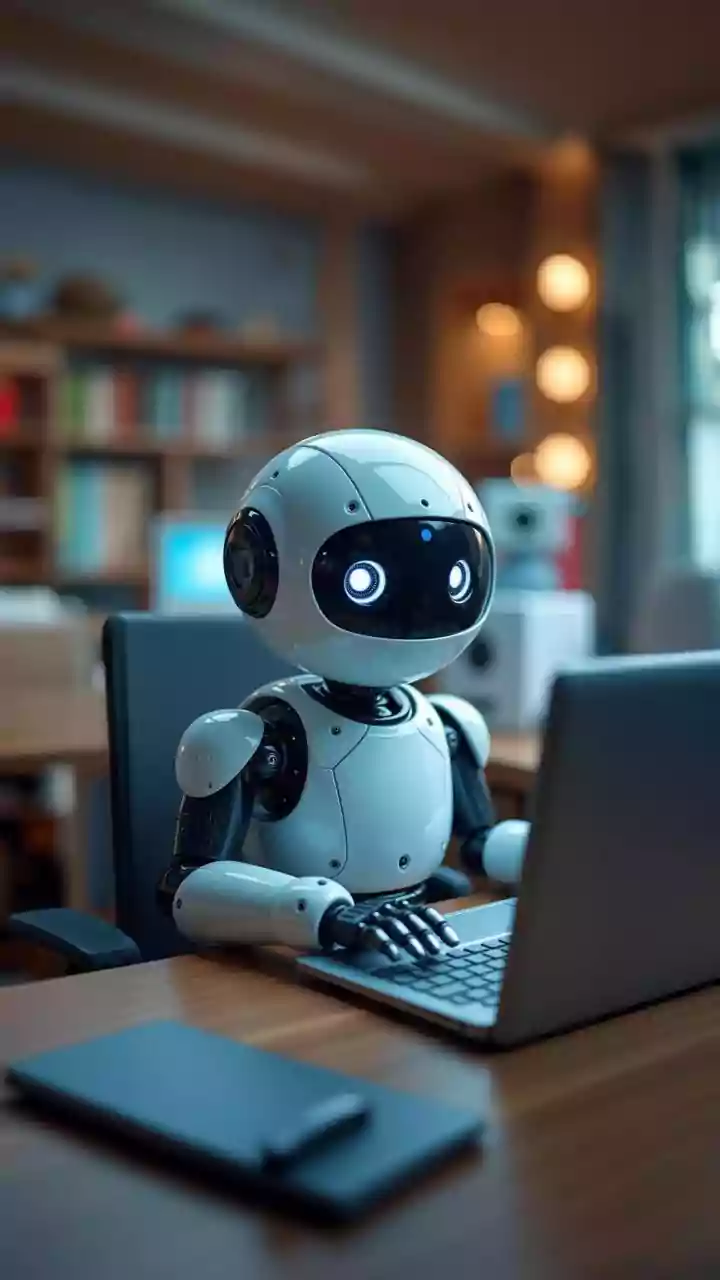
with homework. Students are leveraging generative AI tools like ChatGPT for everything from summarising dense research papers and debugging code to translating complex texts and solving math problems. [3] This widespread adoption is transforming the learning process itself, with AI-powered platforms offering personalised learning paths, instant feedback, and 24/7 support via chatbots and smart tutors. [4, 14] Recognising this shift, government bodies like the UGC and AICTE are actively pushing for AI integration into curricula, ensuring students across disciplines are exposed to these powerful tools. [10, 19]
From Lecture Halls to First Job Offer
Perhaps more surprisingly, students are using AI for more than just academics; they are using it to launch their careers. AI platforms are becoming the new career counsellors, helping students identify skill gaps, build their resumes, and even practice for interviews. [3, 9] These tools can analyze a student's interests and performance to generate personalized career roadmaps, connecting their current studies with long-term professional goals. [21] With employers increasingly using AI to sift through CVs, students are learning to use the same technology to optimise their applications with relevant keywords. [3] This proactive approach means career preparation is no longer a final-year activity but a continuous process that begins early in a student's university journey.
Universities Race to Adapt
Indian higher education institutions are at a pivotal juncture, moving quickly to formalise AI's role on campus. [2] A 2025 FICCI-EY-Parthenon survey revealed that 57% of Indian Higher Education Institutions (HEIs) already have an AI policy, with another 40% developing one. [2] Leading institutions like IIT Madras, Symbiosis, and BITS Pilani are embedding AI analytics and machine learning modules across various disciplines, not just in STEM fields. [4] This push is supported by major government initiatives like the IndiaAI Mission, which has a budget of over ₹10,000 crore to bolster AI innovation and skill development. [13] The goal is to create a future-ready workforce by making AI literacy a fundamental skill for all graduates. [8, 11]
The Evolving Employer Expectation
As students become more AI-savvy, employer expectations are evolving in tandem. Companies are now shifting towards skills-first recruitment, where demonstrated ability with tools like AI is prized over academic credentials alone. [6] While nearly half of all graduates in India are still considered unemployable, the hiring intent for freshers who can prove their skills has reached 73%. [6] However, a critical gap remains. Despite over 90% of employees using generative AI, 82% of Indian employers report they are struggling to find talent with applied AI skills. [6] The message is clear: employers don't just want candidates who know *about* AI; they want graduates who can walk in and use AI to solve real-world business problems from day one. [6]
Bridging the Skills Gap
The rapid adoption of AI on campus highlights a crucial challenge: the mismatch between the skills students are acquiring and the specific needs of the job market. [7, 18] India ranks an impressive 13th globally for AI-economy readiness, but only 18th for 'Skills Alignment'. [18, 22] This suggests that while students and universities are embracing AI, the curriculum adaptation isn't happening fast enough to meet industry demands. [7, 22] The solution lies in stronger collaboration between universities, employers, and policymakers to ensure that the AI skills being taught are relevant and practical. [7, 19] The focus is shifting from theoretical knowledge to applied competence, combining technical AI fluency with essential human skills like critical thinking, communication, and leadership that AI cannot replicate. [6, 7]