




Hyderabad's New Cosmic Menu
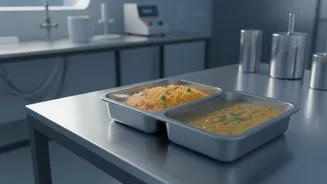
The latest chapter in India's space saga is being written in the kitchens of Hyderabad's ICMR-National Institute of Nutrition (NIN). Scientists here are pioneering a new range of foods specifically for the nation's astronauts. On their prospective menu
are familiar comforts like khichdi, alongside mutton rolls and chicken nuggets, all specially formulated for space travel. This initiative marks a significant step, expanding India's capacity to support its own spacefarers. The Hyderabad-based institute is also deeply involved in studying how the human body reacts to microgravity, ensuring that the food is not just tasty but also perfectly tailored to the physiological needs of astronauts during their mission.
A Legacy of Space-Ready Meals
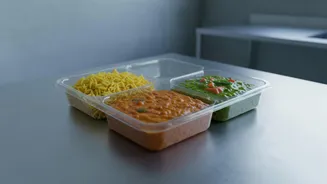
While Hyderabad's contribution is the newest development, the foundation for Indian space food was laid years ago by the Defence Food Research Laboratory (DFRL) in Mysore. For years, DFRL has been the primary institution tasked with creating a ready-to-eat menu for the armed forces, and by extension, for India's astronauts. Their extensive menu features over 30 dishes, including favourites like idli-sambar, vegetable biryani, chicken korma, and moong dal halwa. This work ensured that from the very beginning of its human spaceflight ambitions, India had a plan to provide its astronauts with a taste of home.
The Ultimate Culinary Challenge
Making food for space is far more complex than just packing a meal. In zero gravity, simple things like crumbs can be disastrous, potentially floating into and damaging sensitive electronic equipment. Water behaves differently, liquids must be drunk from special containers. Food must have a shelf life of over a year without refrigeration, be nutritionally dense, lightweight for launch, and easy to consume. Furthermore, the taste and texture must be appealing, as food is a major psychological comfort for astronauts isolated far from Earth. Every dish must be engineered to overcome these immense challenges before it even gets considered for a mission.
The Science Behind the Spice
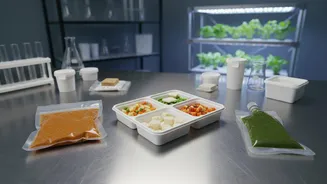
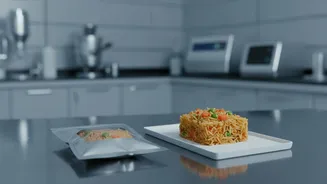
The core technology making Indian space food possible is known as retort processing. This method involves sealing the prepared food in a multi-layered, flexible pouch and then sterilising it with high heat and pressure. This process kills any microorganisms, ensuring the food is safe to eat for long periods at ambient temperatures. The special pouches, often made of four different layers, are durable enough to withstand the rigours of a rocket launch yet flexible and light. This technology, originally developed for military rations, is what allows a dish like vegetable pulav or dal to be safely stored for a year and then simply warmed and eaten in orbit.
A Reality Check from Orbit
Creating the menu is one thing; getting it approved for flight is another. The standards are incredibly strict. Astronaut Shubhanshu Shukla, who flew on a recent mission to the International Space Station, provided a dose of reality on this front. He revealed that while DFRL had prepared a wide array of Indian dishes for potential inclusion, only three ultimately passed the rigorous and time-consuming qualification tests in time: Gajar Ka Halwa, Moong Dal Ka Halwa, and Amras (mango pulp). Items like khichdi and pulao didn't make the cut for that specific mission, not because they were flawed, but because the testing and certification timeline is so demanding. This highlights the immense challenge of not just preparing the food, but proving its safety and stability for space.
Fuelling India's Gaganyaan Dream
The combined efforts of research institutions in both Hyderabad and Mysore are a crucial component of India's ambitious Gaganyaan mission. This isn't just about providing sustenance; it's a demonstration of national capability and self-reliance. By developing its own space food, India ensures its astronauts have nutritious, safe, and psychologically comforting meals that connect them to their culture, even when they are hundreds of kilometres above the Earth. Every packet of space-ready biryani or halwa represents a small but significant victory in India's journey to becoming a major space-faring nation.