






Elon Musk is again pushing the boundaries of technology, this time with a vision to move the backbone of artificial intelligence into orbit. His recent comments outline a future where data centres float in space, but the grand plan is still missing a firm
timeline.
Decoding the Vision: AI in Orbit
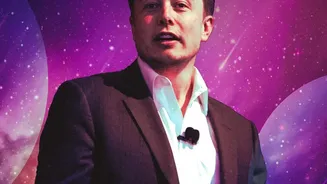
In a series of statements in late October and early November 2026, Elon Musk declared that space is the next logical home for artificial intelligence infrastructure. The core idea is to build massive, orbiting data centres powered by satellites. This concept, which SpaceX is reportedly calling 'Starmind', aims to solve some of Earth's biggest AI-related problems: immense energy consumption, the high cost of cooling, and the need for vast tracts of land. By placing AI hardware in space, Musk argues, companies can tap into continuous, uninterrupted solar power and use the vacuum of space as a natural, free heat sink. He boldly predicted that by the end of 2028, the amount of new AI computing power deployed in orbit could surpass that on the ground, eventually making terrestrial data centres seem 'trivial' in comparison.
The Starlink and Starship Synergy
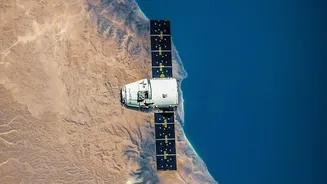
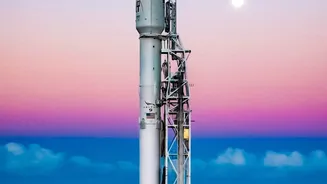
This ambitious plan is not a standalone fantasy; it's deeply integrated with Musk's existing space ventures. The entire concept relies on two key SpaceX pillars: Starship and Starlink. Starship, the company's massive, fully reusable rocket, is essential for making it economically viable to launch the heavy hardware required for these orbital data centres. Without the ability to put immense mass into orbit cheaply, the project would be a non-starter. Starlink, SpaceX's satellite internet constellation, provides the second piece of the puzzle. Its network of high-speed laser links would be used to connect the orbiting AI clusters to each other and beam the processed data back down to Earth. In essence, SpaceX aims to evolve its existing 'communication constellation' into a 'computing constellation', creating what some are calling an 'orbital industrial cloud'.
Potential Applications and Industry Impact
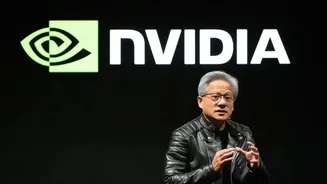
If realised, space-based AI could revolutionise several fields. It would offer unprecedented computing power for tasks like training massive AI models, climate modelling, defence surveillance, and disaster response, all without being tied to a specific nation's power grid or political borders. The project is also a direct challenge to the giants of cloud computing like Microsoft, Google, and Amazon. To bring this vision to life, SpaceX is collaborating with chipmaker Nvidia. Recent announcements confirm that SpaceX plans to use Nvidia's next-generation hardware, like the Vera Rubin platform, as the computational core for its first 'Starmind' AI satellites. This partnership signifies a major step from concept to engineering, lending serious weight to Musk's futuristic claims.
The Reality Check: Hurdles and Timelines
Despite the ambitious talk, the headline's caveat remains crucial: there is no confirmed, large scale deployment timeline. While Musk has suggested that initial test payloads could launch as early as the fourth quarter of 2027, many industry experts believe a commercially viable, large scale orbital data centre network is more likely a prospect for the 2030s. The technical and financial hurdles are immense. The challenges include engineering systems that can effectively manage heat in a vacuum, protecting sensitive electronics from cosmic radiation, and the sheer cost. Some estimates place the cost of a single gigawatt orbital data centre at over three times that of a terrestrial one. Furthermore, the entire strategy is heavily dependent on the Starship program, which has faced its own developmental delays. Musk himself has acknowledged that his timelines are predictions, subject to change as SpaceX navigates these uncharted waters.