

The Secret to Soft, Melt-in-Your-Mouth Koftas
The first hurdle for any home cook is the texture of the kofta itself. Restaurants master this with careful moisture management and binding. For vegetable koftas, especially those with lauki or paneer, squeezing out all excess water is non-negotiable.
After grating, salt the main ingredient and let it sit for a few minutes to draw out moisture, then squeeze it thoroughly, even using a muslin cloth. For meat koftas, use finely minced meat and avoid over-mixing, which can make them tough. The choice of binder is also crucial. While besan is common at home, restaurants often use cornflour, breadcrumbs, or boiled potato for a lighter, more reliable bind that doesn't turn the kofta dense. A pro tip is to chill the shaped koftas for 30 minutes before cooking; this helps them hold their shape beautifully.
To Fry or Not to Fry?
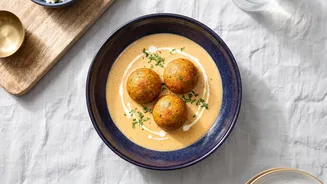
Many home recipes involve deep-frying koftas until dark brown. However, some professional chefs argue that this step can be skipped or modified. Pan-frying just until a light golden shell forms is often sufficient and prevents the koftas from becoming dry. For exceptionally delicate koftas, like those made with malai or paneer, you can even add them directly to the simmering gravy. The key is to never drop them into a violently boiling curry. The gravy should be at a gentle simmer, and once the koftas are in, avoid aggressive stirring. Instead, gently swirl the pan to move them around, preventing breakage.
Achieving That Silky, Rich Gravy
The soul of a restaurant kofta dish is its velvety gravy. This texture is achieved through a multi-step process. It often starts with a base of sautéed onions, tomatoes, ginger, and garlic, which is then blended into a smooth puree. But the real secret is what comes next: filtering. Pushing the blended puree through a fine-mesh sieve removes any leftover skins and seeds, resulting in a uniformly silky base. Another cornerstone is the use of nut pastes, most commonly cashew. Soaking cashews in warm water and blending them into a fine paste before adding to the gravy provides a luxurious creaminess and richness that is hard to replicate with cream alone.
The Art of 'Bhuna': Building Deep Flavour
Beyond texture, restaurant gravies have a depth of flavour that comes from the 'bhuna' technique—the slow and patient sautéing of the masala base. After the onion-tomato puree is added to the pan, it's cooked until the raw smell disappears, the colour deepens, and you can see the oil beginning to separate from the masala. This process caramelises the sugars in the onions and tomatoes, creating a richer, sweeter, and more complex flavour profile. Professional chefs will sometimes add a splash of hot water during this process and reduce it down again, repeating the step to build even deeper layers of flavour.
Finishing Touches That Make All the Difference
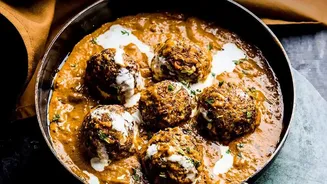
How a dish is finished can elevate it from good to great. In restaurant kitchens, kofta curry is often finished off the heat. Just before serving, a swirl of fresh cream or a dollop of butter is stirred in to add a final touch of richness and a glossy sheen. Another signature restaurant move is to crush kasuri methi (dried fenugreek leaves) between your palms and sprinkle it over the gravy at the very end. This releases its essential oils and adds a distinct, aromatic fragrance that is quintessentially North Indian. Finally, remember that koftas should be added to the gravy close to serving time to prevent them from becoming soggy and losing their texture.