






The Core Findings
A study from Harvard University published in 'Nature Sustainability' has provided one of the most detailed looks yet at the environmental cost of the cloud. Researchers analyzed 403 of the largest 'hyperscale' data centers in the United States between
May 2024 and April 2025. They found these facilities produced approximately 25.7 million metric tons of carbon dioxide. To put that in perspective, it's roughly the same amount of annual emissions as the entire country of Denmark. This figure is two to three times higher than previous peer-reviewed estimates, signaling a rapid increase in the industry's footprint even before the most recent boom in artificial intelligence.
Behind the Energy Demand
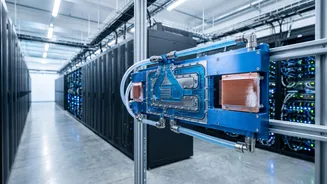
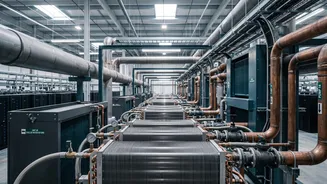
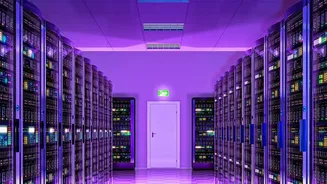
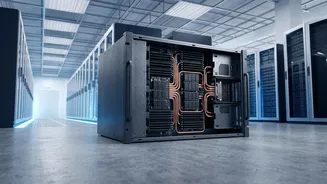
Data centers are essentially factories that never sleep, housing tens of thousands of computer servers that process, store, and move the data behind every email, video stream, and AI query. This immense computational effort generates a huge amount of heat, requiring vast, round-the-clock cooling systems to prevent overheating. The combination of computing and cooling creates a massive and continuous demand for electricity. The Harvard study estimated the 403 centers consumed about 82 terawatt-hours of electricity over the year, which is enough to power nearly 7 million American homes and represents about 1.8% of total U.S. electricity consumption.
Putting the Numbers in Perspective
While 403 data centers is a specific subset, the United States is home to thousands of these facilities, with estimates ranging from 3,000 to over 5,000. The 403 centers analyzed in the study are the largest 'hyperscale' facilities, meaning their impact is disproportionately large. The study's lead author noted that the data, which ends in April 2025, is already 'ancient history' in the fast-moving world of AI, suggesting today's figures are likely even higher. Globally, data centers account for about 1.5% of all electricity consumption, a figure the International Energy Agency projects could double by 2030, with AI as a primary driver.
The Problem with Power Sources
A critical part of the carbon equation isn't just how much power is used, but where it comes from. The Harvard analysis found that more than half—about 54%—of the electricity consumed by these data centers came from burning fossil fuels. Natural gas accounted for roughly 38% and coal for 15%. This reliance on carbon-intensive energy sources is what translates the high electricity demand into millions of tons of greenhouse gas emissions. According to one Harvard researcher, this trend means 'we are going backwards toward the goal of controlling CO2 emissions'.
The Push for Greener Data
The technology industry is not ignoring the problem. Major players like Amazon, Microsoft, and Google have become the world's largest corporate buyers of renewable energy, investing heavily in wind and solar power through long-term contracts known as Power Purchase Agreements (PPAs). The goal is to power their operations with clean energy and meet ambitious corporate climate pledges. However, the intermittent nature of solar and wind power presents a challenge for data centers that require a constant, 24/7 power supply. This has led to increased interest in complementary technologies like large-scale battery storage and even nuclear energy to provide reliable, carbon-free power.