




A Space Hero's First Adventure
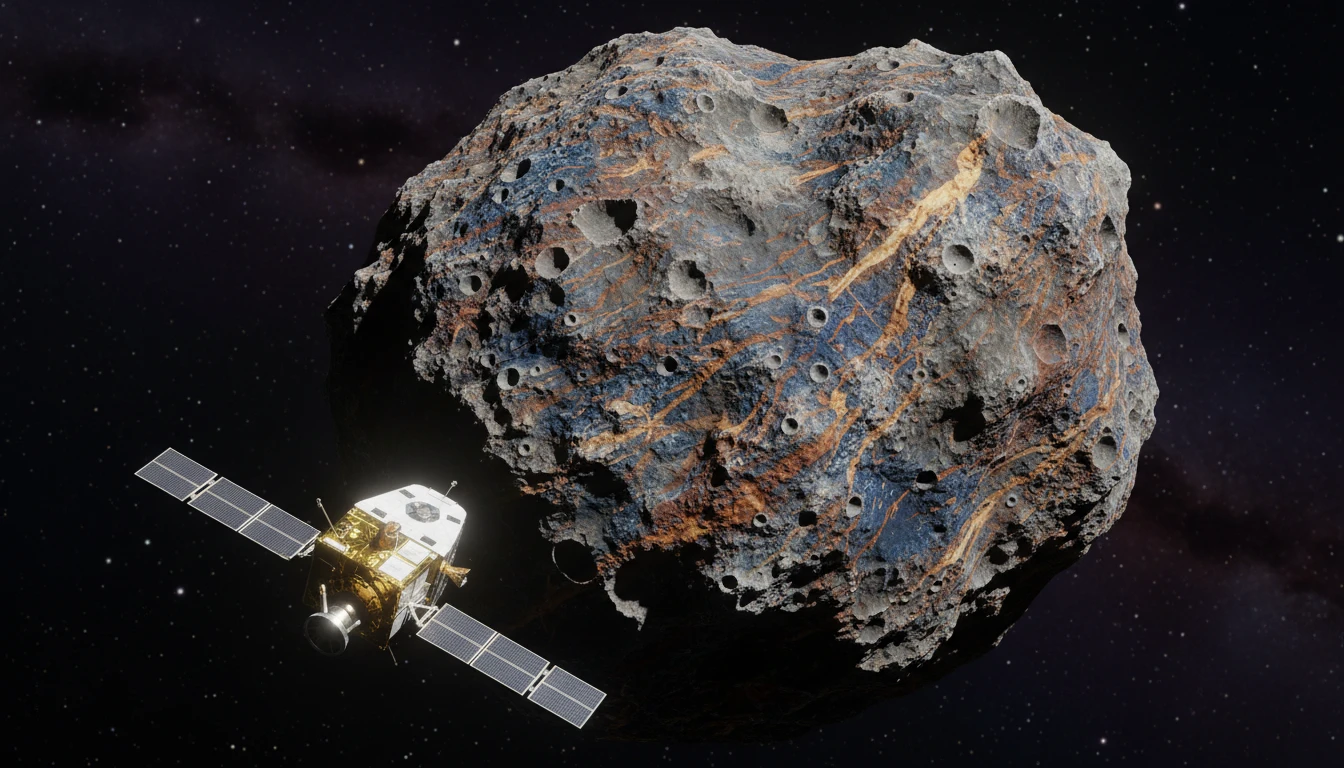
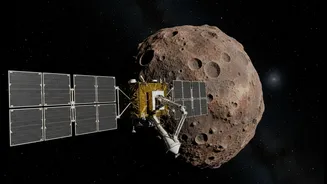
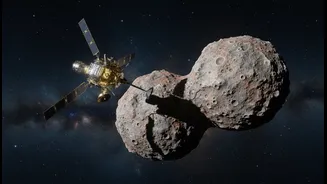
Before we look at its new mission, let's remember what made Hayabusa2 famous. Launched by the Japan Aerospace Exploration Agency (JAXA), its first job was to visit a near-Earth asteroid called Ryugu. From 2018 to 2019, Hayabusa2 studied Ryugu up close.
It even sent small rovers to hop on its surface and, most impressively, managed to touch down twice to collect rock and dust samples. In December 2020, it flew back to Earth and dropped off a capsule containing these precious samples, which are now helping scientists understand the birth of our solar system and where life’s ingredients might have come from.
An Epic Extended Mission
After dropping off its cargo, Hayabusa2 didn't shut down. With plenty of fuel left, JAXA gave it a new, even more ambitious task called the Hayabusa2 Extended Mission. This new journey will take more than a decade to complete. The plan involves flying by one asteroid in 2026 before heading to its final destination in 2031. The headline mentions 'Torifune,' which refers to the flyby of an asteroid named 2001 CC21 (also named Torifune) that happened on July 5, 2026. This event was a crucial test of the spacecraft's ability to observe a target at high speed.
Meet 1998 KY26: The Final Target
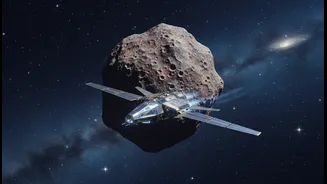
The ultimate goal of this extended mission is a rendezvous with a tiny asteroid called 1998 KY26 in July 2031. When we say tiny, we mean it! This space rock is only about 11 metres in diameter, roughly the size of a large bus. If successful, it will be the smallest asteroid ever explored up-close by a spacecraft. But what makes 1998 KY26 truly fascinating is its speed. It spins incredibly fast, completing a full rotation in just over five minutes. For comparison, a day on Earth is about 24 hours long! This rapid spin makes it a very challenging and exciting object to study.
What is a 'Flyby' and 'Rendezvous'?
You'll hear two key words for this mission: 'flyby' and 'rendezvous'. A 'flyby' is like a high-speed drive-past. For the Torifune (2001 CC21) encounter, Hayabusa2 sped past the asteroid at about 5 kilometres per second, collecting as much data as possible in a short time. A 'rendezvous', which is planned for 1998 KY26, is much more intimate. It means the spacecraft will arrive at the asteroid and stay with it, matching its orbit to observe it for a longer period. This allows for more detailed mapping and analysis, which is incredibly difficult with a target that is so small and spinning so quickly.
Why This Mission Matters for Everyone
Studying asteroids like 1998 KY26 isn't just for curiosity. These small space rocks hold big secrets. Firstly, they are like time capsules from the early solar system, and studying their composition can teach us about how planets formed. Secondly, this mission is vital for 'planetary defense'. An asteroid of this size, though small, could still cause significant damage if it hit Earth. Understanding the structure of these small, fast-spinning objects helps scientists figure out the best way to deflect a potentially hazardous asteroid in the future. The skills JAXA learns from this mission will benefit space agencies all over the world, including India's own ISRO, as humanity works together to explore space and protect our planet.