


What Is Functional Core Strength?
When people talk about the 'core', they often mean the visible 'six-pack' muscles (the rectus abdominis). But your true core is a complex system of muscles that includes your abs, obliques, lower back, hips, and glutes. Functional core training focuses
on strengthening this entire system to work together. The goal isn't just to look good, but to move well. A strong, functional core provides a stable base for your body, improving posture, balance, and making everyday activities like lifting, bending, and twisting easier and safer.
Beyond the Crunch: Why Stability Matters
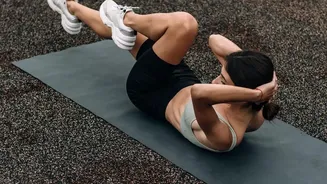
Traditional ab exercises like crunches isolate one small part of your core and involve repeated spinal flexion. While not inherently bad, they don't train your core for its main job: stabilizing your spine and transferring power between your upper and lower body. Functional exercises, on the other hand, often challenge your body to resist movement—like twisting or arching—which is crucial for protecting your back from injury and improving athletic performance. By training for stability, you build a resilient midsection that supports you in everything from carrying groceries to playing sports.
The Plank: Your Foundation for Stability
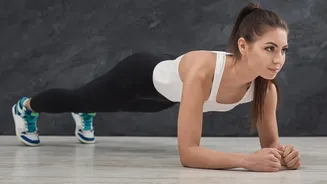
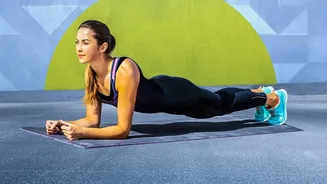
The plank is a fundamental isometric exercise that engages the entire core. To perform it correctly, start on your forearms with your elbows directly under your shoulders. Extend your legs back, coming onto your toes, and lift your hips so your body forms a straight line from your head to your heels. Avoid letting your hips sag or rise too high. Squeeze your glutes and brace your abdominals, as if you're about to be punched in the stomach. Keep your neck in a neutral position by looking at the floor just in front of your hands. Hold for as long as you can maintain perfect form, even if it's just 20-30 seconds to start.
The Dead Bug: Master Core Coordination
This exercise is excellent for teaching your core to remain stable while your limbs are in motion, a key component of functional strength. Lie on your back with your arms extended toward the ceiling and your knees bent at a 90-degree angle over your hips (the 'tabletop' position). Press your lower back gently into the floor. Slowly lower your right arm and left leg toward the floor simultaneously, exhaling as you go. Lower them only as far as you can without your lower back arching. Return to the starting position with control and repeat on the other side. This completes one rep.
The Bird-Dog: For Balance and Control
The bird-dog challenges your stability, balance, and strengthens the muscles along your spine. Start on all fours, with your hands directly under your shoulders and your knees under your hips. Engage your core to keep your back flat. Extend your right arm straight forward and your left leg straight back at the same time, forming a straight line from your fingertips to your heel. Keep your hips and shoulders square to the floor—imagine balancing a glass of water on your lower back. Hold for a few seconds before returning to the start and repeating on the opposite side.
The Glute Bridge: Power from the Posterior
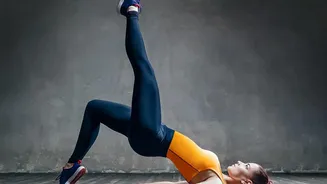
Your glutes and lower back are a critical part of your core system. The glute bridge activates these posterior chain muscles, which can become weak from prolonged sitting. Lie on your back with your knees bent, feet flat on the floor about hip-width apart, and your arms at your sides. Squeeze your glutes and abs, then lift your hips off the floor until your body forms a straight line from your shoulders to your knees. Hold the position for a moment at the top before slowly lowering back down. This exercise not only strengthens your glutes but also improves hip stability.