







What Is Being Proposed?
The Goa Forest Department has submitted a proposal to the Department of Environment and Climate Change to declare 24 beaches across the state as official turtle nesting sites under the Coastal Regulation Zone (CRZ) Notification, 2019. This is a significant
expansion, as only four beaches—Morjim, Mandrem, Agonda, and Galgibaga—are currently formally notified. The new proposal includes some of Goa's most popular tourist hubs, such as Calangute, Baga, Candolim, and Palolem. If accepted, the designation would enable tighter controls on activities that interfere with nesting turtles, especially during the October to May season. This includes restrictions on artificial lighting, loud events, vehicular movement on the sand, and the operation of beach shacks in sensitive areas.
A Balance Over a Blanket Ban
The central idea behind the proposal is to create a framework for co-existence rather than outright exclusion. Authorities and even some environmental groups have previously noted that a blanket ban on all activity is impractical and could alienate local communities whose livelihoods depend on beach tourism. The proposal aims to implement a detailed management plan for each ecologically sensitive area. This approach focuses on specific, targeted restrictions—like controlling light and sound pollution—instead of a complete shutdown of the beaches. The goal is to encourage community participation in conservation, making locals partners in protecting the turtles rather than seeing them as an obstacle to their income. Many shack owners and fishermen have expressed concern, asking for clarity on the exact rules to ensure their businesses are not crippled.
The Olive Ridley's Crucial Journey
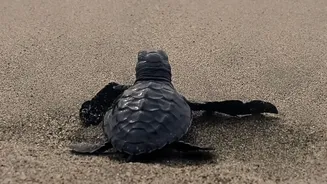
At the heart of this issue is the Olive Ridley sea turtle, a species recognized globally as vulnerable. These turtles have been nesting on Goan shores for centuries. The nesting season, which runs from October to March, unfortunately, coincides with Goa's peak tourist season. Bright lights and noise from shoreline activities can disorient nesting females, causing them to return to the sea without laying eggs. It also confuses hatchlings, who rely on the natural light of the horizon to find their way to the water; artificial lights can lead them inland instead. With only one in a thousand hatchlings surviving to adulthood, protecting these nesting sites is critical for the species' survival. The proposed measures are a response to concerns over a recent decline in nesting numbers compared to previous years.
Which Beaches Will Be Affected?
The proposal significantly expands the list of protected beaches. The four already recognized sites are Morjim and Mandrem in North Goa, and Agonda and Galgibaga in South Goa. The new list of 24 beaches adds many more to the fold. In the North, the list includes popular destinations like Arambol, Ashvem, Vagator, Baga, Calangute, and Candolim. The South Goa expansion is even more extensive, proposing to add Cola, Palolem, Patnem, Rajbag, Mobor, and Cavelossim, among others. This has caused significant concern in talukas like Canacona, where stakeholders fear that nearly the entire coastline could fall under new restrictions, potentially devastating the local tourism economy.
Voices From The Coastline
The proposal has been met with a mix of cautious optimism and significant anxiety. Tourism stakeholders, from shack owners to traditional fishermen, are worried about the economic fallout. They argue that while they support turtle conservation, the government must provide clear guidelines and consult with them before finalising any rules that could affect their right to earn a livelihood. Some, like the All Goa Private Property Shacks and Huts Owners Association, have strongly opposed the move, stating it will kill the tourism business. Environmentalists and conservation groups, on the other hand, see it as a necessary step to formalize protections that have been needed for years. However, the success of the plan will hinge on how well the government manages to balance these competing interests and enforce the new regulations on the ground.