

The Sun’s Unseen Threat
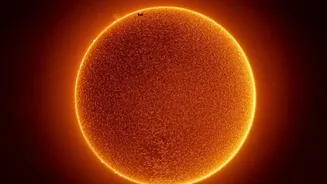
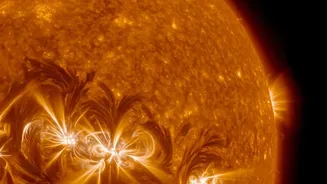
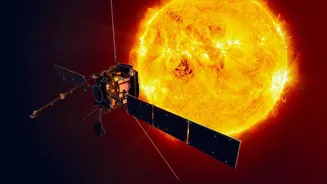
The sun, our life-giving star, has a volatile side. It periodically unleashes massive explosions of plasma and magnetic fields known as Coronal Mass Ejections (CMEs). These aren't just beautiful solar phenomena; they are titanic events that can hurl billions
of tons of solar material into space at speeds up to 3,000 kilometers per second. As this material travels, it can create shock waves that accelerate solar particles—mostly protons—to near the speed of light. When these barrages of high-energy particles, known as Solar Particle Events (SPEs), are aimed at Earth, they pose a significant danger to our technological backbone in orbit.
Vulnerability in Orbit
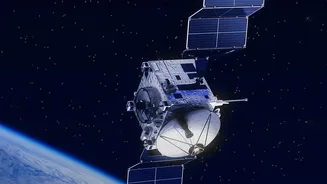
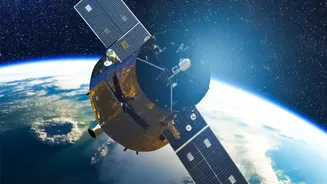
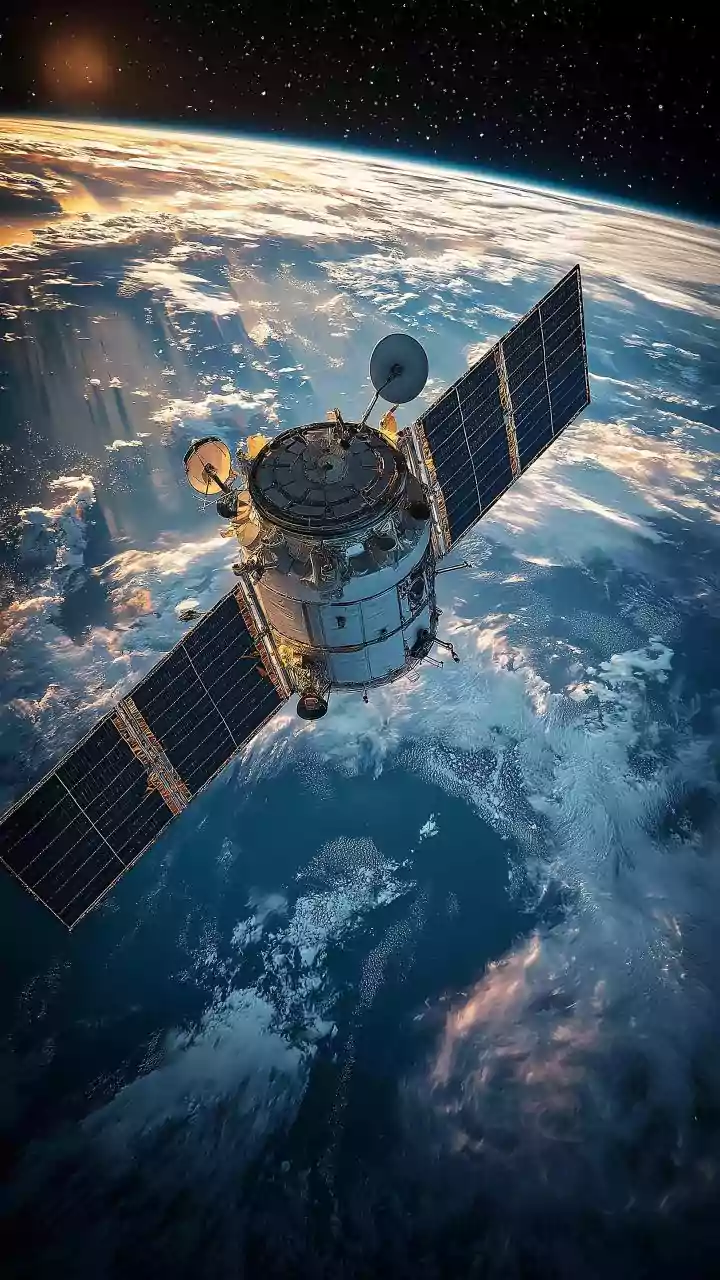
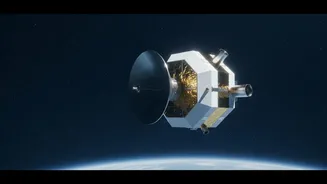
For a commercial satellite, a direct encounter with an SPE is a major problem. These high-energy particles can penetrate a satellite's shielding and wreak havoc on its sensitive electronics. One of the most common issues is the "single-event upset" (SEU), where a particle strikes a microchip and flips a bit of data from a 0 to a 1, or vice versa. This might sound small, but it can lead to corrupted data, software glitches, or faulty commands. In more severe cases, intense particle radiation can cause physical damage to components, degrade solar panels, and even lead to complete satellite failure, representing a catastrophic loss of a multi-million dollar asset and the services it provides.
Introducing Trajectory Modeling
This is where trajectory modeling becomes a critical defense. In simple terms, it’s a sophisticated forecasting system for space weather. Scientists and forecasters can't stop a CME, but they can predict its path. Using data from a fleet of solar observatories like NASA’s SOHO and DSCOVR satellites, agencies like NOAA's Space Weather Prediction Center (SWPC) can spot a CME as it leaves the sun. They measure its initial speed, size, and direction to determine if it’s heading towards Earth.
The Art of Digital Prediction
Once a potentially hazardous CME is identified, its characteristics are fed into complex computer models. The primary model used by NOAA is called WSA-Enlil. This system simulates how the CME will travel through the solar system, factoring in the solar wind—the constant stream of particles from the sun. The model predicts the CME's path, or trajectory, estimating whether it will hit Earth and, if so, when it will arrive and how intense the impact might be. These models, often called "cone models," treat the CME as an expanding cone of plasma, allowing for predictions of its arrival time with a 1-4 day lead.
From Forecast to Protective Action
With a reliable forecast in hand, satellite operators are no longer flying blind. An advance warning of 15 to 60 minutes, provided by satellites at the L1 Lagrange point, gives operators a crucial window to act. Based on the predicted severity of the incoming particle event, they can take several protective measures. These can include temporarily powering down non-essential or particularly sensitive electronic components, reorienting the satellite to place more shielding between its core systems and the incoming radiation, or switching to backup systems. These simple actions can mean the difference between a minor disruption and a permanent loss.
An Increasingly Essential Service
As our reliance on satellite technology grows—from GPS navigation and global communications to the expanding constellations of low-Earth orbit satellites for internet service—so does our vulnerability to space weather. A single powerful solar storm has the potential to disrupt economies and daily life on a global scale. In February 2022, a geomagnetic storm caused by a CME led to the loss of 38 commercial satellites by increasing atmospheric drag. This makes CME trajectory modeling not just a fascinating scientific exercise, but an essential component of modern risk management, safeguarding the orbital infrastructure that underpins our connected world.