








Gaganyaan: India's Human Spaceflight Dream
The Gaganyaan mission is one of India's most ambitious scientific endeavours. Overseen by the Indian Space Research Organisation (ISRO), the project aims to demonstrate human spaceflight capability by launching a crew of up to three astronauts into an orbit
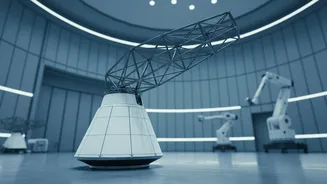
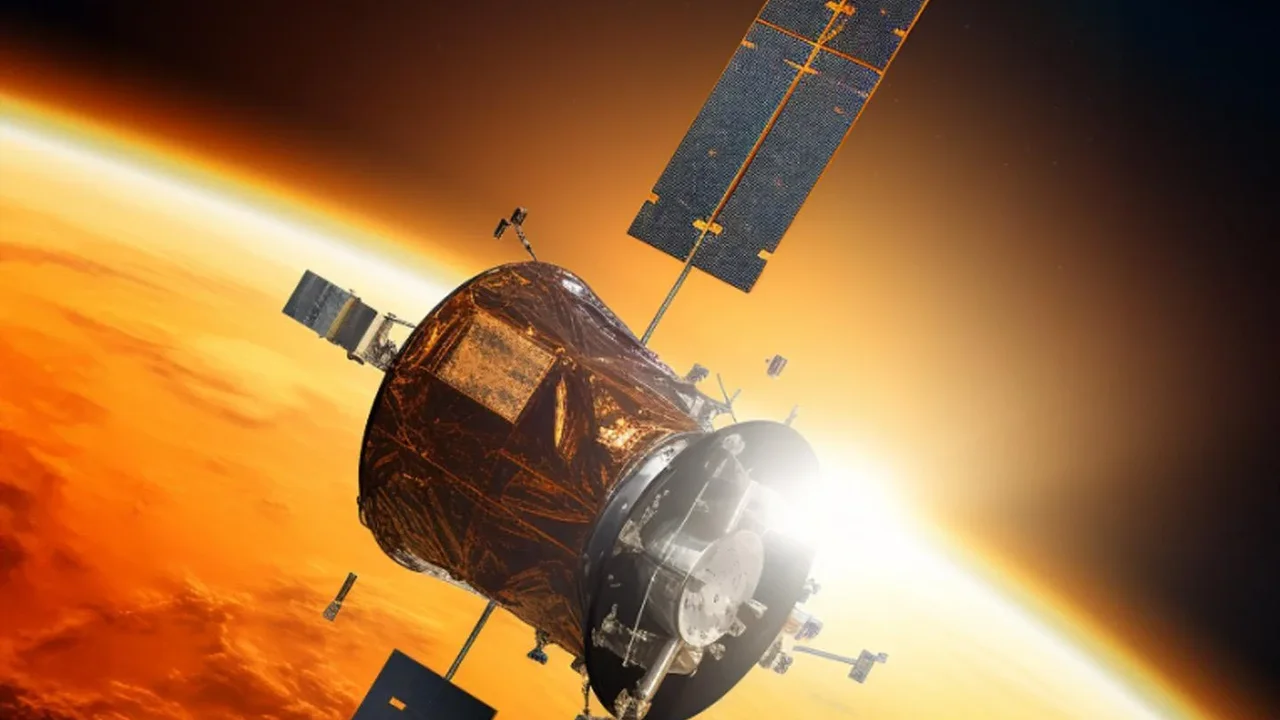
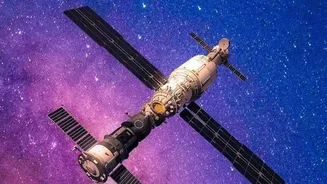
of 400 kilometres for a mission lasting up to three days. Upon successful completion, India will join the elite group of nations—the United States, Russia, and China—that have independently sent humans to space. The mission is not just a technological showcase; it's a statement of national capability and a catalyst for scientific research and innovation. The spacecraft consists of a Crew Module, where astronauts will be housed, and a Service Module for propulsion and power. This entire assembly will be launched atop a human-rated LVM3 rocket, a powerful launch vehicle modified for the unique safety requirements of carrying a crew.
The Ultimate Insurance Policy: The Crew Escape System
Sending humans to space is inherently risky, especially during the launch and ascent phases when the rocket is under immense stress. To protect the crew during a potential emergency, ISRO has developed a sophisticated Crew Escape System (CES). Think of it as a highly advanced ejection seat for an entire space capsule. Its sole purpose is to rapidly pull the Crew Module and its occupants away from a malfunctioning rocket within milliseconds of detecting a problem. This system is mounted at the very top of the rocket and uses a series of powerful, quick-acting solid-fuel motors to achieve this feat. It is a 'puller' type system, a design also used by Russian Soyuz and historic American Apollo missions, which yanks the capsule clear of danger. An Integrated Vehicle Health Management system, a complex network of sensors, serves as the brain, detecting anomalies and triggering the escape sequence automatically.
A Crucial Test for High-Altitude Safety
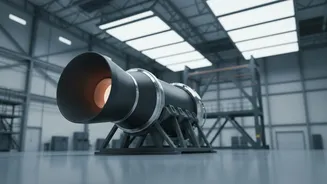
The latest success is the successful testing of the High-Altitude Escape Motors (HEM). These are a key part of the broader Crew Escape System. While some escape motors are designed for emergencies on the launch pad or at low altitudes, the HEMs are specifically for abort scenarios that could occur higher up in the atmosphere. The system includes five main types of motors for different scenarios, including High-Altitude Escape Motors and Low-Altitude Escape Motors. The successful static testing of these motors, where they are fired while anchored to the ground, is a crucial step. It validates that the motors can generate the immense thrust required to pull the crew capsule to a safe distance at high speeds and altitudes, overcoming the rocket's own powerful acceleration. This successful exercise demonstrates that a key piece of the safety puzzle works as designed, building critical confidence in the system's reliability.
Putting It All Together for a Safe Flight
This test is one in a series of rigorous trials to qualify every component of the Gaganyaan mission for human flight. ISRO has already conducted successful demonstrations, like the Test Vehicle Abort Mission-1 (TV-D1), which tested the escape system's performance at a specific altitude and speed. In that test, the system successfully separated the module, which then descended safely under parachutes for a sea recovery. Every successful test, from the propulsion systems of the main rocket to the deceleration parachutes and now the high-altitude escape thrusters, moves the program forward. The goal is to ensure every possible failure has a corresponding safety protocol that works flawlessly. This methodical, safety-first approach is fundamental to the entire Gaganyaan programme, with multiple uncrewed test flights planned to validate all systems before the first crewed mission, which is targeted for 2027.